impact
impact
open science
subheadline
careers and opportunities
subheadline
people & teams
people & teams
subheadline
allenites
subheadline
allen institute advisors
subheadline
board of directors
subheadline
shanahan foundation fellowship
subheadline
next generation leaders
subheadline
research
overview
our approach
subheadline
publications
subheadline
open science
subheadline
accelerator
brain science
subheadline
cell science
subheadline
neural dynamics
subheadline
immunology
subheadline
synthetic biology
subheadline
education
education
science education
subheadline
education resources
subheadline
field trips
subheadline
open science
subheadline
open science quest
subheadline
news
news
stories
subheadline
podcast
subheadline
sign up for our newsletter
subheadline
events
events
all events
subheadline
conferences
subheadline
event code of conduct
subheadline
events
open science quest
subheadline
summer workshop on the dynamic brain
subheadline
open science week
subheadline
brain fest
subheadline
science resources
science resources
allencell.org
subheadline
allenimmunology.org
subheadline
allenneuraldynamics.org
subheadline
brain-bican.org
subheadline
brain-map.org
subheadline
microns-explorer.org
subheadline
impact
back to menu
impact
open science
subheading
careers and opportunities
subheading
people & teams
people & teams
subheading
allen institute advisors
subheading
board of directors
subheading
shanahan foundation fellowship
subheading
next generation leaders
subheading
research
back to menu
impact
Label
subheading
Label
subheading
people & teams
education
back to menu
research
Label
subheading
Label
subheading
Heading
news
back to menu
research
Label
subheading
Label
subheading
Heading
events
back to menu
research
Label
subheading
Label
subheading
Heading
science resources
back to menu
science resources
allencell.org
subheading
allenimmunology.org
subheading
allenneuraldynamics.org
subheading
brain-bican.org
subheading
brain-map.org
subheading
microns-explorer.org
subheading
search
impact
people

Christof Koch

Meritorious Investigator

teams /
Allenite

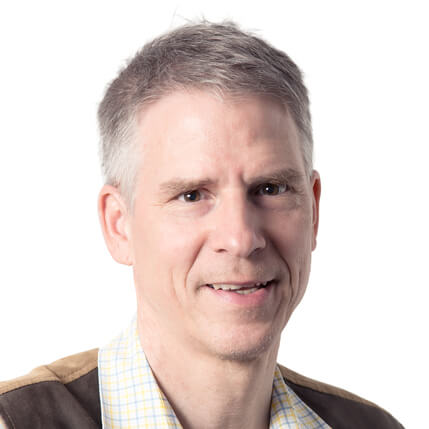
Christof Koch is a Meritorious Investigator at the Allen Institute.

Christof received his baccalaureate from the Lycée Descartes in Rabat, Morocco, his B.S. and M.S. in physics from the University of Tübingen in Germany and his Ph.D. from the Max-Planck Institute for biological Cybernetics in 1982. Subsequently, he spent four years as a postdoctoral fellow in the Artificial Intelligence Laboratory and the Brain and Cognitive Sciences Department at the Massachusetts Institute of Technology. From 1987 until 2013, Koch was a professor at the California Institute of Technology (Caltech) in Pasadena, from his initial appointment as Assistant Professor, Division of Biology and Division of Engineering and Applied Sciences in 1986, to his final position as Lois and Victor Troendle Professor of Cognitive & Behavioral Biology. See here for Christof’s academic pedigree and his students. Christof joined the Allen Institute for Brain Science as Chief Scientific Officer in 2011 and became President in 2015.

Christof’s passion are neurons – the atoms of perception, memory, behavior and consciousness – their diverse shapes, electrical behaviors, and their computational function within the mammalian brain, in particular in neocortex. The Allen Institute for Brain Science is engaged in a major effort to identify all the different types of neurons in the brains of mice and humans – the cell census effort. See the papers below.

Christof discovered that in vivo cortical neurons do not integrate over large number of small inputs given their spiking variability, how neurons can multiply, the relationship between intra- and extra-cellular potential, and how this gives rise to the local field potential and the large-scale current sinks and sources and how weak extracellular fields can entrain spiking activity via ephaptic effects. He postulated the attentional saliency map hypothesis for biological and computer vision according to which one or more topographic organized spatial maps summarize bottom-up salient information in the visual system, he co-discovered, with Itzhak Fried, an high-level, invariant and abstract single neuron representation of familiar individuals and objects in the human medial temporal lobe (the so-called “Jennifer Aniston” or concept neurons) and developed the ‘continuous flashed suppression’ masking technique. In collaboration with Francis Crick, he initiated the modern search for the neuronal correlates of consciousness, a systematic experimental program to identify the minimal bio-physical mechanisms jointly sufficient for any one specific conscious percept. In collaboration with Giulio Tononi, he co-developed the Integrated Information Theory of consciousness.

Christof writings and interests integrate theoretical, computational and experimental neuroscience with philosophy and contemporary trends, in particular artificial intelligence. His latest book, The Feeling of Life Itself – Why Consciousness is Everywhere But Can’t be Computed, was published by MIT Press in Autumn of 2019.

His previous book, Consciousness: Confessions of a Romantic Reductionist, blends science and memoir to explore topics in discovering the roots of consciousness. Stemming in part from a long-standing collaboration with the late Nobel Laureate Francis Crick, Christof authored the book The Quest for Consciousness: A Neurobiological Approach. Koch also authored the technical books Biophysics of Computation: Information Processing in Single Neurons and Methods in Neuronal Modeling: From Ions to Networks, and served as editor for several books on neural modeling and information processing.

Visit Christof’s Wikipedia page.
back to team
featured contributions
featured publications
featured media
featured stories
featured events

featured publications

publication / 2025
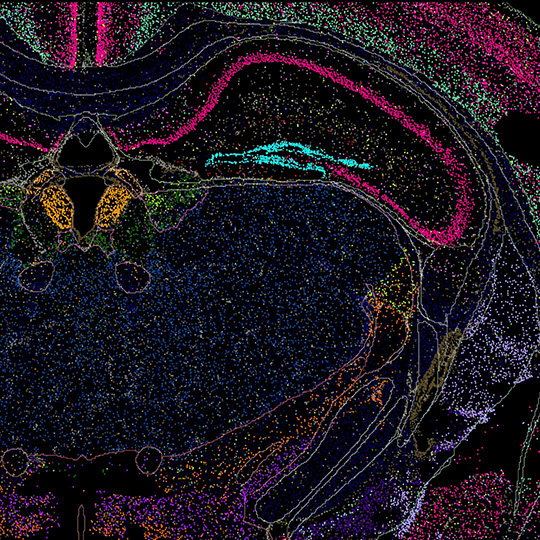
Evidence from spatial transcriptomics for the mosaic hypothesis and pure cell types in the cortex
Cell Reports
publication / 2025
Integrating multimodal data to understand cortical circuit architecture and function
Nature Neuroscience
publication / 2024
Cell-class-specific electric field entrainment of neural activity
Neuron

featured events

No articles for the category

featured stories

video 
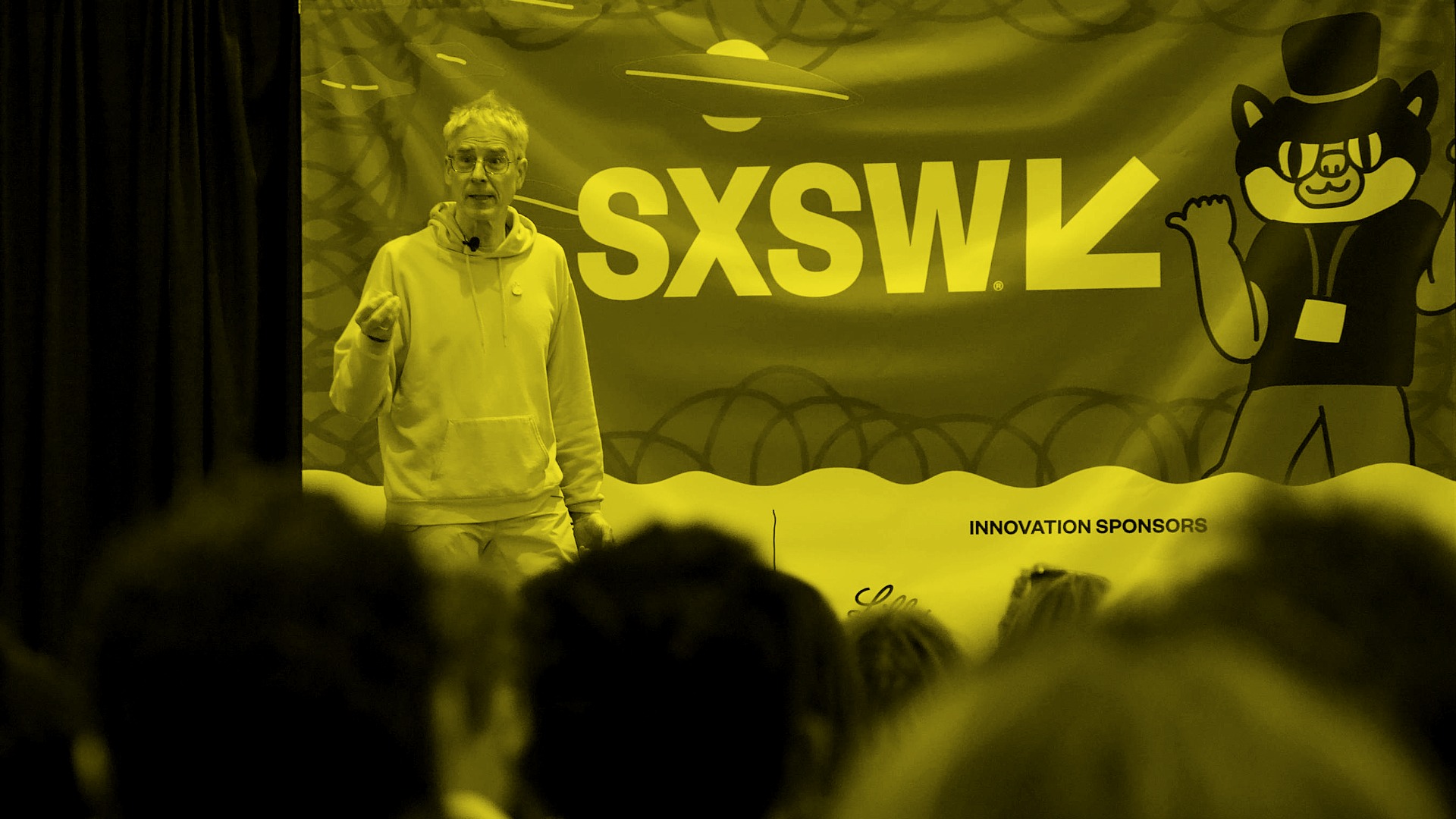
What extreme experience can teach us about consciousness
Christof Koch speaks to a global audience about psychedelics, unresponsive patients, and the unsolved mystery of conscious experience
news 
Landmark experiment sheds new light on the origins of consciousness
Findings suggest it may be about sensory processing and perception, with possible implications for diagnosing and treating comas or vegetative states.
video 
The World's Observatory of the Mind | OpenScope
Great questions can come from anywhere. OpenScope is an open platform for high-throughput and reproducible neurophysiology.

featured media

media / WBUR
How does the brain love and hate?
Consciousness is how we are able to feel, dream and imagine. And yet — scientists haven't figured out how consciousness definitively works.
media / BBC
We feel it in our bones': Can a machine ever love you?
Artificial intelligence can write you a passable love poem and some people even have romantic feelings towards it. But is the feeling mutual?
media / Popular Mechanics
🔒 Popular Mechanics: Scientists Are Gifting AI the Final Ingredient for Consciousness—And It Could Trigger the Singularity
A tech company is working on creating “micro-emotions” within AI to see how it effects their behavior, but not everyone buys into the idea.
we acceleratedevelopcatalyzeimpact

science done differently. shared with the world.

explore our accelerators

brain science

Mapping every cell, connection, and circuit in the brain—openly shared with the world.

cell science

Decoding how cells become tissues, then programming that knowledge into powerful new research tools.

neural dynamics

Revealing the brain's hidden algorithms that transform neural activity into real-world behavior.

immunology

Creating the deepest open reference for the healthy human immune system ever built.

synthetic biology

Engineering cells to record their own histories, transforming how we understand disease over time.

research

Big questions, open answers, and science built to be shared.

education

Inspiring the next generation of scientists through open science resources.

impact

Our science is empowering researchers and advancing health worldwide.
advancing science through open, collaborative research
Get the allen institute newsletter
Stay informed on the latest breakthroughs in neuroscience, bioscience, and AI-driven research.
allen institute
impactpeople & teamscareers & opportunitiesalumnihistory & founder
science resources
allencell.orgallenimmunology.orgallenneuraldynamics.orgbrain-bican.orgbrain-map.orgmicrons-explorer.org
research
brain sciencecell scienceneural dynamicsimmunologysynthetic biologypublications
education
science educationfield tripsprofessional developmenteducation resources
quick links
newseventsopen sciencepodcastscience resourceshuman brain donationvisit uscontact
follow us/

allen institute, 615 Westlake Ave North, Seattle, WA 98109 +12065487055

© 0000 allen institute. all rights reserved.
privacy policyterms of usecitation policyemployee portalpolicy & compliance