impact
impact
open science
subheadline
careers and opportunities
subheadline
people & teams
people & teams
subheadline
allenites
subheadline
allen institute advisors
subheadline
board of directors
subheadline
shanahan foundation fellowship
subheadline
next generation leaders
subheadline
research
overview
our approach
subheadline
publications
subheadline
open science
subheadline
accelerator
brain science
subheadline
cell science
subheadline
neural dynamics
subheadline
immunology
subheadline
synthetic biology
subheadline
education
education
science education
subheadline
education resources
subheadline
field trips
subheadline
open science
subheadline
open science quest
subheadline
news
news
stories
subheadline
podcast
subheadline
sign up for our newsletter
subheadline
events
events
all events
subheadline
conferences
subheadline
event code of conduct
subheadline
events
open science quest
subheadline
summer workshop on the dynamic brain
subheadline
open science week
subheadline
brain fest
subheadline
science resources
science resources
allencell.org
subheadline
allenimmunology.org
subheadline
allenneuraldynamics.org
subheadline
brain-bican.org
subheadline
brain-map.org
subheadline
microns-explorer.org
subheadline
impact
back to menu
impact
open science
subheading
careers and opportunities
subheading
people & teams
people & teams
subheading
allen institute advisors
subheading
board of directors
subheading
shanahan foundation fellowship
subheading
next generation leaders
subheading
research
back to menu
impact
Label
subheading
Label
subheading
people & teams
education
back to menu
research
Label
subheading
Label
subheading
Heading
news
back to menu
research
Label
subheading
Label
subheading
Heading
events
back to menu
research
Label
subheading
Label
subheading
Heading
science resources
back to menu
science resources
allencell.org
subheading
allenimmunology.org
subheading
allenneuraldynamics.org
subheading
brain-bican.org
subheading
brain-map.org
subheading
microns-explorer.org
subheading
search
stories
news

Allen Institute for Cell Science and New York Stem Cell Foundation join forces to advance inclusive cellular biology

Partnership combines advanced cellular tagging with ethnically diverse stem cell lines, addressing critical gaps in biomedical research

September 4, 2024
 min read
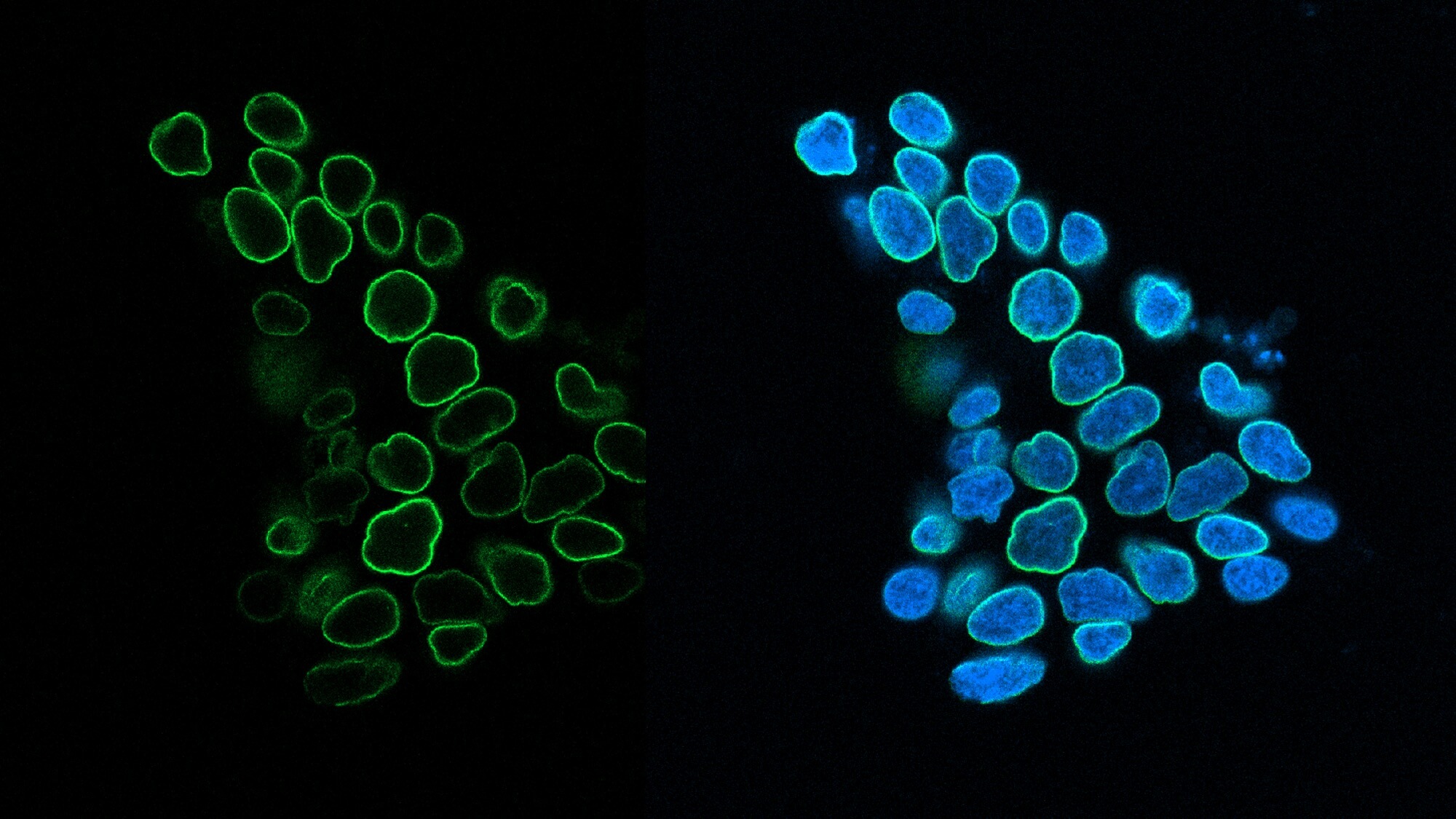
Functional genomics tagging with Parkinson's disease-relevant hiPSC lines for visualizing the structural protein LMN B1.
share/
Functional genomics tagging with Parkinson's disease-relevant hiPSC lines for visualizing the structural protein LMN B1. Image by Josephine Wesely, New York Stem Cell Foundation
Partnership combines advanced cellular tagging with ethnically diverse stem cell lines, addressing critical gaps in biomedical research
Thank you! Your submission has been received!
Oops! Something went wrong while submitting the form.

in this article

table of contents will display on published page only
set h2 to populate the table of contents here

Disease knows no boundaries, but research often does.  

While illness affects all populations, our understanding of disease—and the effectiveness of treatments—varies dramatically across ethnic groups. This disparity stems from a longstanding bias in biomedical research, which has largely focused on European males, leaving much of our global population’s biology unexplored.

Today, the Allen Institute for Cell Science and the New York Stem Cell Foundation (NYSCF) announced a pioneering collaboration to address this critical issue, combining two cutting-edge technologies to create more inclusive cellular models for studying disease.

I’m excited by the potential impact of this collaboration, which will create a diverse and accessible stem cell resource to advance our understanding of cell biology in both normal and disease states.

- Ru Gunawardane, Ph.D., Executive Vice President and Director of the Allen Institute for Cell Science

This partnership will introduce the Allen Institute for Cell Science’s structure tags into NYSCF’s collection of ethnically diverse stem cell lines. The result: an unprecedented resource that will enable researchers to examine disease mechanisms and potential treatments across a spectrum of populations previously excluded from scientific studies.  

“For too long, biomedical research has overlooked the rich diversity of human biology,” said Jennifer J. Raab, president and CEO of NYSCF. “This oversight has real-world consequences, contributing to widening health disparities despite overall advances in medicine. This collaboration is a crucial step toward more equitable and effective healthcare for all.”

The initial phase of the collaboration will enhance 24 of NYSCF’s human induced pluripotent stem cell (hiPSC) lines, which include both healthy volunteers and patients with Alzheimer’s and Parkinson’s disease, whose burden is exponentially increasing in our aging population, from diverse ethnic backgrounds. These hiPSCs were created by reprogramming adult skin or blood samples to their stem cell state, using NYSCF’s automated platform for stem cell technology, the NYSCF Global Stem Cell Array®.  

For this collaboration, NYSCF will use the Array® to gene-edit these diverse hiPSC lines with Allen Institute for Cell Science’s structure tags, allowing scientists to visualize critical aspects of cellular behavior. They will then convert the tagged hiPSCs into neurons and astrocytes, two cell types centrally implicated in Alzheimer’s and Parkinson’s disease.

Notably, 9 of these stem cell lines were derived from nuns, priests, and brothers participating in the Religious Orders Study/Memory and Aging Project (ROSMAP) at Rush University Medical Center through a collaboration between Rush University, NYSCF, and Mass General Brigham. This unique cohort provides valuable insights into aging and cognitive health, adding another layer of significance to the resource.  

By integrating the Allen Institute’s cellular structure tags into these lines, the project aims to provide researchers with deeper insights into cellular biology that are inclusive and relevant to specific diseases, said Ru Gunawardane, Ph.D., executive vice president and director of the Allen Institute for Cell Science.  

“We are thrilled to partner with the New York Stem Cell Foundation to combine their expertise in generating hiPSC lines at scale with our advanced organelle tagging and rigorous quality control protocols,” Gunawardane said. “I’m excited by the potential impact of this collaboration, which will create a diverse and accessible stem cell resource to advance our understanding of cell biology in both normal and disease states.”

Key aspects of the collaboration include:

  • Integration of Allen Institute for Cell Science’s structure tags into 24 of NYSCF’s stem cell lines (12 healthy, 6 with Alzheimer’s, 6 with Parkinson’s)
  • Creation of dual-tagged cell lines for enhanced study of cellular structures
  • Differentiation of tagged stem cells into neurons and astrocytes for neurological disease research

This initial phase of this partnership will demonstrate the power of combining these technologies to examine multiple cellular structures across diverse ancestral backgrounds and cell types. Future phases aim to expand the scope to include additional diseases and minority groups, develop new tagging technologies, and integrate more complex cellular models such as organoids.

Media contact:  

David McKeon, Chief of Staff
New York Stem Cell Foundation
dmckeon@nyscf.org

Peter Kim, Sr. Manager, Communications and Media Relations
Allen Institute
206.605.9884 | peter.kim@alleninstitute.org

Citations
No items found.

about the allen institute

The Allen Institute is an independent, 501(c)(3) nonprofit research organization founded by philanthropist and visionary, the late Paul G. Allen. The Allen Institute is dedicated to answering some of the biggest questions in bioscience and accelerating research worldwide. The Institute is a recognized leader in large-scale research with a commitment to an open science model. For more information, visit alleninstitute.org.
explore related stories

explore more stories
Allen Impact 2025
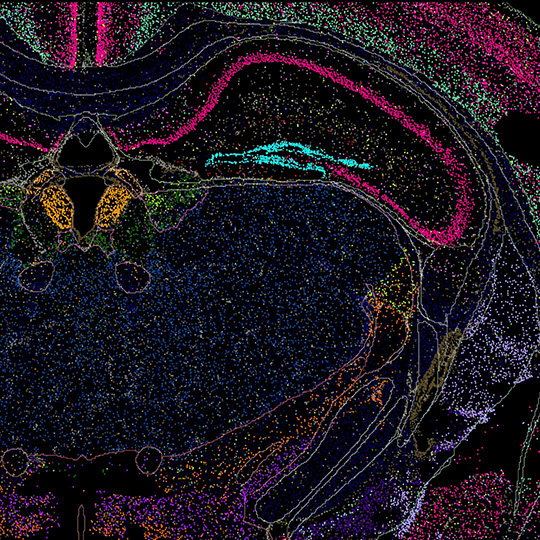
Technology and innovation are fueling discovery in science like never before we’re proud to be leading the way. 2025 was a year of tremendous impact...
video 
Simularium: Accelerating discovery by animating insight
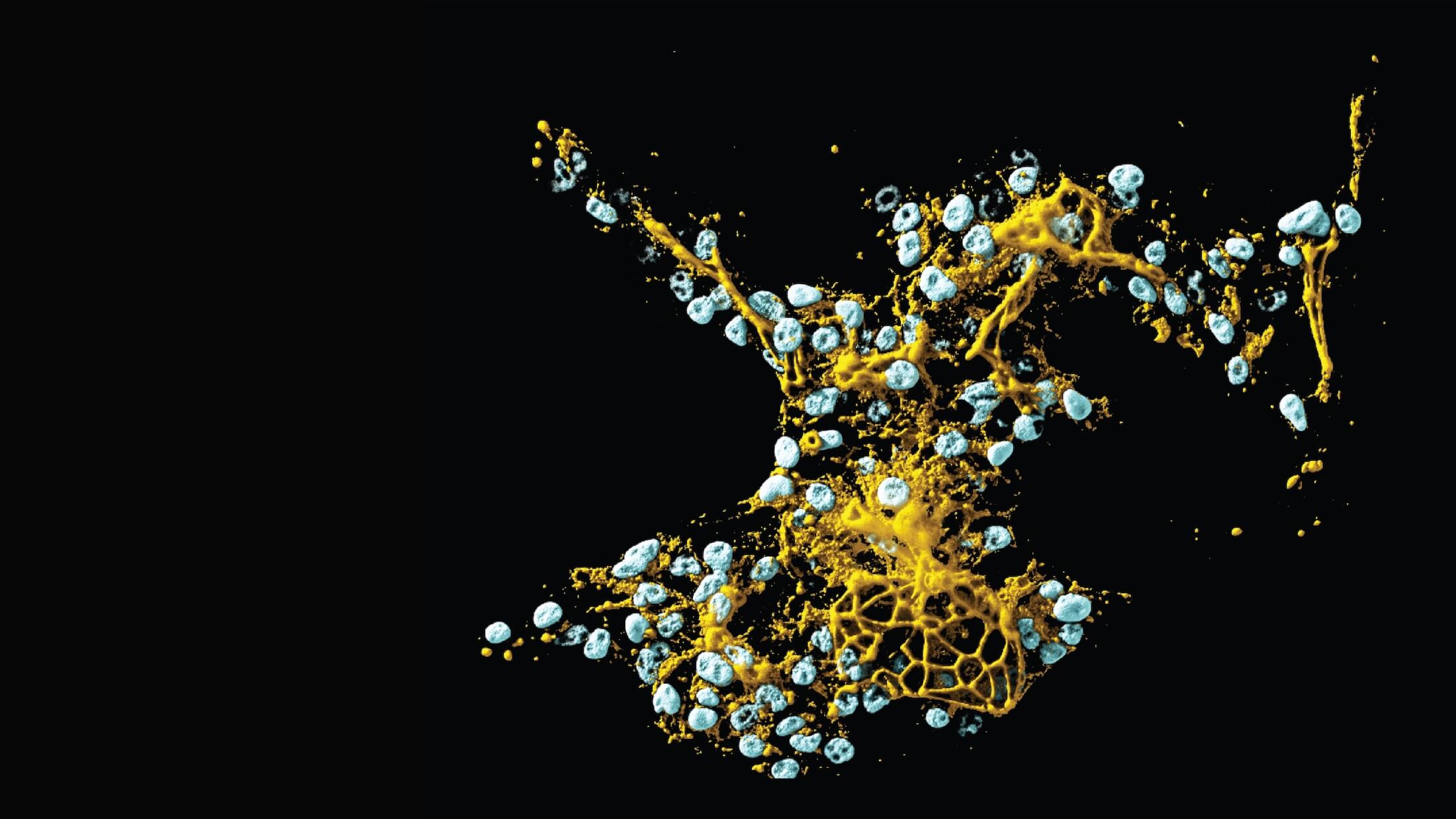
Simularium is an innovative online tool designed by the Allen Institute’s Cell Science team that visualizes 4D simulations (animations) of complex...
news 
Allen Institute cells blast off into outer space
Researchers from Cedars-Sinai are using Allen Institute cell lines to grow organoids in space, which could help design better drugs for disease
video 
What Are the Parts of a Cell?
From mitochondria to endoplasmic reticulum, this educational video explores the major cell organelles and their functions.
news 
Allen Institute names Sarah Norris Hall as next Chief Financial Officer
Norris Hall’s experience and insight into financial operations will help enable and propel transformative science at the Allen Institute.
video 
CellScapes: Launching a new era of cellular biology
CellScapes introduces a groundbreaking approach that will combine cutting-edge imaging and powerful computer models to track how cells change, communicate, and organize.
we acceleratedevelopcatalyzeimpact

science done differently. shared with the world.

explore our accelerators

brain science

Mapping every cell, connection, and circuit in the brain—openly shared with the world.

cell science

Decoding how cells become tissues, then programming that knowledge into powerful new research tools.

neural dynamics

Revealing the brain's hidden algorithms that transform neural activity into real-world behavior.

immunology

Creating the deepest open reference for the healthy human immune system ever built.

synthetic biology

Engineering cells to record their own histories, transforming how we understand disease over time.

research

Big questions, open answers, and science built to be shared.

education

Inspiring the next generation of scientists through open science resources.

impact

Our science is empowering researchers and advancing health worldwide.
advancing science through open, collaborative research
Get the allen institute newsletter
Stay informed on the latest breakthroughs in neuroscience, bioscience, and AI-driven research.
allen institute
impactpeople & teamscareers & opportunitiesalumnihistory & founder
science resources
allencell.orgallenimmunology.orgallenneuraldynamics.orgbrain-bican.orgbrain-map.orgmicrons-explorer.org
research
brain sciencecell scienceneural dynamicsimmunologysynthetic biologypublications
education
science educationfield tripsprofessional developmenteducation resources
quick links
newseventsopen sciencepodcastscience resourceshuman brain donationvisit uscontact
follow us/

allen institute, 615 Westlake Ave North, Seattle, WA 98109 +12065487055

© 0000 allen institute. all rights reserved.
privacy policyterms of usecitation policyemployee portalpolicy & compliance