
impact
impact
open science
subheadline
careers and opportunities
subheadline
people & teams
people & teams
subheadline
allenites
subheadline
allen institute advisors
subheadline
board of directors
subheadline
shanahan foundation fellowship
subheadline
next generation leaders
subheadline
research
overview
our approach
subheadline
publications
subheadline
open science
subheadline
accelerator
brain science
subheadline
cell science
subheadline
neural dynamics
subheadline
immunology
subheadline
synthetic biology
subheadline
education
education
science education
subheadline
education resources
subheadline
field trips
subheadline
open science
subheadline
open science quest
subheadline
news
news
stories
subheadline
podcast
subheadline
sign up for our newsletter
subheadline
events
events
all events
subheadline
conferences
subheadline
event code of conduct
subheadline
events
open science quest
subheadline
summer workshop on the dynamic brain
subheadline
open science week
subheadline
brain fest
subheadline
science resources
science resources
allencell.org
subheadline
allenimmunology.org
subheadline
allenneuraldynamics.org
subheadline
brain-bican.org
subheadline
brain-map.org
subheadline
microns-explorer.org
subheadline
impact
back to menu
impact
open science
subheading
careers and opportunities
subheading
people & teams
people & teams
subheading
allen institute advisors
subheading
board of directors
subheading
shanahan foundation fellowship
subheading
next generation leaders
subheading
research
back to menu
impact
Label
subheading
Label
subheading
people & teams
education
back to menu
research
Label
subheading
Label
subheading
Heading
news
back to menu
research
Label
subheading
Label
subheading
Heading
events
back to menu
research
Label
subheading
Label
subheading
Heading
science resources
back to menu
science resources
allencell.org
subheading
allenimmunology.org
subheading
allenneuraldynamics.org
subheading
brain-bican.org
subheading
brain-map.org
subheading
microns-explorer.org
subheading
search
stories
news

CryoSCAPE: Allen Institute scientists develop ‘suspended animation’ technique for blood draws that will aid research for underserved populations

A new approach that keeps blood cells alive in deep freeze promises to expand reach of cutting-edge single-cell technologies to underserved...

January 6, 2025
 min read
share/
A new approach that keeps blood cells alive in deep freeze promises to expand reach of cutting-edge single-cell technologies to underserved...
Thank you! Your submission has been received!
Oops! Something went wrong while submitting the form.

in this article

table of contents will display on published page only
set h2 to populate the table of contents here

authors

Rachel Tompa
Senior Editor

Your blood is a delicate mixture. Researchers and clinicians often use blood to learn what’s going on inside our bodies, in part because siphoning off a tube of blood is easier and less painful than taking biopsies of an internal organ.

But in some cases, it turns out that blood can be very different outside our bodies. When it comes to certain emerging research techniques, the clock starts ticking as soon as your blood hits the tube. As little as six to eight hours later, some aspects of your blood’s molecular composition will have changed to the point that an experiment would give completely different results.

Virtually all clinical trials run by biopharmaceutical companies will collect blood at one site but then they have to ship the blood overnight to a centralized processing site. We wanted to solve this problem...

Peter Skene, Ph.D., Director of High Resolution Translational Immunology at the Allen Institute for Immunology

If a patient or research study volunteer is having a blood draw at or near a research facility that can perform this type of experiment on site, that time delay doesn’t come into play. But for research studies or clinical trials that hope to enroll patients and volunteers in rural areas or draw blood at clinics without an attached high-tech laboratory, rushing the blood samples to the processing site becomes a problem. Most clinical sample collection occurs near major research hubs, limiting our understanding of underserved and socio-economically deprived communities.

A new approach, called CryoSCAPE, developed by researchers at the Allen Institute for Immunology, a division of the Allen Institute, aims to stop that clock and lower experiment costs to broaden the reach and utility of these cutting-edge technologies for blood draws. The method uses a simple chemical mixture, pre-packaged in a small tube, to put blood into a type of suspended animation, protecting it from damage during freezing and preserving its delicate molecules in their natural state.

This new, scalable immune profiling technology is described in a recently published study in the Journal of Translational Medicine.

“Virtually all clinical trials run by biopharmaceutical companies will collect blood at one site but then they have to ship the blood overnight to a centralized processing site,” said Peter Skene, Ph.D., director of high resolution translational immunology at the Allen Institute for Immunology, who is one of the developers of this new approach. “We wanted to solve this problem by developing a methodology that allows immediate blood stabilization at the bedside.”
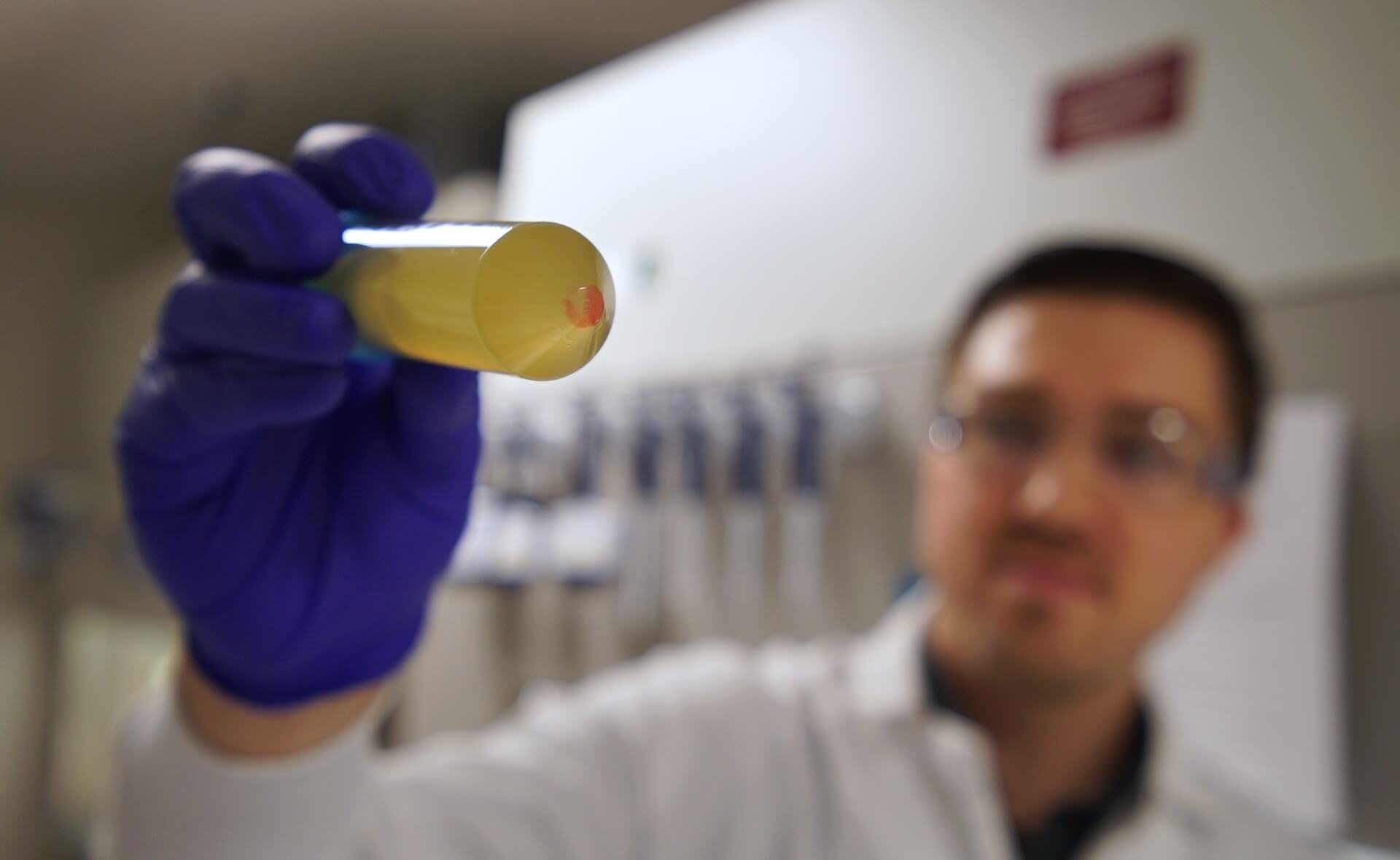
Scientist in blue gloves holding yellow test tube in laboratory setting
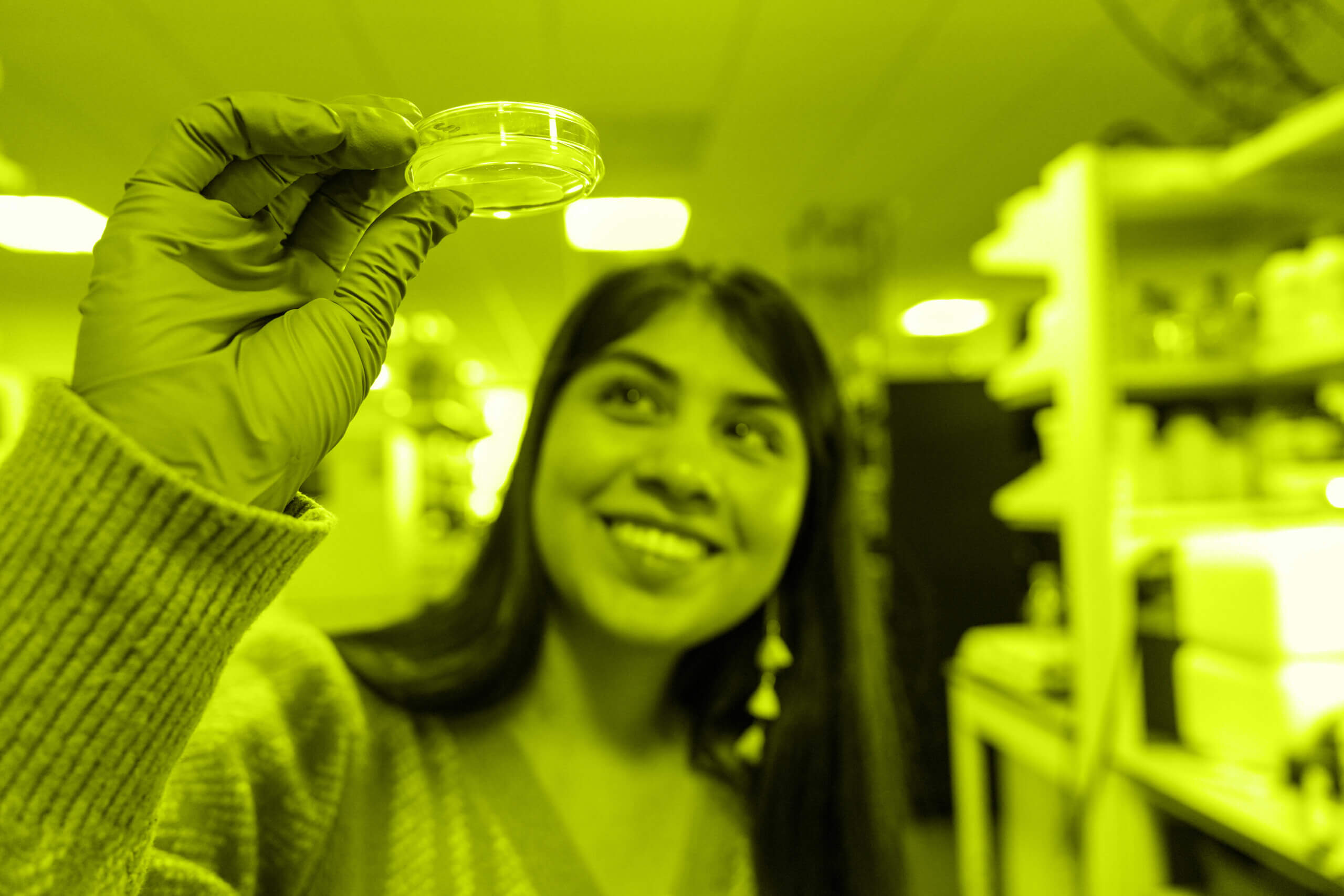
Alex Heubeck, M.S., B.S., researcher at the Allen Institute for Immunology and lead author of the study, works with blood samples in the lab.

The approach aims to broaden the reach of a class of experiments known as single-cell technologies, which capture the exact molecular composition of thousands or more of a patient’s individual cells one cell at a time. As these single-cell methods increase in use in the research world and ultimately make their way to clinical use, a blood stabilization technique like this could help increase the accuracy of experimental results and bring single-cell methods to research in diverse human populations.  

“This technique allows you to, in a way, keep the sample at the stage it was when the patient first gave blood,” said Lisa Forbes Satter, M.D., an immunologist and pediatrician at Baylor College of Medicine and Texas Children’s Hospital who collaborates with researchers at the Allen Institute to study rare immune-deficiency disorders. “It would be a game changer for institutions and clinics that don’t have a lot of resources.”  

The most common of the emerging single-cell technologies is known as single-cell RNA sequencing, a technique that reads out the genes switched on or off in a cell by capturing information about each individual cell’s full suite of RNA molecules. RNA is particularly finicky: The Allen Institute team found that just six hours after blood collection, RNA sequencing data are completely different from those in cells analyzed right after a blood draw. But this new way of stabilizing blood could be useful for other applications too, its creators say, because it keeps the cells alive and close to their natural state in the body.  

The Allen Institute team’s approach also scales up the single-cell experiments to the point that they can now process hundreds of blood samples at once. The technology could be used to broaden the reach of immunology studies at the Allen Institute and elsewhere, Skene said. The method would lower the barriers to participating in research studies because blood could be drawn at neighborhood clinics or pop-up sites, eliminating the need for volunteers to travel to a research laboratory. Skene and his colleagues hope these lowered barriers could lead to increased enrollment of members of underserved communities in research studies and clinical trials. The team also plans to use the approach to help streamline and expand clinical trials conducted by biopharmaceutical companies, those that typically need to ship blood samples to a centralized lab for analysis.

“As a team, we’ve developed a lot of exciting but complicated new approaches, but we also need to make these approaches accessible,” said Julian Reading, senior manager of flow cytometry at the Allen Institute for Immunology. “Now we’re working to open access to this technology, to get to a point where we can actually have broader impact.”

Citations
No items found.

about the allen institute

The Allen Institute is an independent, 501(c)(3) nonprofit research organization founded by philanthropist and visionary, the late Paul G. Allen. The Allen Institute is dedicated to answering some of the biggest questions in bioscience and accelerating research worldwide. The Institute is a recognized leader in large-scale research with a commitment to an open science model. For more information, visit alleninstitute.org.
explore related stories

explore more stories
news 
Designing better weapons to fight prostate cancer
New study unlocks key insights that could help develop next-generation immunotherapies
news 
SciShots: Nervous and immune systems team up to take on parasites
Pain-sensing neurons in the intestine give marching orders to the immune system to kick off an attack against parasites
Allen Impact 2025
Technology and innovation are fueling discovery in science like never before we’re proud to be leading the way. 2025 was a year of tremendous impact...
news 
How age affects vaccine responses and how to make them better
Age-related shifts in T cells weaken vaccine response in older adults, but new findings pave the way for next generation of vaccines.
news 
Susan Kaech, Ph.D., named next leader of Allen Institute’s Immunology accelerator
Leader in immunology to advance the Institute’s next frontier in understanding the immune system’s role across health and disease
news 
New study reveals rheumatoid arthritis begins long before symptoms, opening door to prevention
The seven-year study reveals early-warning signs that could help doctors catch the disease before it starts, potentially saving patients years of pain and disability.
we acceleratedevelopcatalyzeimpact

science done differently. shared with the world.

explore our accelerators

brain science

Mapping every cell, connection, and circuit in the brain—openly shared with the world.

cell science

Decoding how cells become tissues, then programming that knowledge into powerful new research tools.

neural dynamics

Revealing the brain's hidden algorithms that transform neural activity into real-world behavior.

immunology

Creating the deepest open reference for the healthy human immune system ever built.

synthetic biology

Engineering cells to record their own histories, transforming how we understand disease over time.

research

Big questions, open answers, and science built to be shared.

education

Inspiring the next generation of scientists through open science resources.

impact

Our science is empowering researchers and advancing health worldwide.
advancing science through open, collaborative research
Get the allen institute newsletter
Stay informed on the latest breakthroughs in neuroscience, bioscience, and AI-driven research.
allen institute
impactpeople & teamscareers & opportunitiesalumnihistory & founder
science resources
allencell.orgallenimmunology.orgallenneuraldynamics.orgbrain-bican.orgbrain-map.orgmicrons-explorer.org
research
brain sciencecell scienceneural dynamicsimmunologysynthetic biologypublications
education
science educationfield tripsprofessional developmenteducation resources
quick links
newseventsopen sciencepodcastscience resourceshuman brain donationvisit uscontact
follow us/

allen institute, 615 Westlake Ave North, Seattle, WA 98109 +12065487055

© 0000 allen institute. all rights reserved.
privacy policyterms of usecitation policyemployee portalpolicy & compliance