
impact
impact
open science
subheadline
careers and opportunities
subheadline
people & teams
people & teams
subheadline
allenites
subheadline
allen institute advisors
subheadline
board of directors
subheadline
shanahan foundation fellowship
subheadline
next generation leaders
subheadline
research
overview
our approach
subheadline
publications
subheadline
open science
subheadline
accelerator
brain science
subheadline
cell science
subheadline
neural dynamics
subheadline
immunology
subheadline
synthetic biology
subheadline
education
education
science education
subheadline
education resources
subheadline
field trips
subheadline
open science
subheadline
open science quest
subheadline
news
news
stories
subheadline
podcast
subheadline
sign up for our newsletter
subheadline
events
events
all events
subheadline
conferences
subheadline
event code of conduct
subheadline
events
open science quest
subheadline
summer workshop on the dynamic brain
subheadline
open science week
subheadline
brain fest
subheadline
science resources
science resources
allencell.org
subheadline
allenimmunology.org
subheadline
allenneuraldynamics.org
subheadline
brain-bican.org
subheadline
brain-map.org
subheadline
microns-explorer.org
subheadline
impact
back to menu
impact
open science
subheading
careers and opportunities
subheading
people & teams
people & teams
subheading
allen institute advisors
subheading
board of directors
subheading
shanahan foundation fellowship
subheading
next generation leaders
subheading
research
back to menu
impact
Label
subheading
Label
subheading
people & teams
education
back to menu
research
Label
subheading
Label
subheading
Heading
news
back to menu
research
Label
subheading
Label
subheading
Heading
events
back to menu
research
Label
subheading
Label
subheading
Heading
science resources
back to menu
science resources
allencell.org
subheading
allenimmunology.org
subheading
allenneuraldynamics.org
subheading
brain-bican.org
subheading
brain-map.org
subheading
microns-explorer.org
subheading
search
stories
news

How age affects vaccine responses and how to make them better

Age-related shifts in T cells weaken vaccine response in older adults, but new findings pave the way for next generation of vaccines.

October 29, 2025
 min read
share/
Age-related shifts in T cells weaken vaccine response in older adults, but new findings pave the way for next generation of vaccines.
Thank you! Your submission has been received!
Oops! Something went wrong while submitting the form.

in this article

table of contents will display on published page only
set h2 to populate the table of contents here

authors

Liz Dueweke
Communications and Media Relations Specialist

As flu season approaches and public health officials roll out their annual push for vaccination, Allen Institute scientists are learning why vaccines can trigger a weaker response in older adults, around age 65, and what can be done to improve them. These insights open the door to designing more effective vaccines.  

In the largest study of its kind, published in Nature, scientists discovered that our T cells—key players in coordinating immune responses—undergo profound and specific changes as we age. These changes, far from being random or a byproduct of chronic disease and inflammation, are a fundamental feature of healthy aging and will happen to all of us as we get older.  

“We were surprised that inflammation is not driving healthy aging. We think inflammation is driven by something independent from just the age of a person,” said Claire Gustafson, Ph.D., assistant investigator at the Allen Institute and one of the lead authors of the study. “This is important because there’s been research showing similar findings that inflammation and aging don’t go hand in hand, and your immune system is just changing with age.”  

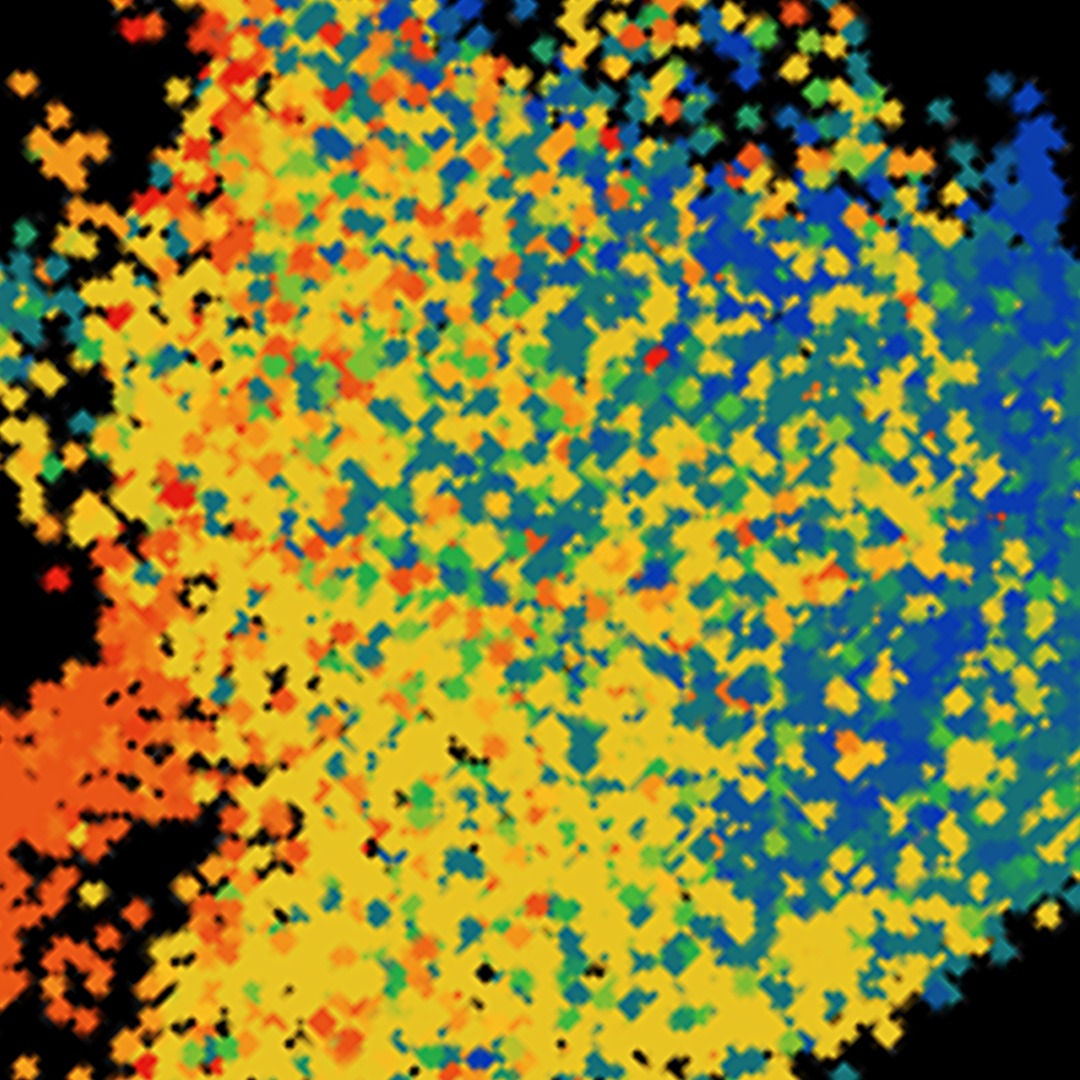
(Video of a 3-D “U-Map”. Each dot is a single cell of the blood, and each color is a different cell type. Video credit: Allen Institute)

The changes also point to why vaccines, including the annual flu shot and COVID-19 boosters, tend to be less effective in older adults.

The changes scientists discovered

T cells are a critical part of our immune system that help “train” white blood cells, called B cells, to produce antibodies in response to viruses and vaccines. But this study found that memory T cells in older adults undergo a dramatic shift toward what is known as a “Th2-like” state, which is a change in gene expression that fundamentally alters how these cells respond to threats. Researchers found this shift directly affects B cells’ ability to generate strong antibody responses. In other words, the flu shot might still deliver the right viral components, but if the memory T cells aren’t functioning properly, the body struggles to respond effectively.  

(Allen Institute automation engineer, Peter Wittig, with a research robot used to scale experiments. Video credit: Allen Institute)

How this could lead to better vaccines

With this insight, doctors may be able to use a person’s immune profile to predict how well they’ll respond to a vaccine. Now that scientists can pinpoint how T cells become less effective with age, they can also start designing new vaccine formulas or immune-boosting treatments to address these issues.  
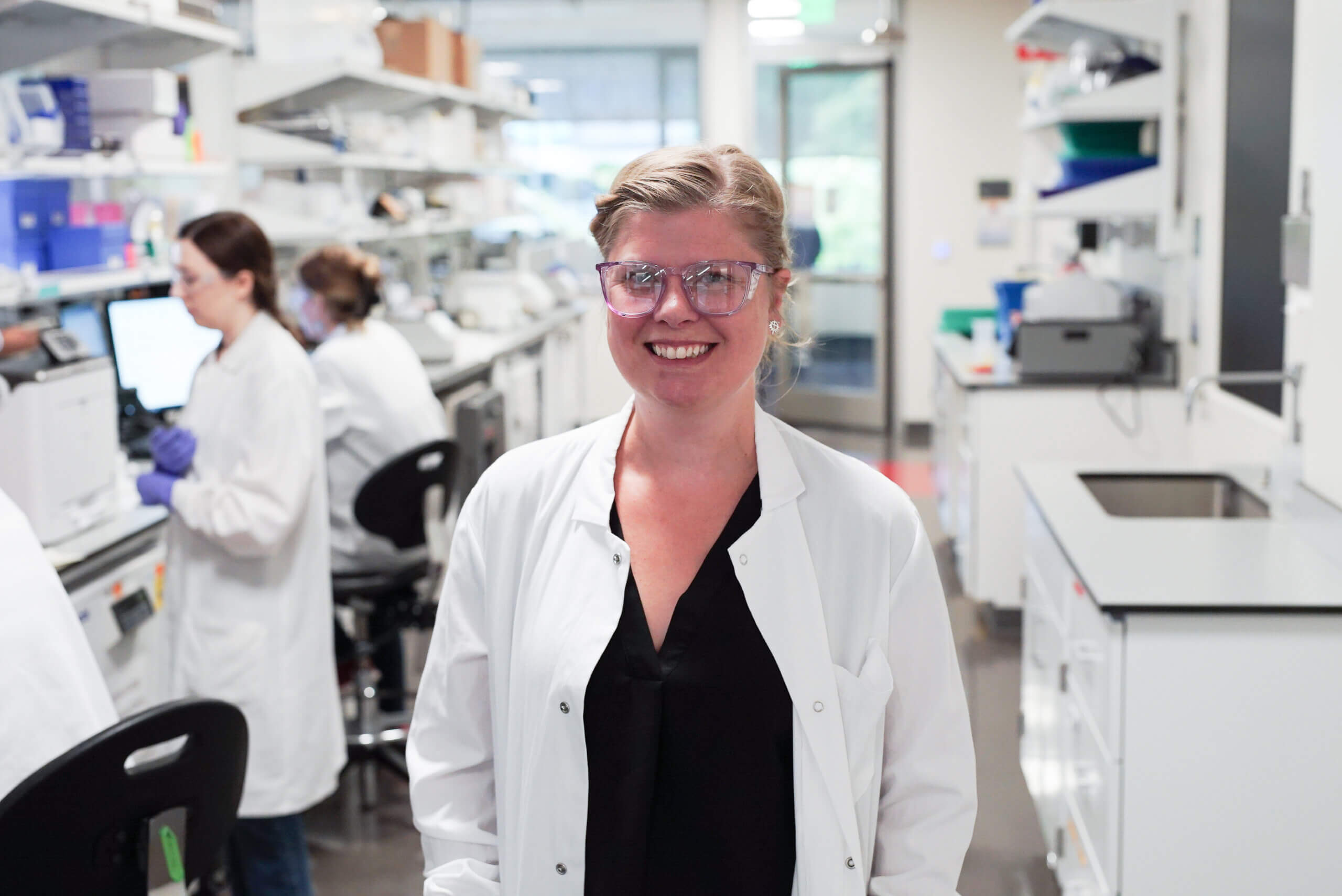
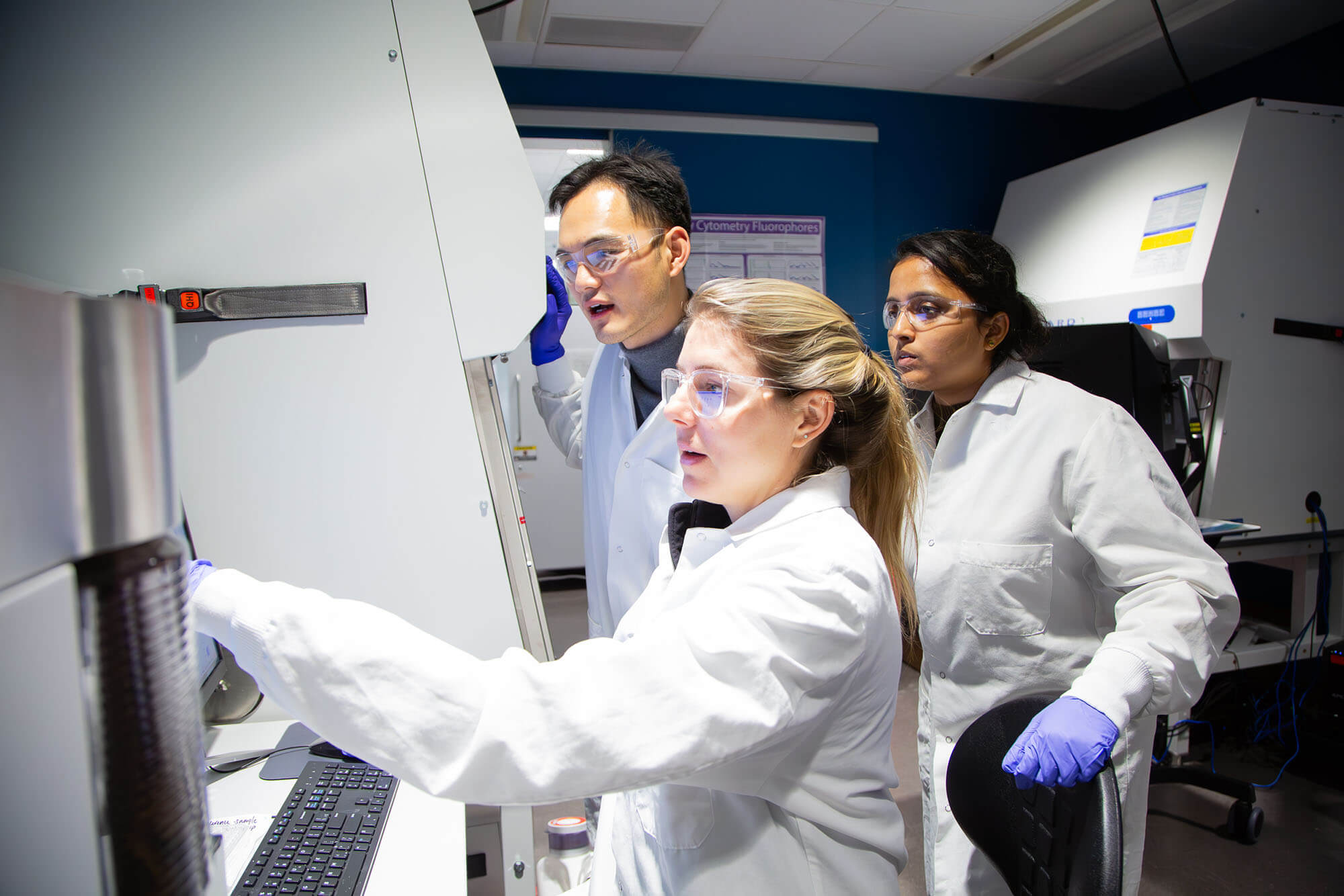
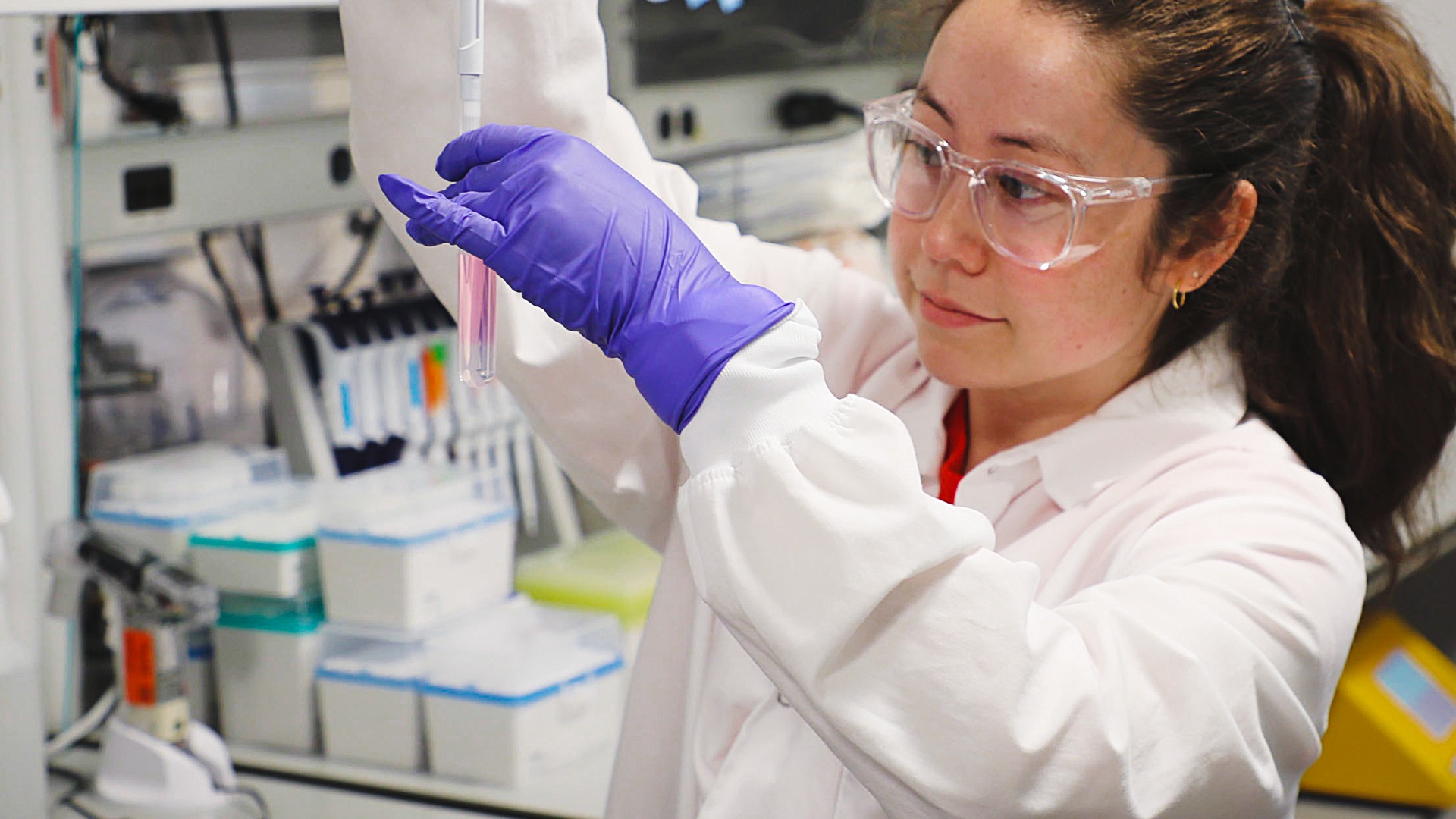
Smiling scientist in white lab coat and glasses in modern laboratory with colleagues and equipment
One of the lead authors of the study, Claire Gustafson, in the lab. (Photo credit: Allen Institute)

Since T cells in older adults function differently, scientists could reformulate vaccines to compensate specifically for age-related cellular changes rather than using a one-size-fits-all approach. Gene-editing tools like CRISPR could also be used to reprogram a person’s T cells before vaccination, essentially re-programming older immune cells to make them respond to vaccines like younger cells do—like CAR-T cell therapy that reprograms immune cells to fight cancer.  

Researchers say this work goes beyond just vaccines and reveals how our immune systems change in all of us as we get older and how our bodies fight age-related disease and viruses. It also opens the door to interventions like new therapies to restore key immune cells.  

How researchers made the discovery

Scientists tracked more than 96 healthy adults between the ages of 25 and 65 for over two years in collaboration with Benaroya Research Institute. The researchers then used cutting-edge techniques like single-cell RNA sequencing, proteomics, and spectral flow cytometry to profile the immune system of these individuals over time. The scientists then used this data on the immune system to create a detailed Human Immune Health Atlas, an online resource mapping 71 different immune cell types and how they change over time, and why those changes matter. Then, they applied this Atlas to study over 16 million individual immune cells from healthy adults ranging between 25 to 90+ years of age, offering an unprecedented tool for researchers worldwide to better understand—and support—the aging immune system. This online resource is the largest of its kind and freely available to researchers worldwide.  

“This research illustrates how working collaboratively can make a significant impact on our understanding of the immune system, both now and in the future,” said Jane Buckner, M.D., president of the Benaroya Research Institute. “It was made possible through the combined efforts of several Seattle-based research institutions, dedicated scientists, clinicians and research coordinators, as well as the individuals who generously volunteered their time, samples, and health information.”  

The significance of this work extends beyond aging research and provides a roadmap for understanding how immune dysfunction develops over time, offering concrete targets for intervention and potentially transforming how we approach immune health across the entire human lifespan.  

“There’s so much more information to be gained by looking at this dataset we’ve produced,” said Gustafson. “My hope is that it will be used for a long time to enable other researchers to look more deeply and find more insights into human immunity.”

Citations
No items found.

about the allen institute

The Allen Institute is an independent, 501(c)(3) nonprofit research organization founded by philanthropist and visionary, the late Paul G. Allen. The Allen Institute is dedicated to answering some of the biggest questions in bioscience and accelerating research worldwide. The Institute is a recognized leader in large-scale research with a commitment to an open science model. For more information, visit alleninstitute.org.
explore related stories

explore more stories
news 
Designing better weapons to fight prostate cancer
New study unlocks key insights that could help develop next-generation immunotherapies
news 
“Computational crystal ball” helps predict cell behavior
New technology could lead to better treatments for cancer by allowing scientists to perform virtual experiments
news 
SciShots: Nervous and immune systems team up to take on parasites
Pain-sensing neurons in the intestine give marching orders to the immune system to kick off an attack against parasites
Allen Impact 2025
Technology and innovation are fueling discovery in science like never before we’re proud to be leading the way. 2025 was a year of tremendous impact...
news 
Susan Kaech, Ph.D., named next leader of Allen Institute’s Immunology accelerator
Leader in immunology to advance the Institute’s next frontier in understanding the immune system’s role across health and disease
news 
New study reveals rheumatoid arthritis begins long before symptoms, opening door to prevention
The seven-year study reveals early-warning signs that could help doctors catch the disease before it starts, potentially saving patients years of pain and disability.
we acceleratedevelopcatalyzeimpact

science done differently. shared with the world.

explore our accelerators

brain science

Mapping every cell, connection, and circuit in the brain—openly shared with the world.

cell science

Decoding how cells become tissues, then programming that knowledge into powerful new research tools.

neural dynamics

Revealing the brain's hidden algorithms that transform neural activity into real-world behavior.

immunology

Creating the deepest open reference for the healthy human immune system ever built.

synthetic biology

Engineering cells to record their own histories, transforming how we understand disease over time.

research

Big questions, open answers, and science built to be shared.

education

Inspiring the next generation of scientists through open science resources.

impact

Our science is empowering researchers and advancing health worldwide.
advancing science through open, collaborative research
Get the allen institute newsletter
Stay informed on the latest breakthroughs in neuroscience, bioscience, and AI-driven research.
allen institute
impactpeople & teamscareers & opportunitiesalumnihistory & founder
science resources
allencell.orgallenimmunology.orgallenneuraldynamics.orgbrain-bican.orgbrain-map.orgmicrons-explorer.org
research
brain sciencecell scienceneural dynamicsimmunologysynthetic biologypublications
education
science educationfield tripsprofessional developmenteducation resources
quick links
newseventsopen sciencepodcastscience resourceshuman brain donationvisit uscontact
follow us/

allen institute, 615 Westlake Ave North, Seattle, WA 98109 +12065487055

© 0000 allen institute. all rights reserved.
privacy policyterms of usecitation policyemployee portalpolicy & compliance