impact
impact
open science
subheadline
careers and opportunities
subheadline
people & teams
people & teams
subheadline
allenites
subheadline
allen institute advisors
subheadline
board of directors
subheadline
shanahan foundation fellowship
subheadline
next generation leaders
subheadline
research
overview
our approach
subheadline
publications
subheadline
open science
subheadline
accelerator
brain science
subheadline
cell science
subheadline
neural dynamics
subheadline
immunology
subheadline
synthetic biology
subheadline
education
education
science education
subheadline
education resources
subheadline
field trips
subheadline
open science
subheadline
open science quest
subheadline
news
news
stories
subheadline
podcast
subheadline
sign up for our newsletter
subheadline
events
events
all events
subheadline
conferences
subheadline
event code of conduct
subheadline
events
open science quest
subheadline
summer workshop on the dynamic brain
subheadline
open science week
subheadline
brain fest
subheadline
science resources
science resources
allencell.org
subheadline
allenimmunology.org
subheadline
allenneuraldynamics.org
subheadline
brain-bican.org
subheadline
brain-map.org
subheadline
microns-explorer.org
subheadline
impact
back to menu
impact
open science
subheading
careers and opportunities
subheading
people & teams
people & teams
subheading
allen institute advisors
subheading
board of directors
subheading
shanahan foundation fellowship
subheading
next generation leaders
subheading
research
back to menu
impact
Label
subheading
Label
subheading
people & teams
education
back to menu
research
Label
subheading
Label
subheading
Heading
news
back to menu
research
Label
subheading
Label
subheading
Heading
events
back to menu
research
Label
subheading
Label
subheading
Heading
science resources
back to menu
science resources
allencell.org
subheading
allenimmunology.org
subheading
allenneuraldynamics.org
subheading
brain-bican.org
subheading
brain-map.org
subheading
microns-explorer.org
subheading
search
stories
news

New fluorescently tagged cell lines available, including first ‘silent’ tagged line

The Allen Cell Collection now contains five new fluorescently tagged stem cell lines, including the first cells in the collection with a tag specific...

June 19, 2018
 min read
share/
The Allen Cell Collection now contains five new fluorescently tagged stem cell lines, including the first cells in the collection with a tag specific...
Thank you! Your submission has been received!
Oops! Something went wrong while submitting the form.

in this article

table of contents will display on published page only
set h2 to populate the table of contents here

To date, all the cell lines have been gene edited to carry a fluorescent marker that is produced in undifferentiated cells, before they go on to become specific cell types, like cardiomyocytes, nerve cells or liver cells.

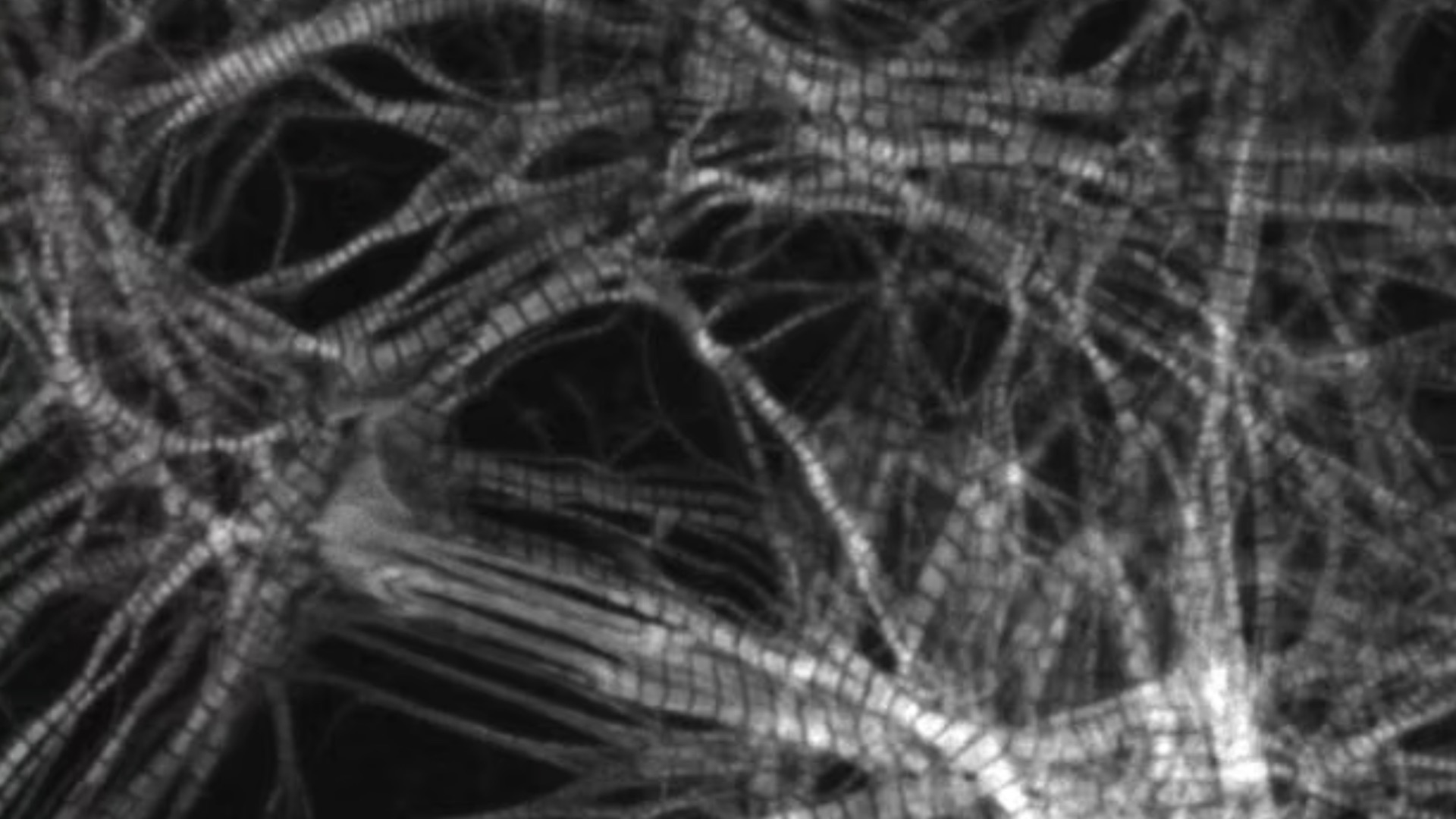
Tagging a structure that is not present in the cell’s nascent, undifferentiated state means tagging something you can’t see. The gene that is tagged in the new line in the collection is known as troponin I1, slow skeletal type (TNNI1); it only becomes active as the cells develop into cardiomyocytes. The troponin I, slow skeletal muscle protein is part of muscle cell structures known as sarcomeres, long fibers that help the cells do the work of contracting when muscles are active.

To achieve this silent gene editing, the cell science team stitches the fluorescent tag specific to the troponin gene to another tag that will light up in the undifferentiated stem cells, allowing researchers to identify the cells where the gene editing has worked. They then use a genetic trick to cut out the initial selection tag which is active in the undifferentiated stem cell, leaving only the cardiomyocyte-specific gene and its fluorescent tag.

The researchers have several more heart cell-specific tags in the works that will be available in the collection in the coming months.

The cell lines released in May and June bear tags marking the proteins:

  • Troponin I, slow skeletal muscle (TNNI1), the cardiomyocyte-specific protein.
  • Connexin-43 (GJA1), which is part of cells’ gap junctions, the channels between cells that allow them to exchange small molecules.
  • Nucleophosmin (NPM1), a protein that sits in the nucleolus, a structure inside the cell’s nucleus.
  • Beta-catenin (CTNNB1), a protein that is also involved in cell-cell adhesion and differentiation.
  • CAAX, the membrane-targeting domain of K-Ras, tagged with mTagRFP-T under the control of a CAG promoter inserted at the safe harbor locus (AAVS1). mTagRFP-T-CAAX localizes to the plasma membrane that surrounds the periphery of the cell.
Citations
No items found.

about the allen institute

The Allen Institute is an independent, 501(c)(3) nonprofit research organization founded by philanthropist and visionary, the late Paul G. Allen. The Allen Institute is dedicated to answering some of the biggest questions in bioscience and accelerating research worldwide. The Institute is a recognized leader in large-scale research with a commitment to an open science model. For more information, visit alleninstitute.org.
explore related stories

explore more stories
Allen Impact 2025
Technology and innovation are fueling discovery in science like never before we’re proud to be leading the way. 2025 was a year of tremendous impact...
video 
Simularium: Accelerating discovery by animating insight
Simularium is an innovative online tool designed by the Allen Institute’s Cell Science team that visualizes 4D simulations (animations) of complex...
news 
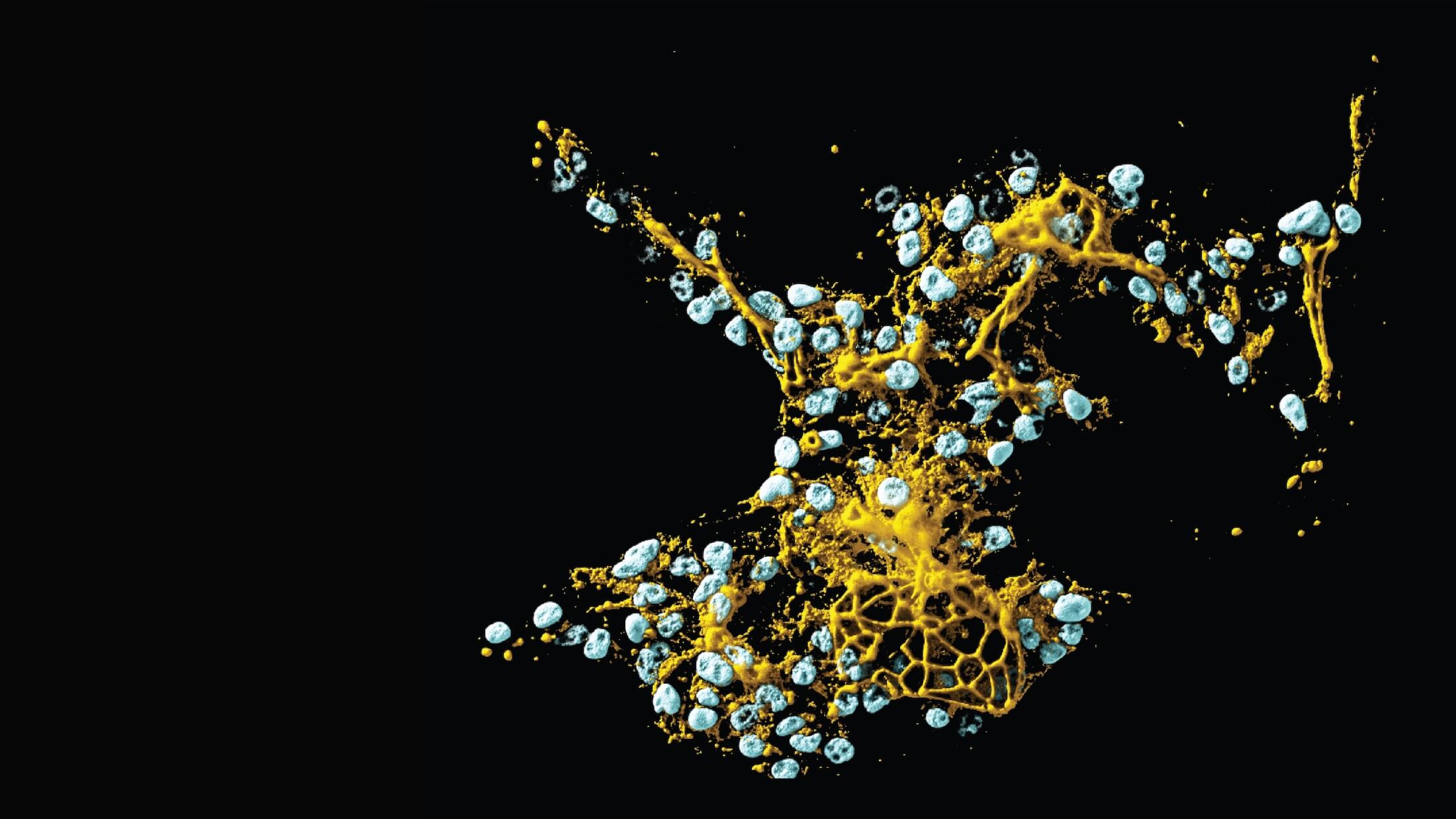
Allen Institute cells blast off into outer space
Researchers from Cedars-Sinai are using Allen Institute cell lines to grow organoids in space, which could help design better drugs for disease
video 
What Are the Parts of a Cell?
From mitochondria to endoplasmic reticulum, this educational video explores the major cell organelles and their functions.
news 
Allen Institute names Sarah Norris Hall as next Chief Financial Officer
Norris Hall’s experience and insight into financial operations will help enable and propel transformative science at the Allen Institute.
video 
CellScapes: Launching a new era of cellular biology
CellScapes introduces a groundbreaking approach that will combine cutting-edge imaging and powerful computer models to track how cells change, communicate, and organize.
we acceleratedevelopcatalyzeimpact

science done differently. shared with the world.

explore our accelerators

brain science

Mapping every cell, connection, and circuit in the brain—openly shared with the world.

cell science

Decoding how cells become tissues, then programming that knowledge into powerful new research tools.

neural dynamics

Revealing the brain's hidden algorithms that transform neural activity into real-world behavior.

immunology

Creating the deepest open reference for the healthy human immune system ever built.

synthetic biology

Engineering cells to record their own histories, transforming how we understand disease over time.

research

Big questions, open answers, and science built to be shared.

education

Inspiring the next generation of scientists through open science resources.

impact

Our science is empowering researchers and advancing health worldwide.
advancing science through open, collaborative research
Get the allen institute newsletter
Stay informed on the latest breakthroughs in neuroscience, bioscience, and AI-driven research.
allen institute
impactpeople & teamscareers & opportunitiesalumnihistory & founder
science resources
allencell.orgallenimmunology.orgallenneuraldynamics.orgbrain-bican.orgbrain-map.orgmicrons-explorer.org
research
brain sciencecell scienceneural dynamicsimmunologysynthetic biologypublications
education
science educationfield tripsprofessional developmenteducation resources
quick links
newseventsopen sciencepodcastscience resourceshuman brain donationvisit uscontact
follow us/

allen institute, 615 Westlake Ave North, Seattle, WA 98109 +12065487055

© 0000 allen institute. all rights reserved.
privacy policyterms of usecitation policyemployee portalpolicy & compliance