in this article
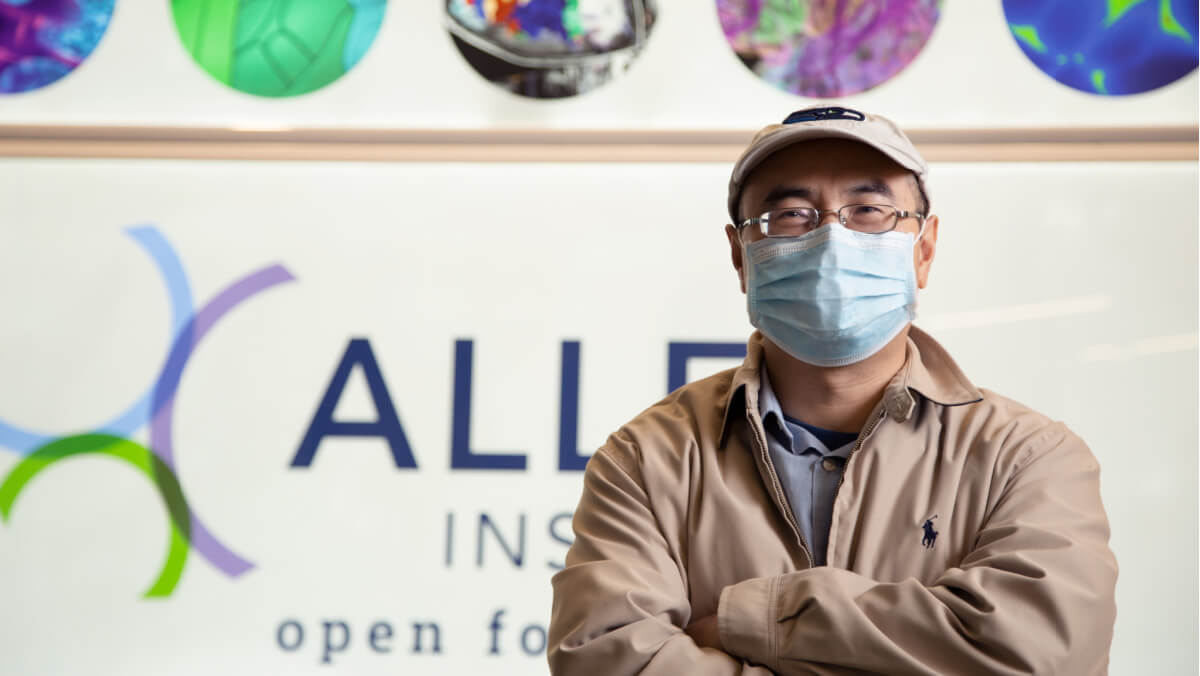
Xiaojun Li, Ph.D., got into science out of boredom. He didn’t have much else to do as a kid, he said, but science piqued his interest.
He liked math and he didn’t like to memorize facts, so he originally decided to pursue physics (chemistry was ruled out due to its abundance of facts). Shortly after he finished his Ph.D., the Human Genome Project was ramping up and making headlines, and he found himself drawn to biology.
More than two decades later, with a career path in bioinformatics that kicked off at Seattle’s Institute for Systems Biology and spanned several positions in the biotechnology industry, Li joined the Allen Institute for Immunology this past spring to lead the Bioinformatics team. We caught up with him to find out more about his career, what brought him to the Allen Institute, and why he’s excited about human immunology research.
The following conversation has been lightly edited for length and clarity.
You started your career as a physicist. How did you take your first steps into biology and bioinformatics?
I was really drawn in by the Human Genome Project, that was so exciting. I decided to take some molecular biology classes after I finished my Ph.D. My first job in biology was at the ISB (Institute for Systems Biology), and that was a very interesting place. It was a new concept; they had a vision for doing biology differently. We had people from totally different backgrounds: molecular biologists, analytical chemists, computer scientists, physicists like me. We all had to figure out how to work together and learn together; it was a really fun time.
What was next for you after that position?
After ISB, then I worked for several companies. Through the years I was involved in developing five diagnostic products for different diseases, and then later I started managing bioinformatics teams. I developed diagnostics for lung cancer, colorectal cancer, inflammatory bowel disease and liver fibrosis. My last job was to try to rescue failed drugs through a personalized medicine approach.
What drew you to the Allen Institute?
I was working on products for many different disease areas, but they all trace back to the immune system. Immunology plays a huge role in all the diseases I was working on. During my career, I thought, I wish I knew more about immunology so I could have a deeper understanding of what’s going on. That was my motivation. When I was asked to interview for this position, I started to dive deeper into what the Allen Institute for Immunology was doing, and I thought it was really challenging and interesting. One of the challenges is that we’re working with so many different types of cutting-edge data and needing to integrate them all.
You’ve worked in both non-profit and industry. What have been the main differences for you, and why did you want to come back to a non-profit?
In industry, much of the time you focus on what you do best, and after a while you get really narrowed down on one knowledge base and one skill set. It became a bit routine for me and I like new challenges. I missed the exploration of doing something new.
What do you find most interesting about immunology research?
Immunology is a fascinating field. There are so many different types of immune cells that are trying to protect us from all kinds of disease, they all play different roles and they all coordinate with each other. It’s like an orchestra. If everyone is doing their part well, it’s a beautiful symphony. But if something is off, say the conductor is not great, it sounds miserable. In a rough sense that’s what happens with autoimmune disease or cancer, the different parts aren’t playing well together.
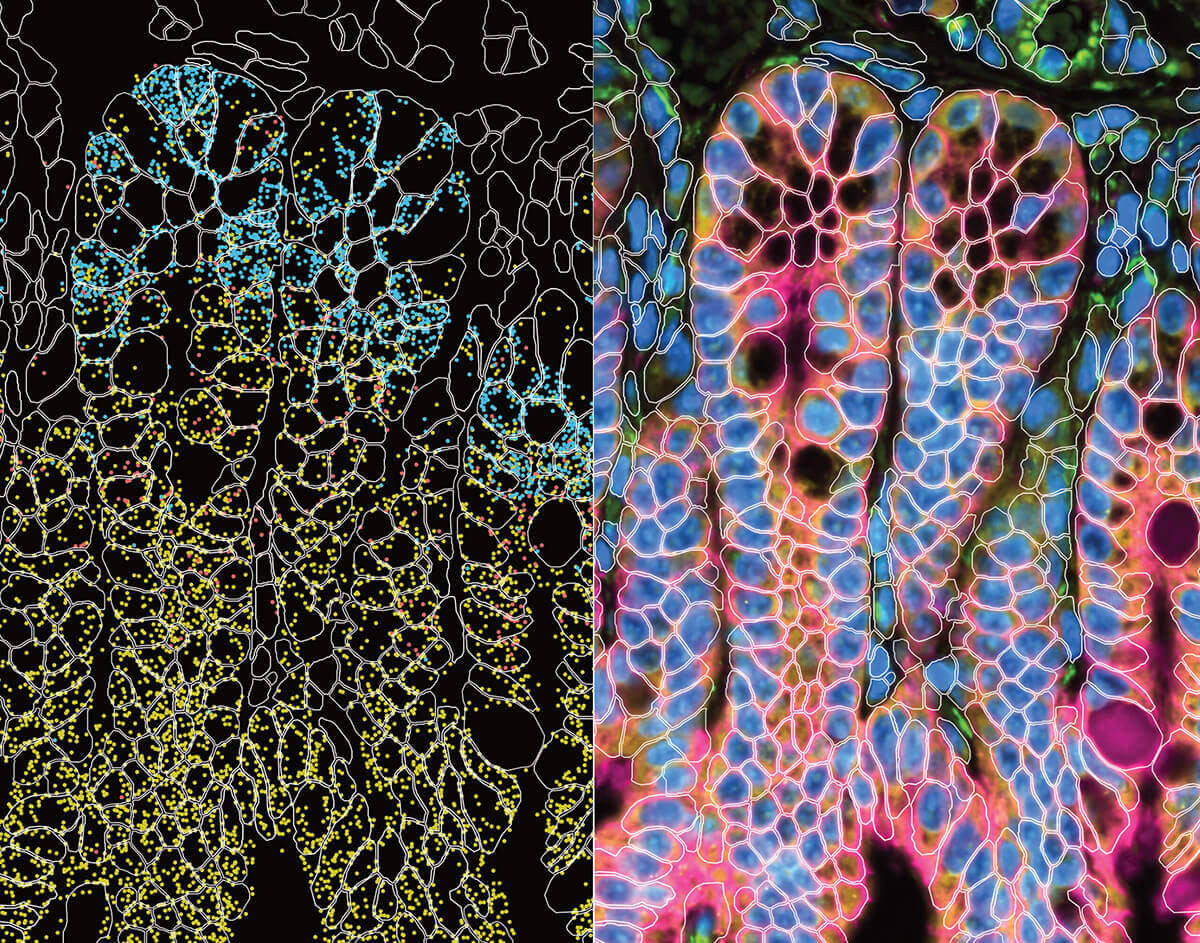
At the Allen Institute for Immunology, we also have all kinds of data, including flow cytometry and a lot of different single-cell data. Right now, all those datasets are by themselves, and you can learn a lot through the individual datasets already, but we think there will be much more power from integrating that data. One type of data tells a story from one angle, another type from another angle. If you can combine them, you have a more comprehensive understanding about what’s going on. Our goal is to identify new targets for therapies, and I think our chance of success is much higher if we know how to integrate the data.
The way you describe integrating different kinds of data, it’s very similar to how you talked about the different types of immune cells working together to create something bigger.
Yes, exactly. You get a more complete story this way.
You started this position in the middle of May. What was it like to change jobs in the middle of the pandemic?
I haven’t set my foot in the Allen Institute building yet, actually. I also haven’t met anyone in person. We meet on video all the time, but I haven’t met a real person. It’s an interesting time.
You and your colleagues recently pivoted to add COVID-19 to the diseases you’re studying. What’s that been like?COVID-19 to the diseases you’re studying. What’s that been like?
We’re analyzing some of that first COIVD-19 data right now and trying to learn as quickly as we can about the disease. We’re trying to contribute to the knowledge and hopefully down the road to the treatment of the disease. Unfortunately, this is impacting a lot of people; it’s a challenge that society needs to take on. We’re glad to try our best to contribute to this important area.
Citations
about the allen institute
The Allen Institute is an independent, 501(c)(3) nonprofit research organization founded by philanthropist and visionary, the late Paul G. Allen. The Allen Institute is dedicated to answering some of the biggest questions in bioscience and accelerating research worldwide. The Institute is a recognized leader in large-scale research with a commitment to an open science model. For more information, visit alleninstitute.org.