in this article
Six years ago, bioengineer James Collins, Ph.D., and a scientist in his lab, Keith Pardee, had an idea: If you take out everything that’s inside a normal cell, that microscopic bit of goo that holds thousands of complex molecular machines, and freeze-dry it, would it still work?
Unlike freeze-dried and reconstituted hiker’s meals, which are but a shadow of the real thing, the rehydrated cell machinery worked like a charm. Collins, a professor of bioengineering at the Massachusetts Institute of Technology and the Wyss Institute — who is also an Allen Distinguished Investigator — and his colleagues used their technology to make rapid, inexpensive tests that could detect Ebola and Zika during those viral outbreaks by spotting the dried out cellular parts onto storable pieces of paper.
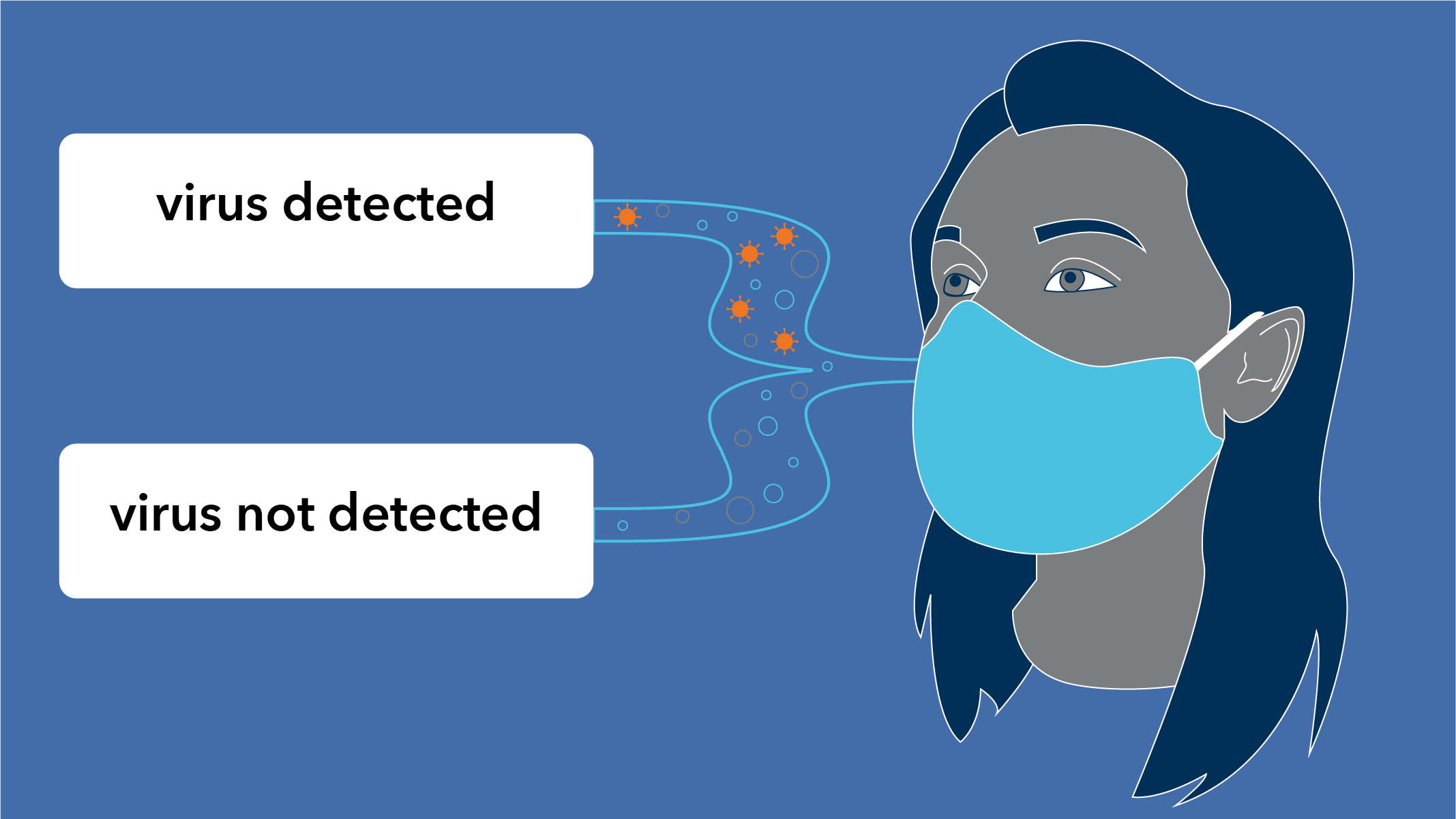
As COVID-19 infections swept the U.S., they had the idea to apply their technology to this global pandemic. This time, they would load the freeze-dried extracts not onto paper, but onto cloth, building the technology into a disposable, protective face mask that would signal if the wearer is infected with the novel virus.
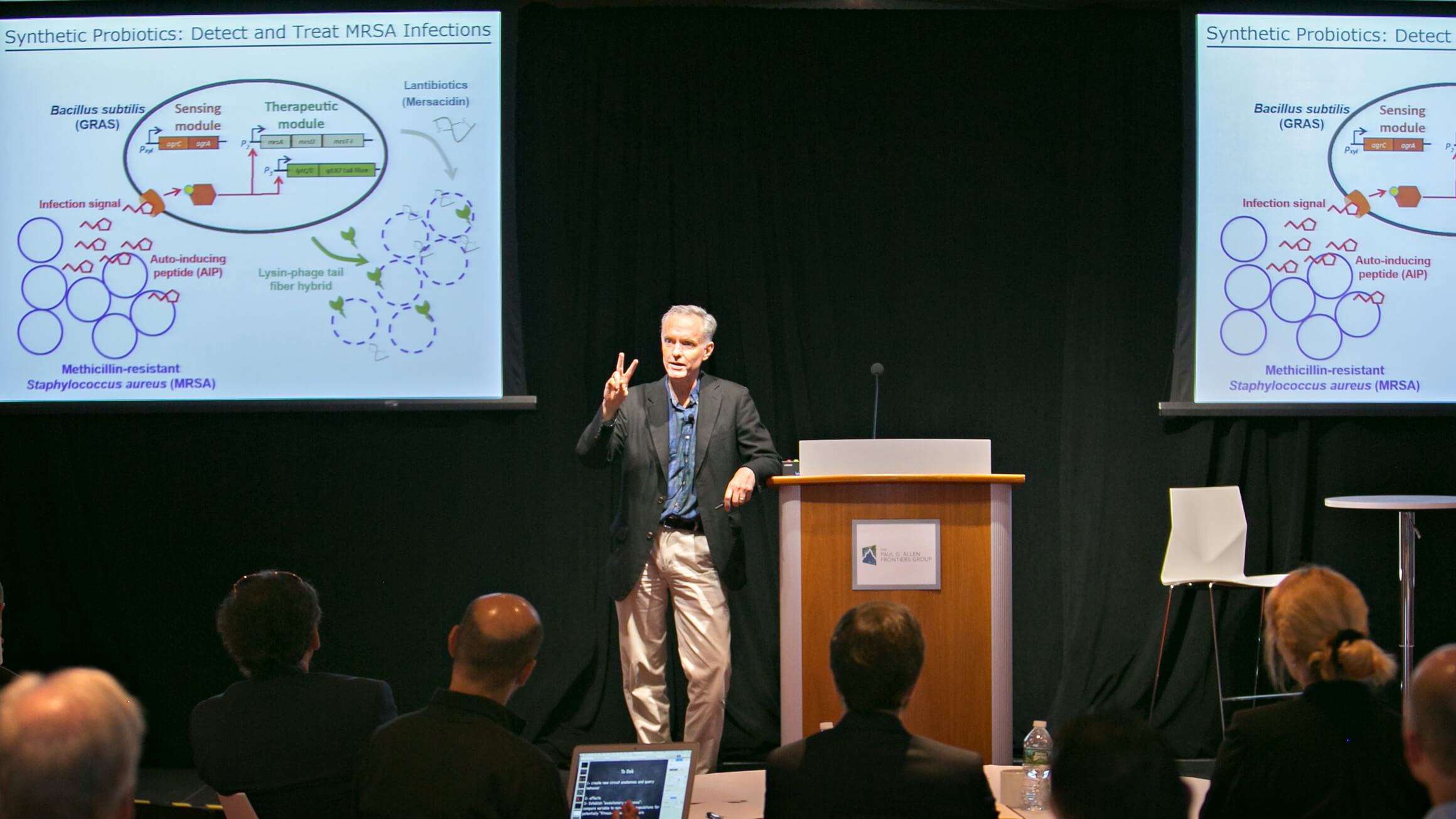
We recently sat down with Collins to find out more about the face mask idea and when it might come to fruition. The following conversation has been lightly edited for length and clarity.
Can you tell us more about how you came up with the idea for a diagnostic face mask?
About a year ago, we had taken our freeze-dried, cell-free technology and demonstrated that it wasn’t just limited to paper, it also worked on cloth. We used that to design wearable diagnostics that could be incorporated into a lab coat for a doctor, for instance, or protective gear for first responders or military personnel. When COVID-19 hit, we realized that this platform could also be integrated into face masks. The system would be designed so that you could have integrated into the face mask cell-free extracts along with sensors for COVID-19 that are self-activated.
How would that work?
When we speak, we give off a good amount of vapor. If you’re infected, you also give off viral particles, not only in coughing and sneezing, but also when speaking, in small droplets and in vapor. The notion is if you’re wearing a mask, that within 2 to 3 hours you could have a readout as to whether you’re infected. For example, by having the mask design give off a fluorescence output in the case of a positive test.
If someone is wearing this mask, what does the experience look like for them? How would people use it?
It would be a protective mask; it has this dual function. After some period of time, they could take it off to check, has it produced a fluorescence signal? The signal could be detected by a simple, hand-held device. If it hasn’t, you could take with some confidence that at present you’re not infected. If the mask does produce a fluorescence signal, the protocol would likely be contact your physician, as well as to immediately begin to self-isolate.
I like the idea of it being something you’d use anyway.
For sure, and I think we’ll see the real value of face masks, in general, as we come out of this pandemic. Of course, the number one need for them is for healthcare workers, so they can protect themselves to be able to continue their important work. But I predict that as more of us attempt to get back to work, one of the ways will be having people wear masks. To protect themselves, as well as to prevent them from infecting somebody else.
It’s a beautiful idea. How do you bring it to reality? How far off do you think this might be?
In the academic world, we’re well suited to do this kind of blue-sky innovative work. We came up with the idea just a few weeks ago, then pulled together a team of talented scientists at the Wyss Institute and MIT who are all working aggressively on different features. Can we come up with the right sensors to detect the virus? Should this be integrated directly into the design of the face mask, or should we have it as a unit that you could add to any face mask? How do you make sure it’s safe for the patient, and how do you safely dispose of it? We’re making progress on all those questions and hoping to have proof-of-concept demonstrations in the next few weeks. Then comes the work of translating it and finding the right partners to manufacture it. We’re targeting to get the face mask diagnostics out in the summer so they can be part of the way we can ease this crisis.
How could something like this change the trajectory of the outbreak?
What we need for any outbreak are data. Data on who’s been exposed, who’s infected, so you can take measures to isolate those individuals and reduce the spread. This virus is insidious, in part, because you can be infectious several days before you’re symptomatic. And new data are indicating that you can be infectious and never be symptomatic. That becomes a big challenge. If you’re infectious, you’re giving off viral particles. If you had an inexpensive mask, you could envision having widespread distribution, and using the masks to diagnose those individuals who are at the early stages of infection who are yet to be symptomatic.
Has the pandemic had an impact on your students in terms of showing them the importance of what they’re studying?
I think the pandemic will have a transformative impact on the current generation of students. Very few students come to MIT wanting to study infectious diseases, even though the problems are of great importance and critical need. The pandemic is highlighting the need for young researchers to be engaged in cutting-edge infectious disease research. We also seeing a growing appreciation for the important work performed by scientists and healthcare workers. It is nice to see healthcare workers and scientists being celebrated by the media and general public. I think this recognition and appreciation will help further motivate and inspire young people.
A face mask that detects coronavirus
Citations
about the allen institute
The Allen Institute is an independent, 501(c)(3) nonprofit research organization founded by philanthropist and visionary, the late Paul G. Allen. The Allen Institute is dedicated to answering some of the biggest questions in bioscience and accelerating research worldwide. The Institute is a recognized leader in large-scale research with a commitment to an open science model. For more information, visit alleninstitute.org.