impact
about
our story
explore our impact
careers and opportunities
join us
open science
sharing science to speed discovery
open science week
celebrating open science
team science
people & teams
discovery is a team effort
allenites
the people who make our work possible
advisors
their input shapes our science
board of directors
they help us fulfill our mission
shanahan foundation fellowship
at the interface of data and neuroscience
next generation leaders
fostering emerging leaders in bioscience
research
overview
our approach
science at the scale of greatest impact
publications
explore our publications
open science
sharing science to speed discovery
science accelerators
brain science
building a blueprint of the brain
cell science
understanding how cells become organs
neural dynamics
revealing the brain’s hidden algorithms
immunology
creating the ultimate immune system reference
synthetic biology
seattle hub for synthetic biology
education
overview
science education
science is for everyone
open science
sharing science speeds discovery
engagement
education resources
real science. real skills.
field trips
experience science where it happens
educator development
empowering educators
news
overview
all news
explore the latest news
podcast
the human stories behind discovery
sign up for our newsletter
stay connected to our science
events
overview
all events
public engagement, workshops, seminars and more
conferences
connect with us
science resources
science resources
allencell.org
allenimmunology.org
allenneuraldynamics.org
brain-bican.org
brain-map.org
microns-explorer.org
impact
back to menu
team science
our story
explore our impact
careers and opportunities
join us
open science
sharing science to speed discovery
open science week
celebrating open science
team science
people & teams
discovery is a team effort
allenites
the people who make our work possible
advisors
their input shapes our science
board of directors
they help us fulfill our mission
shanahan foundation fellowship
at the interface of data and neuroscience
next generation leaders
fostering emerging leaders in bioscience
research
back to menu
overview
our approach
science at the scale of greatest impact
publications
explore our publications
open science
sharing science to speed discovery
science accelerators
brain science
building a blueprint of the brain
cell science
understanding how cells become organs
neural dynamics
revealing the brain’s hidden algorithms
immunology
creating the ultimate immune system reference
synthetic biology
seattle hub for synthetic biology
education
back to menu
overview
science education
science is for everyone
open science
sharing science speeds discovery
engagement
education resources
real science. real skills.
field trips
experience science where it happens
educator development
empowering educators
news
back to menu
overview
all news
explore the latest news
podcast
the human stories behind discovery
newsletter
stay connected to our science
events
back to menu
overview
all events
public engagement, workshops, seminars and more
conferences
connect with us
science resources
back to menu
science resources
allencell.org
allenimmunology.org
allenneuraldynamics.org
brain-bican.org
brain-map.org
microns-explorer.org
search
news

Neuroscience data joins the cloud

Neuroscientists and open data experts have teamed up to make a new, and large set of mouse brain data publicly available and open for analysis on the...

August 9, 2018
 min read
share/
Allen Institute is moving its vast neuroscience datasets to the cloud, making massive brain data more accessible to researchers worldwide and accelerating discovery at global scale.
Thank you! Your submission has been received!
Oops! Something went wrong while submitting the form.

in this article

table of contents will display on published page only
set h2 to populate the table of contents here

Through a collaboration launched earlier this summer, Amazon Web Services is hosting the Allen Brain Observatory — Visual Coding dataset through the AWS Public Dataset Program.

That large dataset is comprised of the raw data from the Allen Brain Observatory, a set of experiments that captures neurons’ activity in real time in the mouse visual system. Putting this neuroscience data in the cloud, where powerful remote servers store the information and allow anyone around the world to access the public database, has already opened more doors than was possible before the team turned to cloud computing, said David Feng, Ph.D., Associate Director of Technology at the Allen Institute for Brain Science.

The Allen Institute is built on a model of sharing its data with the research community. Sometimes, greater insights result when multiple groups sift through the same raw numbers and images with different perspectives, asking different research questions. But when Feng and his colleagues got together to discuss how to share the observatory data, they hit a stumbling block. There was just too much data to share the way the researchers had always made information available in the past, through the Institute’s dedicated online data portal, the Allen Brain Atlas.

The observatory experiments entail capturing precise information about brain cell activity as mice look at different photos or movie clips, with the ultimate goal of understanding how brains process visual information. The research team on the Allen Brain Observatory has already recorded information from more than 65,000 different neurons. Some of that information is easily shareable, but some — namely, the raw video files of brain cells in action — presents a larger challenge.

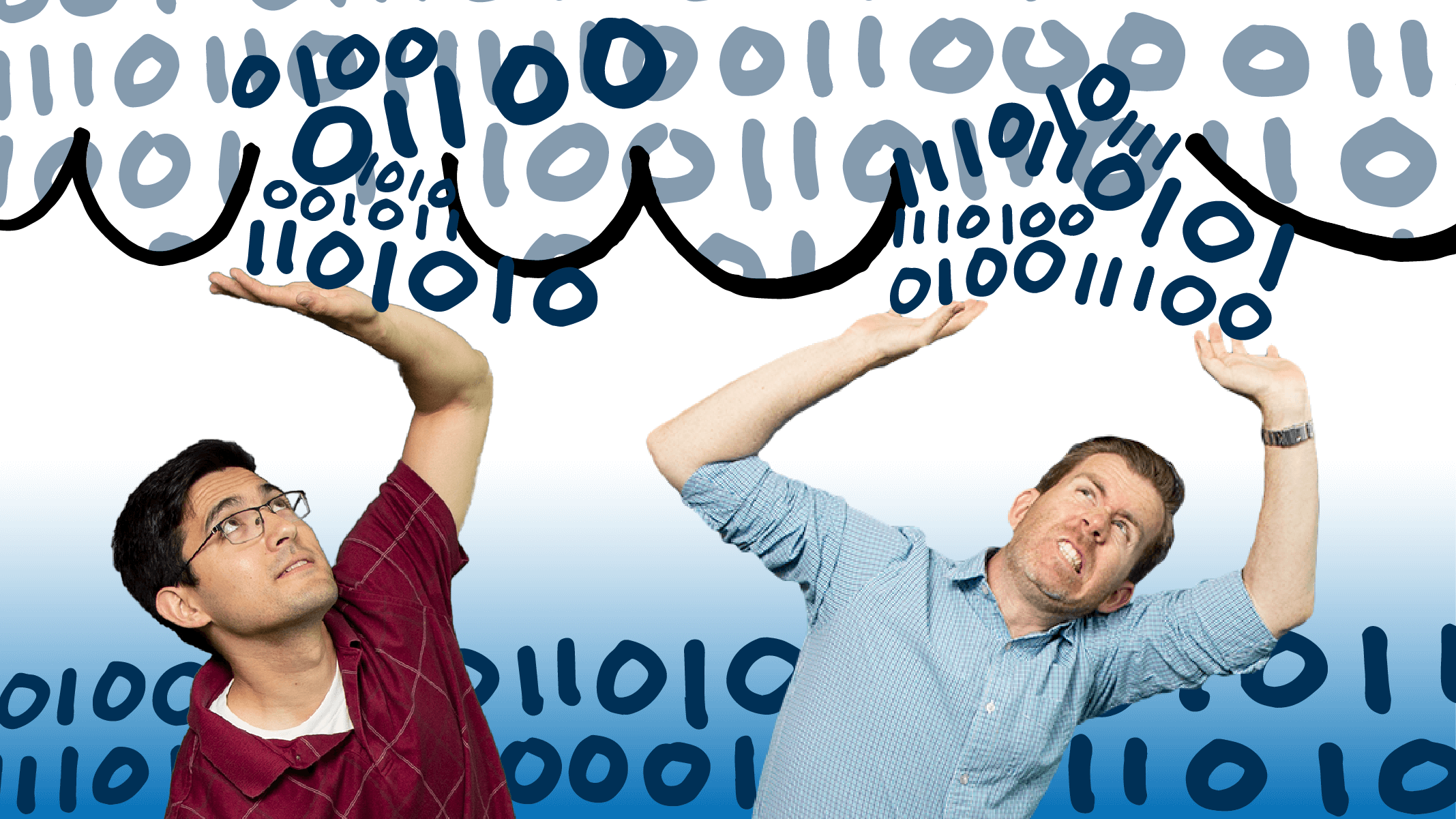
To date, that dataset is 40 terabytes large, which is about four times the size of the Hubble Space Telescope’s yearly output, and more experiments are coming down the pike.

An iceberg of information

When the scientists initially began sharing the observatory data in 2016, they put the curated results of the experiments — the analyses of those videos — online for anyone to download. It’s still a large amount of information, but it’s manageable, said Justin Kiggins, Ph.D., a scientist at the Allen Institute for Brain Science who is part of the observatory team.

“But that data is really just the tip of the iceberg,” Kiggins said.

Without any better way to share the massive piles of raw data, the researchers decided to advertise an old-fashioned work-around: External researchers could mail a hard drive to the Allen Institute, where the researchers would load it up with as much data as would fit (at most around a dozen of the hundreds of experiments, Kiggins said) and put it back in the mail.

In the two years since they posted that note on their website, they’ve gotten a grand total of two requests to distribute the data via hard drive, Feng said.

“It was really only open in the technical sense of the word,” he said. “And that wasn’t because we didn’t want to make it as easy as possible for people to access the videos, but because we just didn’t have a way to do it.”

Enter the cloud.

Feng, Kiggins and their colleagues realized that they could use shared cloud computing services like AWS to make the data available to the research community outside the Allen Institute. In 2017, they set up a pilot project through the Allen Institute and University of Washington’s Summer Workshop on the Dynamic Brain, a two-week workshop on San Juan Island that introduces students to a variety of neuroscience and data science topics through hands-on computational projects.

The previous year, they’d brought a stack of hard drives to the workshop and had to spend a few days at the start of the workshop configuring each student’s laptop to work with the data. In 2017, through their pilot collaboration with AWS, the workshop organizers not only gave the students access to much more data, but they also set up a universal programming environment in the cloud so the students could boot up and immediately get to work.

Instead of several days of setup, “now it’s about five clicks, five minutes of waiting, and you have a powerful computer running remotely and you can start analyzing the data” with the latest machine learning tools, Feng said.

Opening new doors

With a successful pilot behind them, the researchers started exploring a larger, more long-term solution. The collaboration was a perfect fit for their public dataset program, said Jed Sundwall, Open Data Lead at AWS.

“There are research questions that people would like to ask but the cost of asking the questions is too high; there’s all this pain to get to the data,” Sundwall said. “We have a very obvious solution to that.” After the dynamic brain workshop, which Sundwall also helped coordinate on the cloud computing side, “it became very clear that the Allen Institute team understood the value of the cloud computing and knew how much further it could go,” he said.

The AWS Public Dataset Program covers the cost of hosting public datasets on the cloud for two years. The Allen Brain Observatory dataset joined that program in June. Since then, they’ve already had a handful of outside groups access the data — an encouraging increase from the two hard drive requests in the previous two years, Feng said.

The researchers are excited not only about a better storage solution for the information, but about new ways to interact with that data. There’s a lot being done in the broader community to develop new tools to work with scientific data through cloud computing services like AWS, Kiggins said.

“This could completely open up doors to exploring and communicating about this work,” he said. “When you have 40 terabytes of data right behind your browser, the future opportunities are awesome.”

Get the latest news from the Allen Institute.

Citations
No items found.

about the allen institute

The Allen Institute is an independent, 501(c)(3) nonprofit research organization founded by philanthropist and visionary, the late Paul G. Allen. The Allen Institute is dedicated to answering some of the biggest questions in bioscience and accelerating research worldwide. The Institute is a recognized leader in large-scale research with a commitment to an open science model. For more information, visit alleninstitute.org.
related news

all news
news
“Computational crystal ball” helps predict cell behavior
New technology could lead to better treatments for cancer by allowing scientists to perform virtual experiments
news
Mind trip: How psilocybin changes the brain
New research may help improve psychedelic therapy for neuropsychiatric disorders
news
Computer model predicts aspects of cognitive performance
The Allen Human Brain Atlas helped researchers design a model that looked at “intrinsic neural timescales”
news
Scientists unveil the world's most comprehensive AI-powered tool for neuroscience: Brain Knowledge Platform
Massive, first-of-its-kind data resource aims to accelerate medical breakthroughs in brain diseases like Alzheimer’s and Parkinson's
news
Scientists shoot lasers into brain cells to uncover how illusions work
Supported by the Allen Institute's OpenScope program, the findings could help us better understand neuropsychiatric disorders like schizophrenia and...
news
Collaboration Expands Research Tool to Help Crack the Code on Parkinson’s and Other Neurodegenerative Diseases
A new view of Parkinson's Disease
we acceleratedevelopcatalyzeimpact

science done differently. shared with the world.

explore our accelerators

brain science

Mapping every cell, connection, and circuit in the brain—openly shared with the world.

cell science

Decoding how cells become tissues, then programming that knowledge into powerful new research tools.

neural dynamics

Revealing the brain's hidden algorithms that transform neural activity into real-world behavior.

immunology

Creating the deepest open reference for the healthy human immune system ever built.

synthetic biology

Engineering cells to record their own histories, transforming how we understand disease over time.

research

Big questions, open answers, and science built to be shared.

education

Inspiring the next generation of scientists through open science resources.

impact

Our science is empowering researchers and advancing health worldwide.
advancing science through open, collaborative research
Get the allen institute newsletter
Stay informed on the latest breakthroughs in neuroscience, bioscience, and AI-driven research.
allen institute
impactpeople & teamscareers & opportunitiesalumnihistory & founder
science resources
allencell.orgallenimmunology.orgallenneuraldynamics.orgbrain-bican.orgbrain-map.orgmicrons-explorer.org
research
brain sciencecell scienceneural dynamicsimmunologysynthetic biologypublications
education
science educationfield tripsprofessional developmenteducation resources
quick links
newseventsopen sciencepodcastscience resourceshuman brain donationvisit uscontact
follow us/

allen institute, 615 Westlake Ave North, Seattle, WA 98109 +12065487055

© 0000 allen institute. all rights reserved.
privacy policyterms of usecitation policyemployee portalpolicy & compliance