impact
impact
open science
subheadline
careers and opportunities
subheadline
people & teams
people & teams
subheadline
allenites
subheadline
allen institute advisors
subheadline
board of directors
subheadline
shanahan foundation fellowship
subheadline
next generation leaders
subheadline
research
overview
our approach
subheadline
publications
subheadline
open science
subheadline
accelerator
brain science
subheadline
cell science
subheadline
neural dynamics
subheadline
immunology
subheadline
synthetic biology
subheadline
education
education
science education
subheadline
education resources
subheadline
field trips
subheadline
open science
subheadline
open science quest
subheadline
news
news
stories
subheadline
podcast
subheadline
sign up for our newsletter
subheadline
events
events
all events
subheadline
conferences
subheadline
event code of conduct
subheadline
events
open science quest
subheadline
summer workshop on the dynamic brain
subheadline
open science week
subheadline
brain fest
subheadline
science resources
science resources
allencell.org
subheadline
allenimmunology.org
subheadline
allenneuraldynamics.org
subheadline
brain-bican.org
subheadline
brain-map.org
subheadline
microns-explorer.org
subheadline
impact
back to menu
impact
open science
subheading
careers and opportunities
subheading
people & teams
people & teams
subheading
allen institute advisors
subheading
board of directors
subheading
shanahan foundation fellowship
subheading
next generation leaders
subheading
research
back to menu
impact
Label
subheading
Label
subheading
people & teams
education
back to menu
research
Label
subheading
Label
subheading
Heading
news
back to menu
research
Label
subheading
Label
subheading
Heading
events
back to menu
research
Label
subheading
Label
subheading
Heading
science resources
back to menu
science resources
allencell.org
subheading
allenimmunology.org
subheading
allenneuraldynamics.org
subheading
brain-bican.org
subheading
brain-map.org
subheading
microns-explorer.org
subheading
search
impact
people

Boaz P. Levi

Associate Investigator

teams /
Allenite

Boaz Levi is an Associate Investigator in the Human Cell Types group at the Allen Institute where he is working to develop prospective and retrospective techniques to characterize adult human neocortical cell types. Dr. Levi joined the Allen Institute for Brain Science in 2011 as a Scientist in the in vitro human cell types group where he implemented single cell transcriptomic techniques to characterize neural cell types produced from human embryonic stem cells (hESCs), and to compare them to primary human neocortical cells. Dr. Levi joined the Allen Institute for Brain Science after a postdoctoral fellowship in the laboratory of Sean J. Morrison at the University of Michigan, where he studied the genetic and physiological mechanisms that control hematopoietic and neural stem cell self-renewal in mice. Dr. Levi earned a Ph.D. in biochemistry from Stanford University in the laboratory of Mark A. Krasnow, where he worked to identify and characterize genetic pathways required for the development of the Drosophila tracheal system. Prior to his graduate studies, Dr. Levi earned a B.S. in biochemistry from the University of Oregon, and studied vesicular transport in Saccharomyces cerevisiae in the lab of Tom Stevens.

research focus

The Applied Genomics team works on projects in the Cell Type program, where the goal is to define the diversity of cell types in the mouse and human brains. Multimodal techniques must be used to correlate the transcriptomically-defined cell types with structural, physiological and functional neuronal properties. Dr. Levi’s team is involved in establishing both prospective and retrospective methods for identifying cell types at the Allen Institute. These techniques include multiplexed FISH and Patch-seq for retrospective marking of cell types, and building live-cell viral reporters to prospectively mark and manipulate transcriptomically-defined cell types in mouse and human tissues. Dr. Levi’s team was also involved in the characterization of neural cell types differentiated from human embryonic stem cells. hESC-derived forebrain excitatory, inhibitory, and mid/hindbrain cell types, and their lineages were characterized by single cell RNA-Seq. Those cell types were compared to single cells form primary human fetal cells to determine genes that were conserved or divergent in the hESC derived cell types. This work helped establish more precisely what cell types are generated in some of the most commonly used neural differentiation protocols, and what cell types these culture systems succeed and fail to model.
back to team
featured contributions
featured publications
featured media
featured stories
featured events

featured publications

publication / 2025
AAV delivery of full-length SYNGAP1 rescues epileptic and behavioral phenotypes in a mouse model of SYNGAP1-related disorders
Molecular Therapy: The Journal of the American Society of Gene Therapy
publication / 2025
Enhancer AAVs for targeting spinal motor neurons and descending motor pathways in rodents and macaque
Cell Reports
publication / 2025
Evaluating methods for the prediction of cell-type-specific enhancers in the mammalian cortex
Cell Genomics

featured events

No articles for the category

featured stories

news 
Scientists fix genetic defect in mice tied to brain disorders that include autism and epilepsy
Gene therapy successfully reduced epileptic activity, hyperactivity and risk-taking behaviors tied to SYNGAP1-related disorders
news 
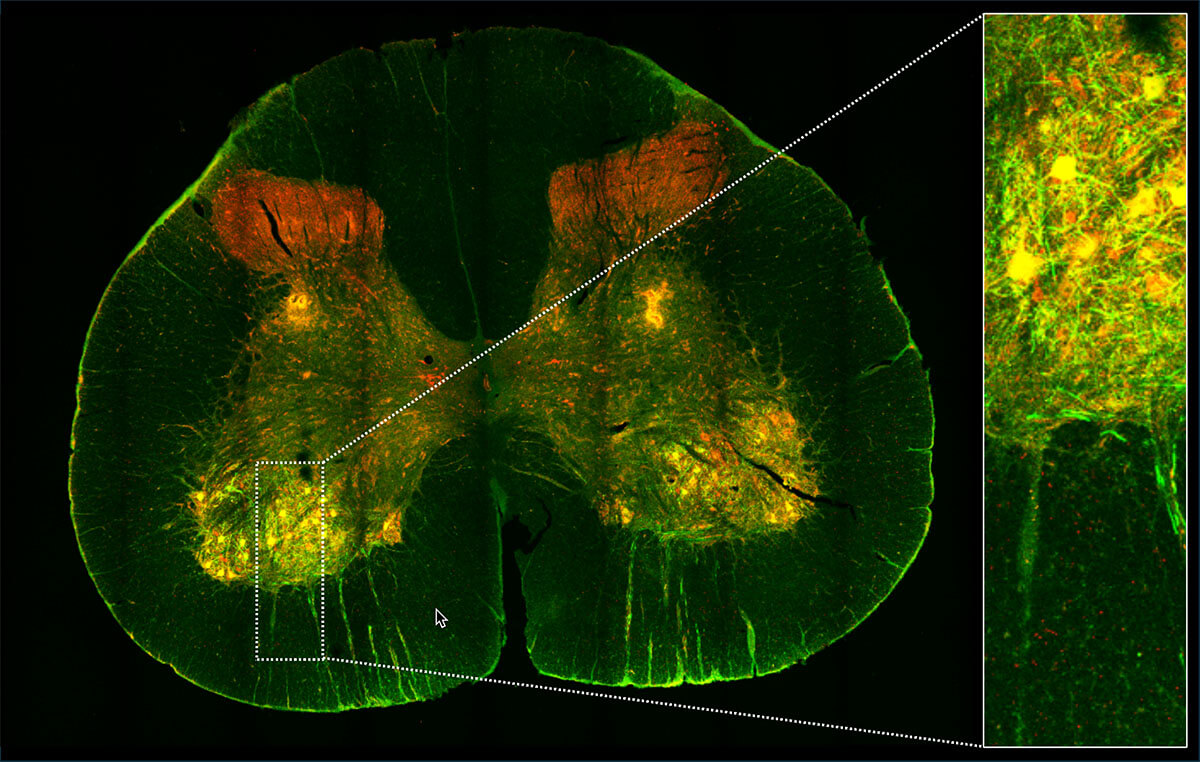
Scientists can now target the cells at the center of ALS
For the first time ever, scientists have developed a precise genetic toolkit that can target the exact nerve cells destroyed by ALS-a discovery that...
news 
Allen Institute scientists awarded $1 million to research gene therapy for Dravet syndrome
Washington Research Foundation grant will accelerate gene therapy development for the rare, devastating disorder.

featured media

No articles for the category
we acceleratedevelopcatalyzeimpact

science done differently. shared with the world.

explore our accelerators

brain science

Mapping every cell, connection, and circuit in the brain—openly shared with the world.

cell science

Decoding how cells become tissues, then programming that knowledge into powerful new research tools.

neural dynamics

Revealing the brain's hidden algorithms that transform neural activity into real-world behavior.

immunology

Creating the deepest open reference for the healthy human immune system ever built.

synthetic biology

Engineering cells to record their own histories, transforming how we understand disease over time.

research

Big questions, open answers, and science built to be shared.

education

Inspiring the next generation of scientists through open science resources.

impact

Our science is empowering researchers and advancing health worldwide.
advancing science through open, collaborative research
Get the allen institute newsletter
Stay informed on the latest breakthroughs in neuroscience, bioscience, and AI-driven research.
allen institute
impactpeople & teamscareers & opportunitiesalumnihistory & founder
science resources
allencell.orgallenimmunology.orgallenneuraldynamics.orgbrain-bican.orgbrain-map.orgmicrons-explorer.org
research
brain sciencecell scienceneural dynamicsimmunologysynthetic biologypublications
education
science educationfield tripsprofessional developmenteducation resources
quick links
newseventsopen sciencepodcastscience resourceshuman brain donationvisit uscontact
follow us/

allen institute, 615 Westlake Ave North, Seattle, WA 98109 +12065487055

© 0000 allen institute. all rights reserved.
privacy policyterms of usecitation policyemployee portalpolicy & compliance