








summary
How does the brain work? Scientists are closer to answering this enigma with the largest wiring diagram and functional map of a mammalian brain to date. In April 2025, the Allen Institute, as part of a global team, unveiled what was once thought impossible: a high-resolution functional map of a cubic millimeter of brain, revealing both form and function. In this Lab Notes episode, the Allen Institute’s Clay Reid, M.D., Ph.D., Nuno da Costa, Ph.D., and Forrest Colman, Ph.D., and scientific collaborator, Andreas Tolias, Ph.D., explain how they created a “digital twin” of a portion of the mouse brain the size of a grain of sand and how they used artificial intelligence to digitally reconstruct a labyrinth of brain cells and wiring from 95 million high resolution images – stitching together the elaborate architecture that underpins the “language of the brain.“
podcast transcript
show full transcript
Andreas Tolias, Ph.D.
Our hope is that we will gain insights of what is the similarities and differences between brain and machines, and that could open a up a brand-new era.
Amity Addrisi
We often hear about artificial intelligence learning like a brain, but can an artificial neural network ever truly mimic the brain’s astounding complexity? The answer lies somewhere between physical and virtual reality.
Liz Dueweke
In a first of its kind experiment, AI played a major role in unlocking the secrets of the brain, helping scientists complete what’s been called the most challenging neuroscience experiment ever attempted: the MICrONS Project. According to Clay Reid, a senior investigator at the Allen Institute, it’s the culmination of two decades of work — dating back to his days at Harvard.
Clay Reid, M.D., Ph.D.
Uh, the project started almost exactly 20 years ago, and it was very soon after the first paper in what became the field of [electron microscopy] EM, connectomics and the student, and I just decided, this is the time. Let’s start reconstructing neurons and neural circuits with electron microscopy.
Amity Addrisi
In April 2025, a global team of scientists unveiled the MICrONS Project to the world. Over seven years, they mapped the connections and electrical firing properties of a single cubic millimeter of the mouse visual cortex.
Liz Dueweke
This “functional wiring diagram” reveals the location of half a billion synapses, contains [NdC2] the path of around 4 kilometers of axons, and begins to reveal the “language of the brain”—how cells talk to one another in a dizzying labyrinth of neurons and connections.
Amity Addrisi
It’s been compared to the Apollo moon shot and the Human Genome Project. In a 1979 issue of Scientific American, famed biologist Francis Crick – the man who discovered the shape of DNA – said something like this was impossible.
Clay Ried, M.D., Ph.D.
I mean, the whole story of that quote just makes me happy. You know, here’s the, here’s the Scientific American from 1979. I got a, copy of this and was just astounded to read. Uh, it is no use asking for the impossible, such as say the exact wiring diagram for a cubic millimeter of brain tissue and the way all its neurons are firing because that’s exactly an experiment that we just finished up and, you know, before publishing.
Liz Dueweke
I’m Liz Dueweke
Amity Addrisi
I’m Amity Addrisi – and this – is Lab Notes.
Andreas Tolias, Ph.D.
It was like a demonstration that big projects in neuroscience can succeed to deliverables and we in academia can work together, even if we’re in different institutions, to achieve something bigger than the sum of our parts.
Amity Addrisi
That’s Andreas Tolias – a Stanford professor who started his work on the MICrONS Project while at Baylor College of Medicine.
Andreas Tolias, Ph.D.
So basically, the big picture here, there was, for about 100 years now, there’s been two major parallel tracks, trying three, really, let’s say, try to understand the brain. One is anatomically, you know, what is the anatomy of the brain? And then there was also a behavioral psychological approach, where people were measuring the behavior of the brain. And neuroscience, you can think of it as like structural, molecular characterization, functionally, because it’s dynamical system. How is activity generated, and then the behavioral What is it related to things? And what is unique about this process, this project is trying, for the first time at the large scale, bring all these three things together.
Liz Dueweke
When it comes to data collection, what the MICrONS Project accomplished is nothing short of extraordinary! A ‘dream team’ of scientists from the Allen Institute, Baylor College of Medicine, and Princeton – digitally reconstructed around 200,000 cells, pinpointing more than 523 million synaptic connections. Every one of those cells, neurons and synapses add up to an astounding 1.6 petabytes of data…. It’s like taking a real brain in space and time and creating its virtual twin in the digital world.
Amity Addrisi
So, how did machine learning help tackle this impossible challenge? First came the physical part. · Scientists at Baylor used special microscopes to record the brain activity in mice while they were watching video clips from YouTube. Then researchers at the Allen Institute used an electron microscope to take 95 million hi-res images of that same portion of the brain.
Andreas Tolias, Ph.D.
Then this data had to be stitched back together, which is not a trivial problem, because, you know, when you slice it, things may shrink a little bit. They get, you know, they change. So now you have to stitch all these slices together.
Liz Dueweke
This is where the real magic of machine learning materializes: scientists at Princeton University used A-I to digitally reconstruct the cells and their connection into a 3D wiring model. Combined with the recordings of brain activity from Baylor, the result was the largest wiring diagram and functional map of the brain to date.
Andreas Tolias, Ph.D.
We haven’t proof read the entire thing, think right now maybe we have like, 1000 neurons where their axons have been proven out of it, out of the 10s of 1000s. So all that stuff, the entire basically machine learning and AI, was used not just to build a digital twin, but every, almost every step of the processing pipeline to go from the EM data, which you can think of it as, pixels with different intensities across 1000s of images that are part of 3d value. You know, to do that, it was all machine learning to get, to make those images and make those pictures, and then on the on the physiology side, you know, there’s the equivalent, like deep neural networks and everything to get. So basically, it’s like this project also, I think, as you said, brought in the sort of full force of modern machine learning and AI to bear to be able to synthesize a picture.
Amity Addrisi
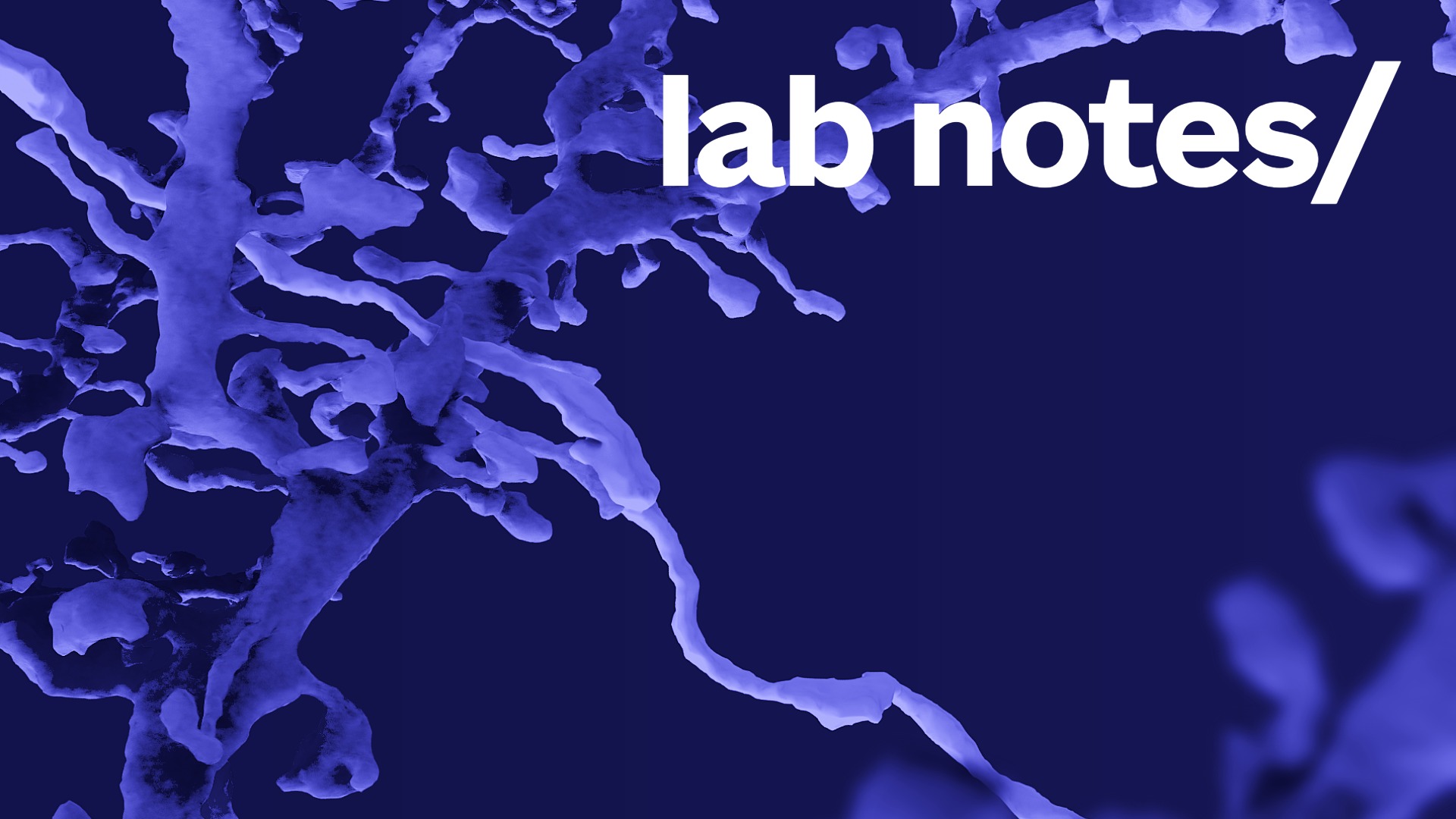
And the picture it created is has been compared to that of a galaxy – the image of the recostructed brain section is set against a dark back-drop … it’s a rectangular structure consisting of glowing threads that intertwine into tangles that represent the brains delicate architecture. The goal says Forrest Colman from the Allen Institute beyond the beauty of its form – this project also identified how the brain works – the language its cells use to communicate with each other.
Nuno da Costa, an associate investigator at the Allen Institute explains why it’s so important to fuse form with function.
Nuno da Costa, Ph.D.
Let’s imagine that you record all of the conversations in a party and you know what each person is doing but you do not know with whom they are talking to. And then separately you get that information with whom each one is talking so if you just have to separate, you might not be able to kind of make sense of it because you don’t know who’s talking to replying to. We just have a map of the conversation and the other one you don’t know what people are saying, but by putting these two together, you know you get both to know what each person is saying to whom is talking to and that’s and that’s really, special about this.
Liz Dueweke
Another special aspect of MICrONS comes straight out of Hollywood science fiction.
Can you talk a little bit about this mouse watching the Matrix? Like, how that whole thing came to be?”
Andreas Tolias, Ph.D.
What we did is, like we chose movies, or we made some movies, and one of them was, let’s say the metrics Mad Max that had a lot of energy, like a lot of action movies, right? So that’s ho w they were chosen. We showed mostly every stimulus once, and then few of them we repeated because we wanted to sample as much as possible the statistics of natural images. For example, we wanted to show some scenes that had fast movement, slow movement, optic flow. You know, different scenes, you know, different objects, stuff like that. Things crashing, things not crashing. You know, you can think of it like that.
Liz Dueweke
So, essentially it wasn’t about plugging the mouse into a simulated reality – the goal was to observe how neurons in the visual cortex responded to dynamic, real-world scenes, that would stimulate survival mode in the mouse …
Amity Addrisi
And that, is where the idea of a ‘digital twin’ comes in. Microns isn’t just about mapping the brain; it’s about creating a functional, predictive model of how the brain works – a replica capable of responding like a real brain.
Andreas Tolias, Ph.D.
So basically, by the time we finished and got (sounds weird but it’s not a cut) data, we could utilize deep neural networks to build these predictive models, or digital twins of the mouse. And I think that capture people’s imagination too, because a lot of people are interested in brain simulations. Can we simulate the brain?
Amity Addrisi
Now, instead of using live mice, thanks to the MICrONS digital twin, countless experiments can be run through virtual experimentation. Scientists can test their hypotheses and generate answers faster and at a lower cost.
Liz Dueweke
Microns might also be the next step in understanding and improving artificial intelligence.
Andreas Tolias, Ph.D.
The brain, when you think about how I talk to you and then you talk back to me, there is activity processing this information… If we find a way to bring together the neural activity with the behavioral revolution in AI, this could be a new type of fuel, a nuclear fuel for AI.
Liz Dueweke
The project was partly funded by the federal government through the BRAIN Initiative and the Intelligence Advanced Research Projects Activity, or (IARPA). The goal is to close the gap between man and machine: to build better AI models that can recognize patterns and make inferences like our brains can.
Andreas Tolias, Ph.D.
We can copy some of the way the brain does computation 19:17 /// 13th SOT 19:26 and then we can compare it to a biological, digital twin of the brain to an artificial one… and by comparing the two.
Amity Addrisi
Projects like MICrONS could help us better understand the underlying logic of incredibly powerful AI models. This understanding would, in turn, significantly enhance the safety of these systems as the world increasingly relies on them
Andreas Tolias, Ph.D.
So right now, AI is not as well grounded in a scientific theory of intelligence. It’s more like a brute force engineering that we just have a lot of money, a lot of resources, and we’re just putting them in because we’re in a race to beat. And what is a bit some people are scared is that we’re building things that are incredibly intelligent, but we don’t really understand how they are thinking, and there is evidence that they do things like jailbreaking, they will lie to us. One of the things that people are concerned about in AI is, and I’m sure you hear about it all the time, it’s not so much about consciousness I mean, some people care about that too, but it’s more about safety, right? We humans are at the verge. We’ve already kind of built something that is super intelligent and may surpass us, at least, is its cognitive capabilities, and maybe in robotics too. But we do not understand how it works.
Amity Addrisi
Andreas believes the brain has a “code” we can understand. And if we crack it, A-I models trained on it could become more interpretable, and therefore, more trustworthy.
Liz Dueweke
Neuroscience projects like MICrONS could also help AI address the efficiency issue – learning faster and requiring less data. But most importantly, it could also lead to new treatments and therapies for brain disease.
Andreas Tolias
I think already we’re going to see that it’s going to be a collaboration between AI and humans to understand the brain. So that’s number one. Then we have to understand it to cure diseases, right? Because, you know, neuropsychiatric diseases, neurological diseases, as we a population, is aging. We see people suffering, you know, of course, you know, from a lot of like aging diseases of the brain. But also, of course, depression, autism, other diseases, right? But third, also, we believe that by comparing brains and machines, we can bring science to intelligence, and it’s not just brute force engineering. So that’s why I think it’s a very exciting era, because it’s a very unique thing to be doing neuroscience, because there’s three things you can tackle, basic science, medicine and AI collab, you know, understanding intelligence in general. So it’s very unique.
Liz Dueweke
The Microns project reveals what’s possible when brilliant minds work together. Just like the Human Genome Project provided a blueprint for genetics, Microns offers a tool that may help researchers better understand neurological conditions like Alzheimer’s, Parkinson’s, or even autism.
Amity Addrisi
Programs like the National Institutes of Health’s Brain Connects are already looking to expand this work to map the entire mouse brain and long-distance connections in the human brain, pushing the boundaries of what was once considered impossible.
I’m Amity Addrisi…
Liz Dueweke
And I’m Liz Dueweke….
Amity Addrisi
Thank you to Andreas Tolias for sharing his insights on the Microns project and the future of AI.
Liz Dueweke
This episode of Lab Notes was produced by Amity Addrisi, Peter Kim, Liz Dueweke and Rob Piercy.
Amity Addrisi
For more episodes and science research news – visit our website: alleninstitute.org.
Liz Dueweke
Thanks for listening.
behind every science headline, there is a human story
The 21st century is the century of biology. Discoveries made in the lab today will shape the cures of tomorrow. Hear about the advancements in neuroscience, cell biology, immunology the frontiers of science with Lab Notes: A podcast from the Allen Institute. Streaming everywhere.

.jpeg)