in this article
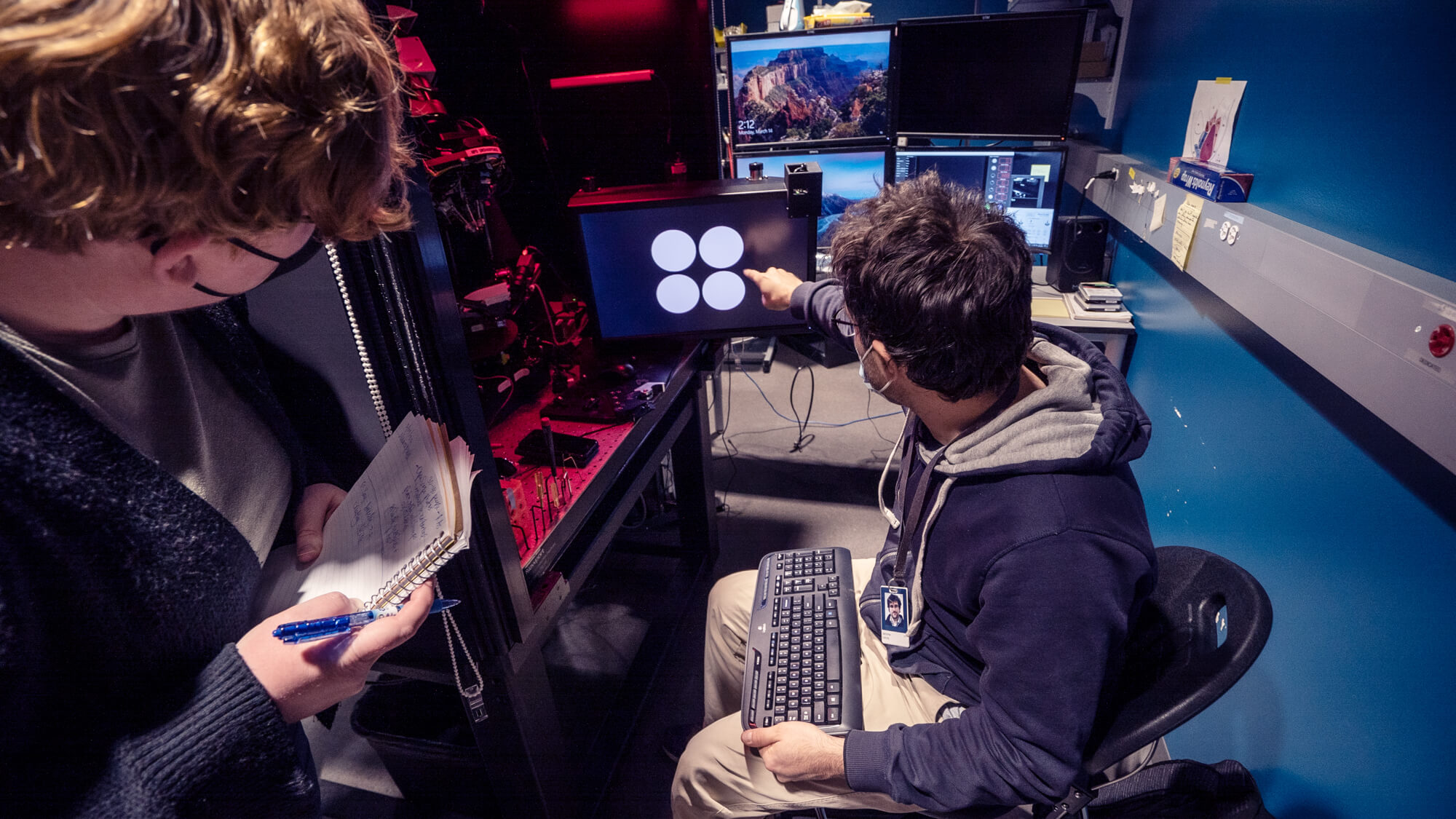
Séverine Durand, Ph.D., and Jérôme Lecoq, Ph.D., are really excited about some white circles on their computer monitor.
“This was not working five minutes ago!” Lecoq says as we come into the lab to observe their work.
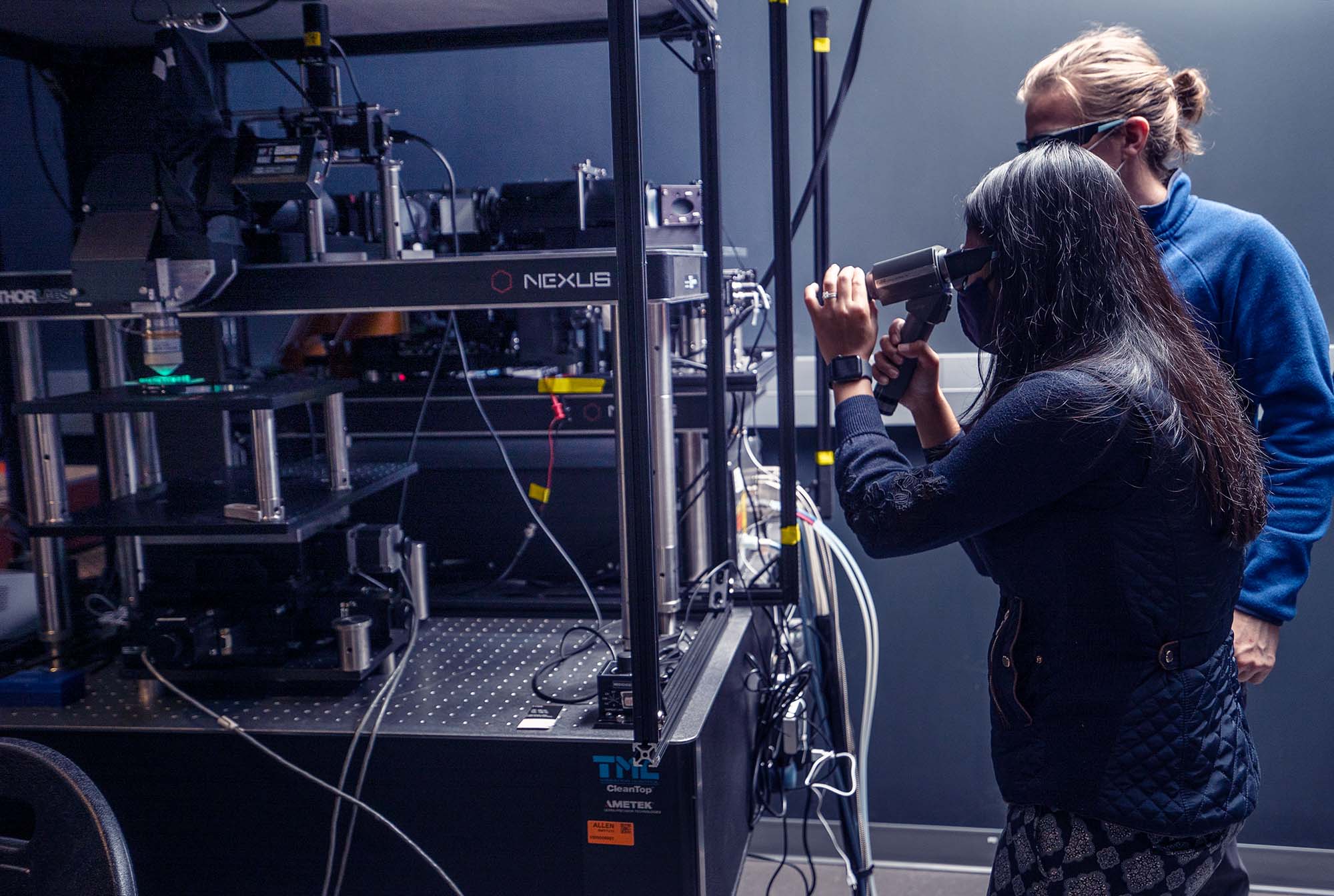
Durand and Lecoq are part of the OpenScope team at the Allen Institute, a group that gives researchers around the world access to the Institute’s “observatory of the mind” to study the activity of neurons in real-time in the mouse brain. The program was modeled after shared astronomy observatories that have been the seat of major findings about the physical universe.
Right now, the team is preparing for some new projects that are soon to be underway. The projects take advantage of the Allen Brain Observatory, a standardized experimental platform that captures neural activity in a living animal as it responds to things it sees or performs certain tasks. Before experiments are run, other scientists spend several days training the lab mice on their tasks.
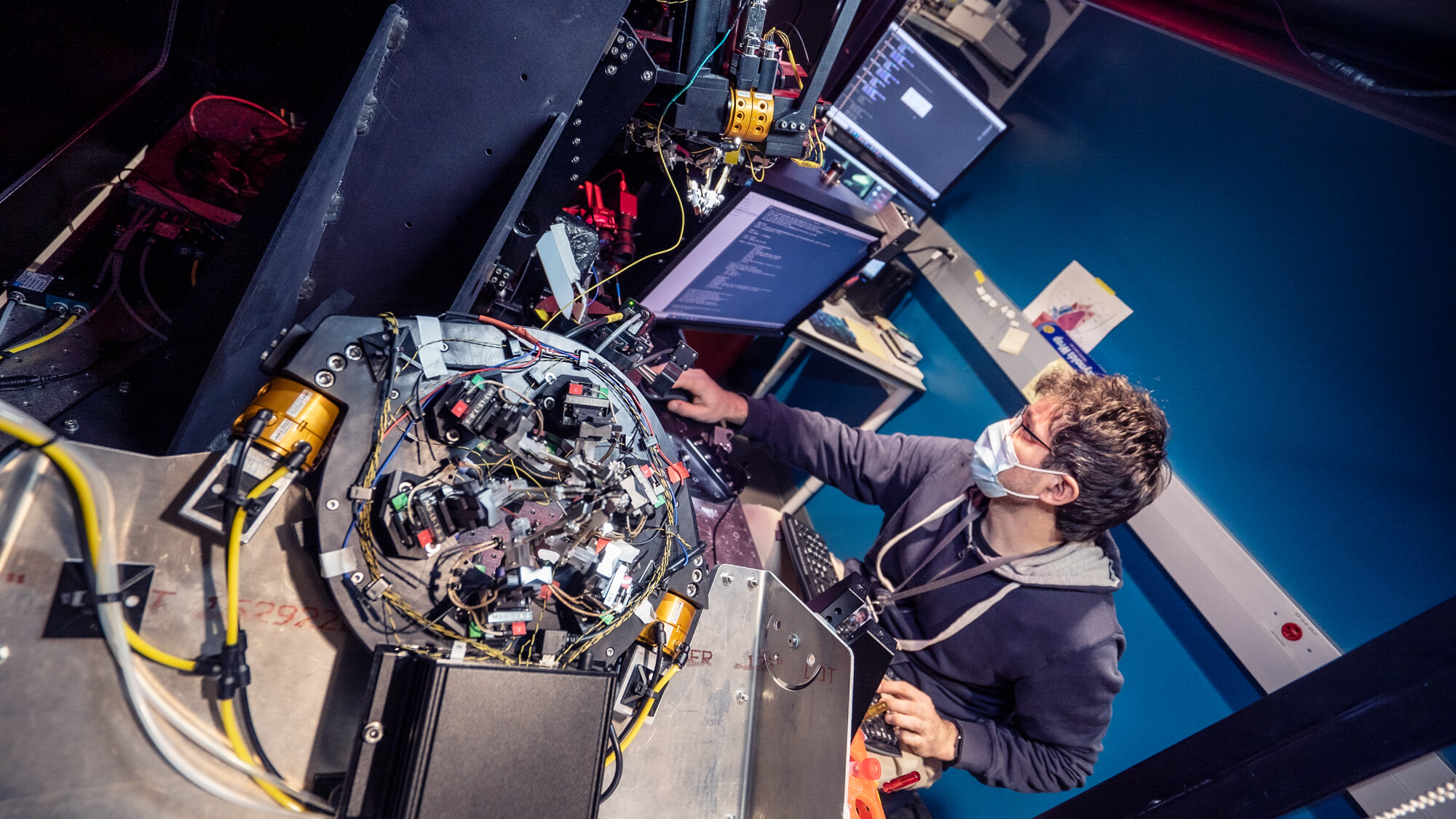
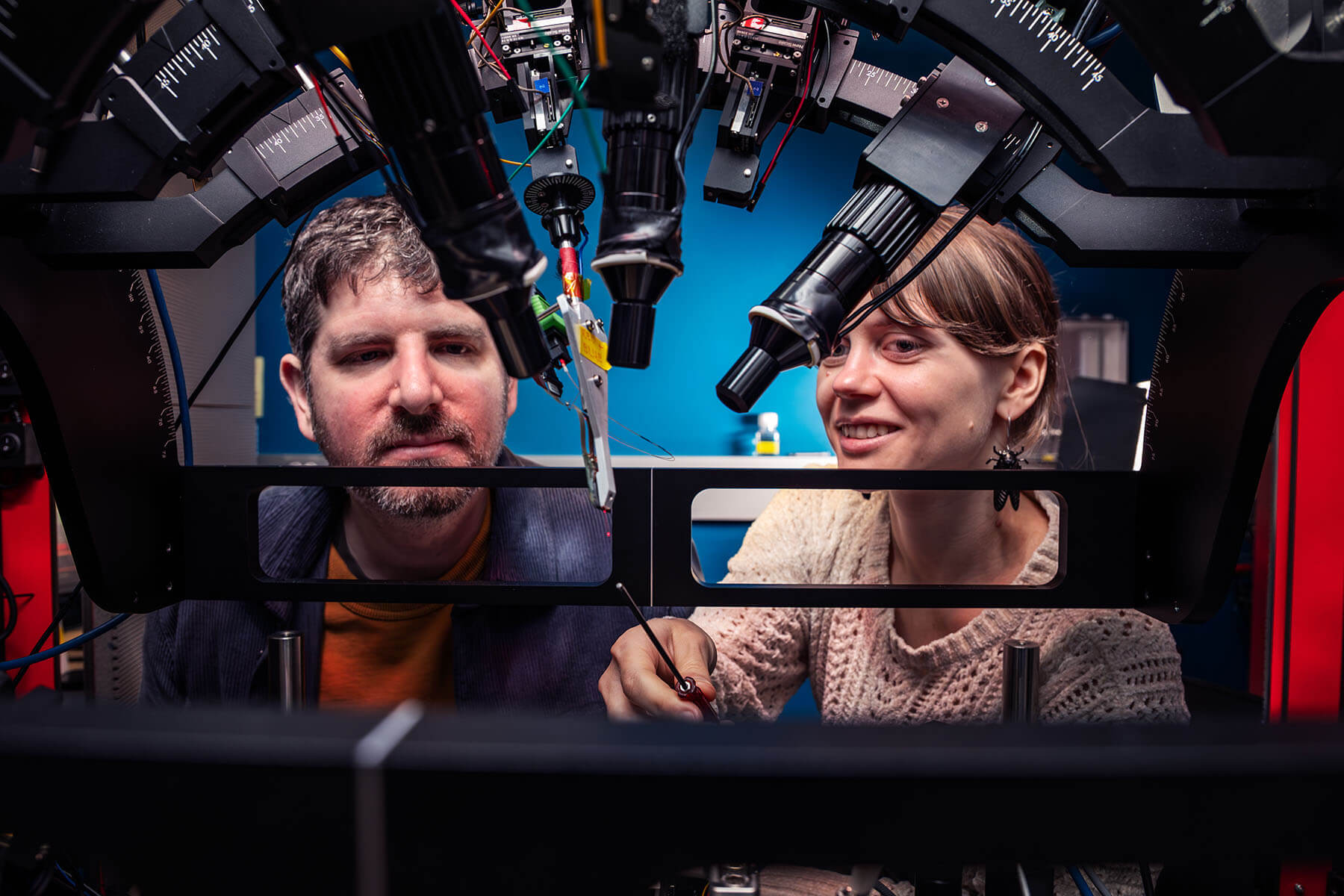
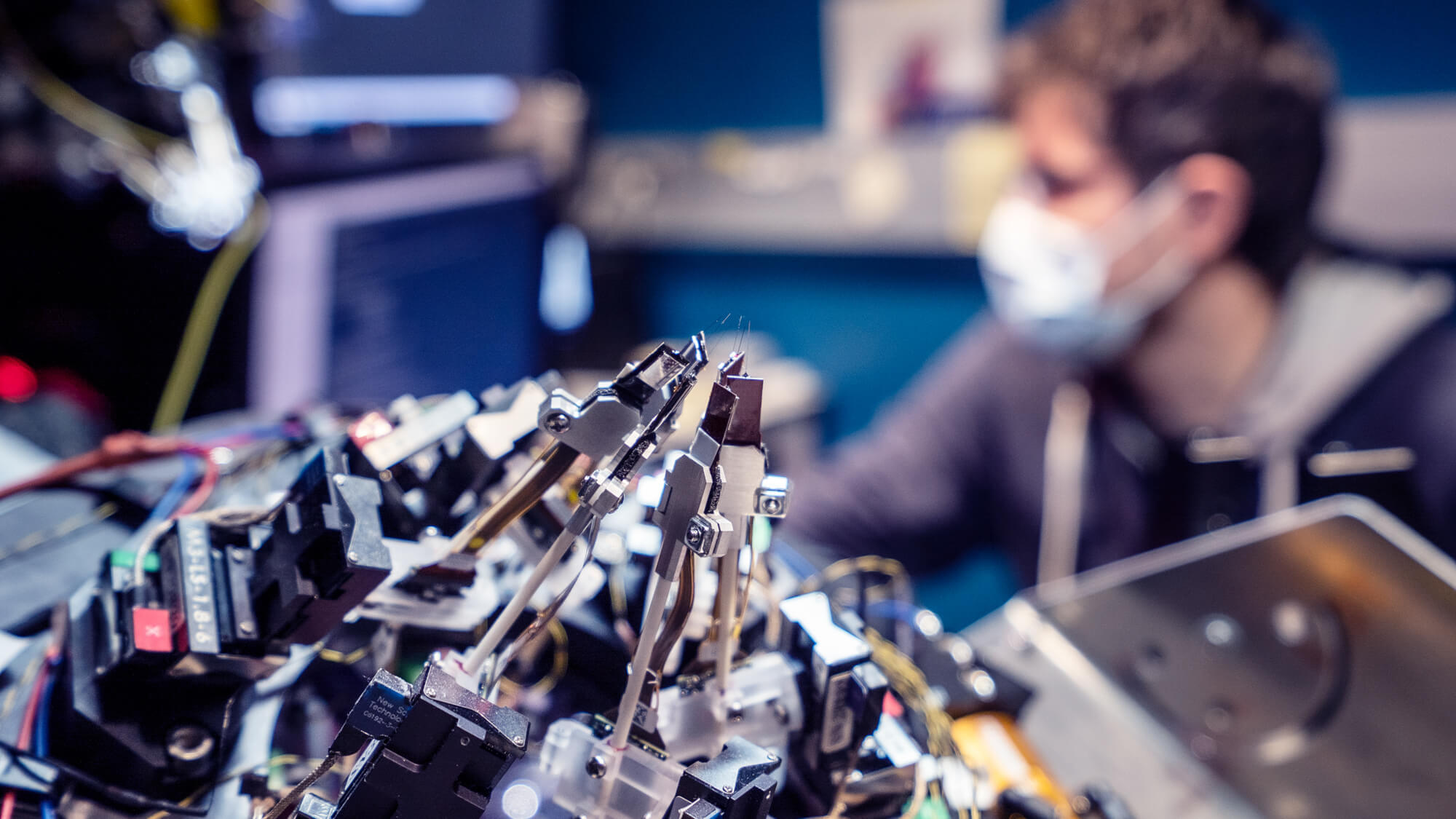
When we visit, Lecoq and Durand are running test experiments on a special system rigged up to hold six Neuropixels probes, high-resolution silicon probes as thin as a human hair that each read out activity from hundreds of neurons at once. The rig sits behind a large computer monitor, where scientists can show the animals different images or movies (Durand refers to these as “stims,” short for stimuli) and record changes in their neurons.
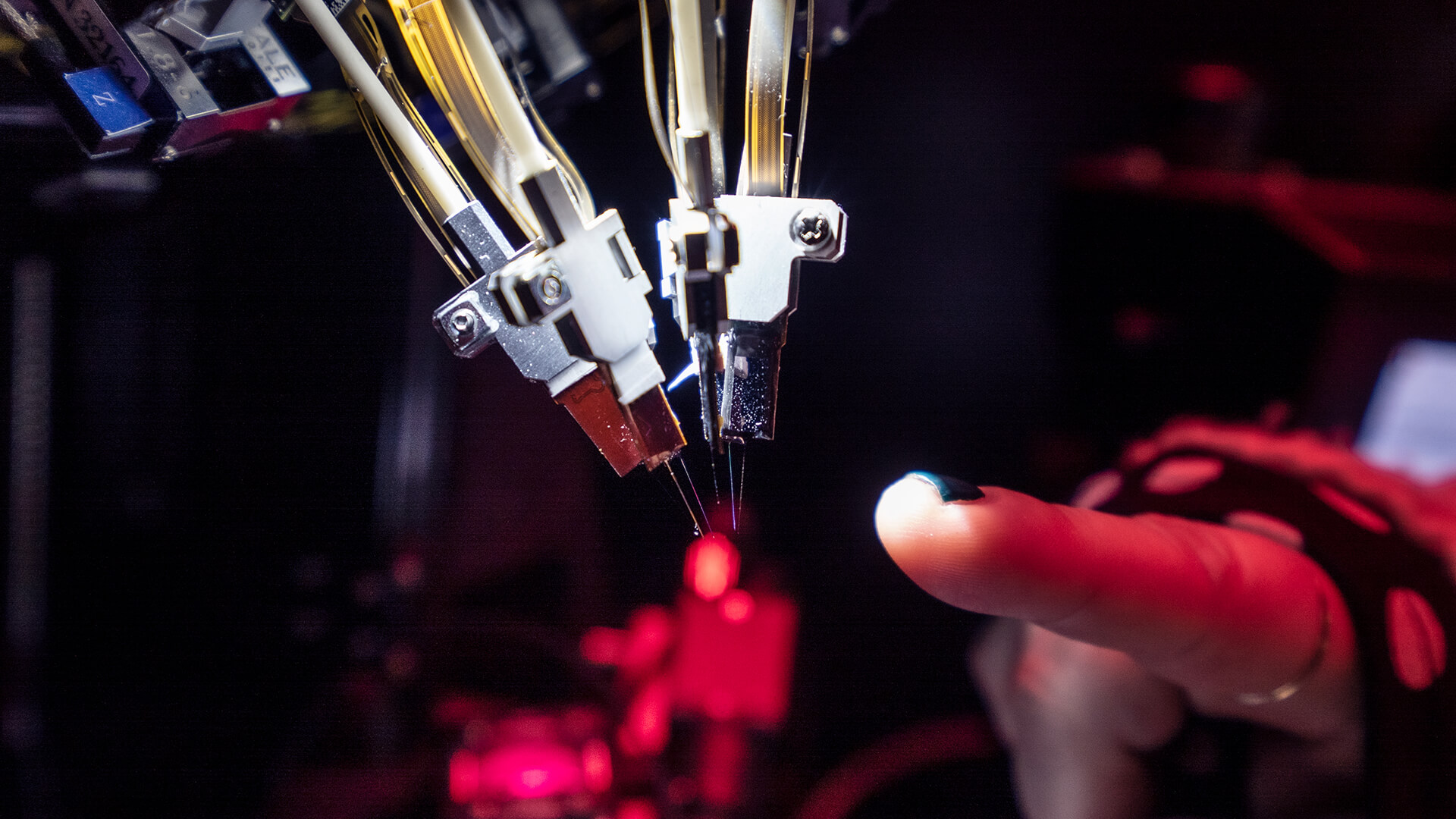
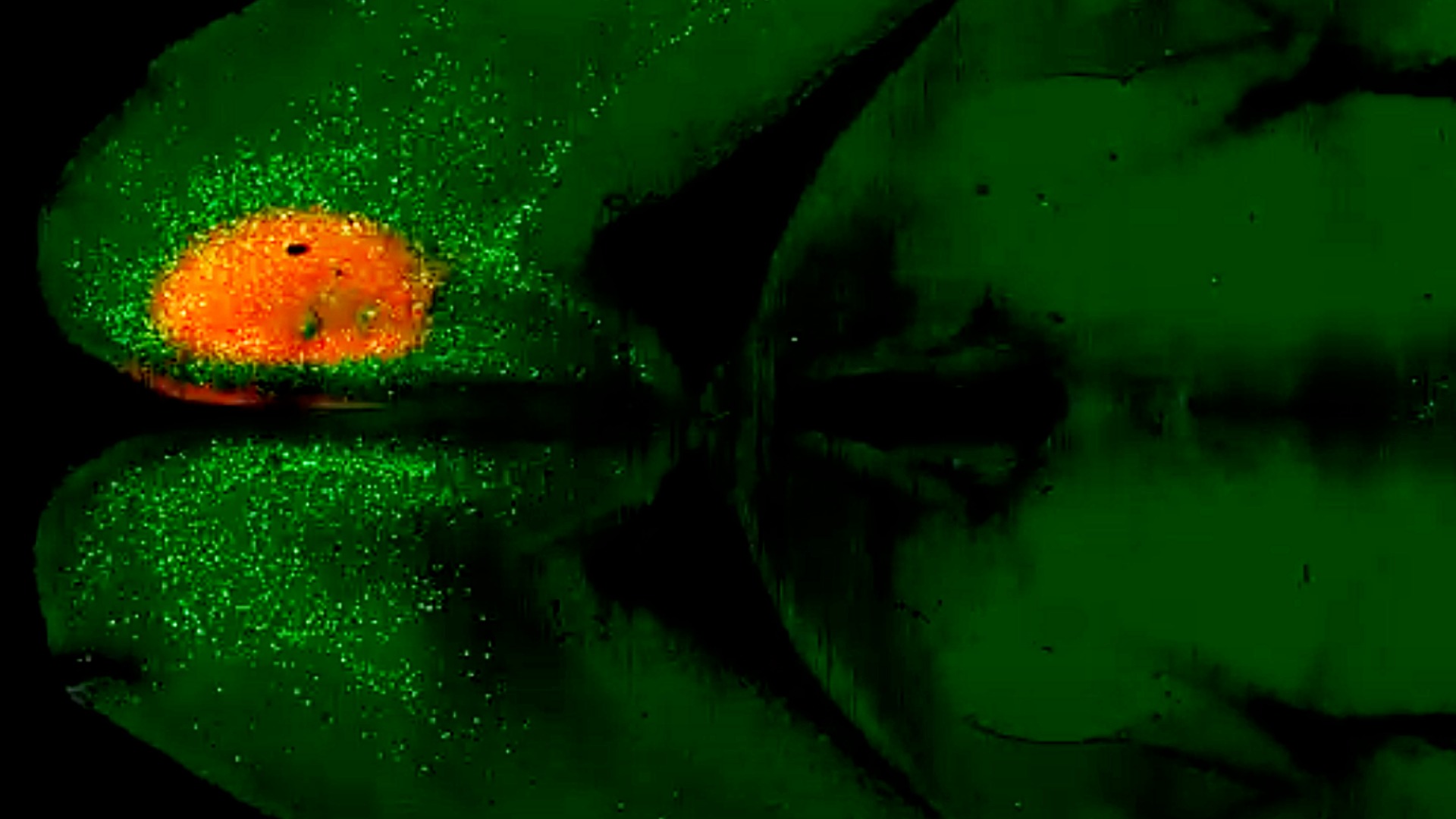
Some Allen Brain Observatory projects use Neuropixels, while others use a special fluorescent labeling system that causes neurons to flash bright white under the microscope when they are active.
Durand shows us a joystick that controls the robotic arms holding the Neuropixels in place. The whole setup is highly automated, ensuring that the probes are measuring from the same precise point in the brain in each experiment.
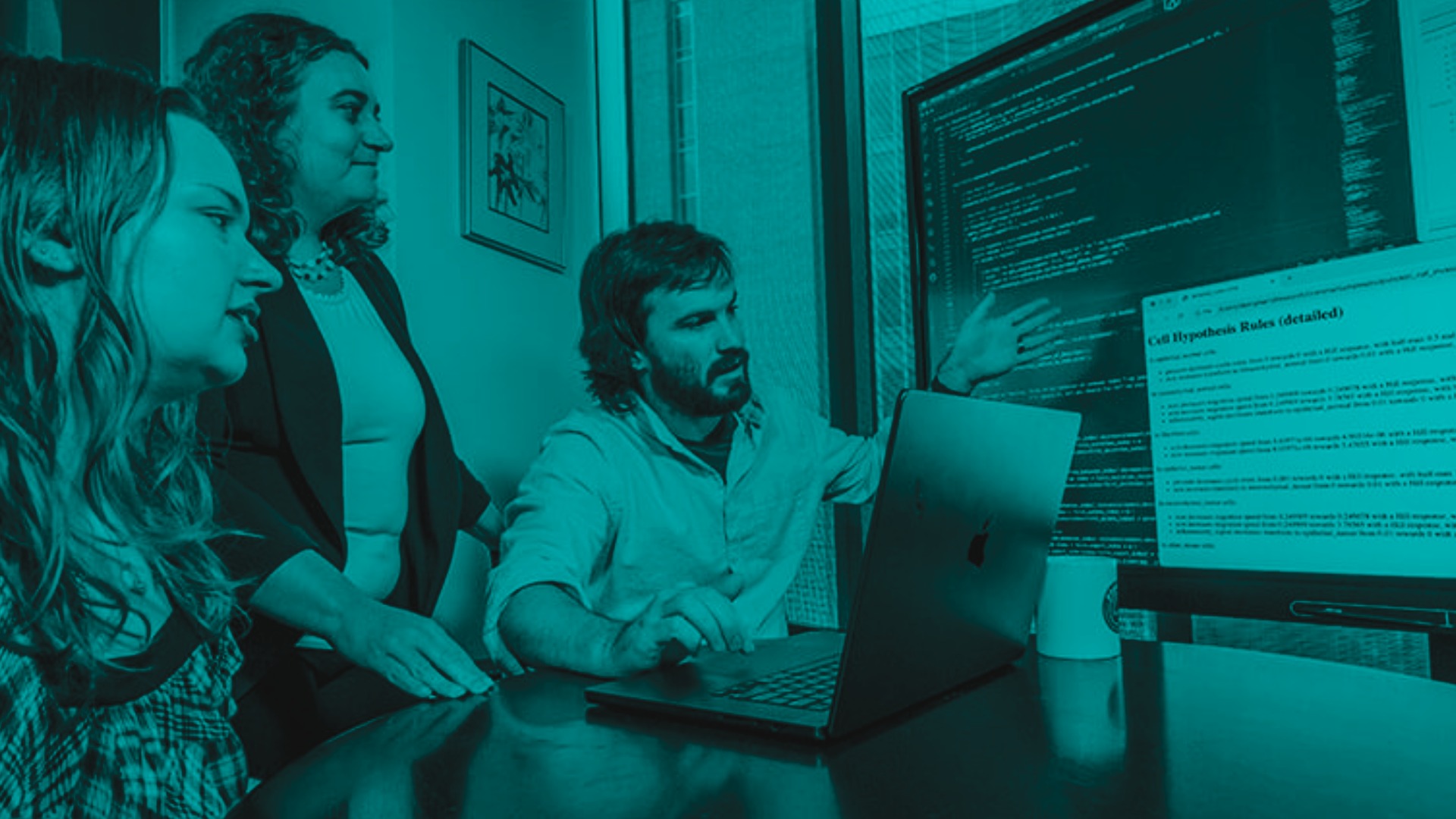
Today, the two are testing different series of images and movies on the monitor. Once the computer scripts coding for those specific images are debugged and ready, they’ll be integrated into the larger experimental workflow. It’s a lengthy process to set up this kind of large-scale experiment, Durand says.
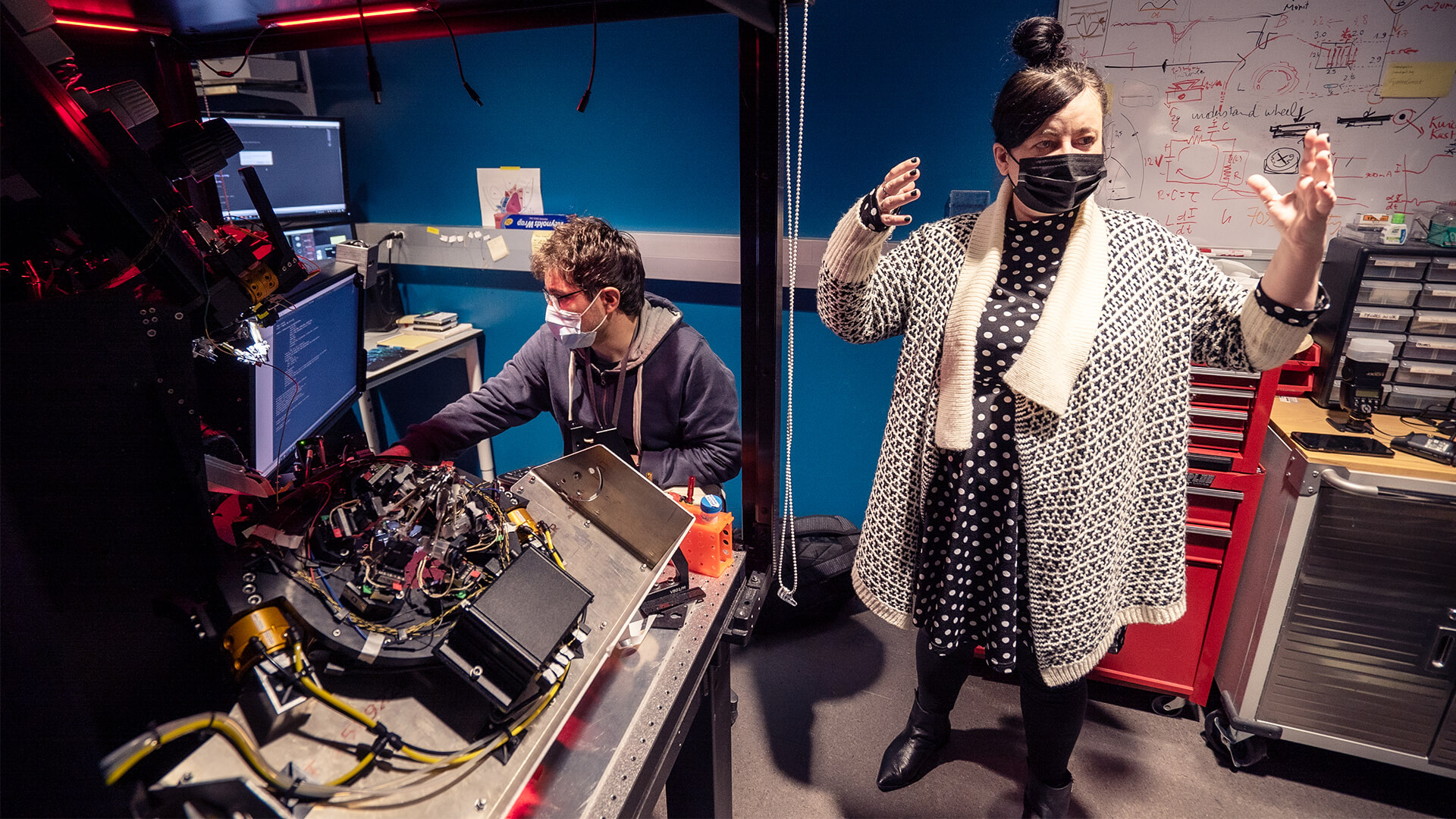
That’s part of the reason for OpenScope’s existence in the first place — not all labs can afford the resources or time it takes to observe neural activity at such a large scale. The program aims to bring these resources to more neuroscientists in the community, expanding the potential of the experimental platform to yield interesting information about the brain in action.
Photos by Erik Dinnel, Senior Producer at the Allen Institute, and text by Rachel Tompa, Senior Editor at the Allen Institute. Get in touch at press@alleninstitute.org.
Citations
about the allen institute
The Allen Institute is an independent, 501(c)(3) nonprofit research organization founded by philanthropist and visionary, the late Paul G. Allen. The Allen Institute is dedicated to answering some of the biggest questions in bioscience and accelerating research worldwide. The Institute is a recognized leader in large-scale research with a commitment to an open science model. For more information, visit alleninstitute.org.