impact
impact
open science
subheadline
careers and opportunities
subheadline
people & teams
people & teams
subheadline
allenites
subheadline
allen institute advisors
subheadline
board of directors
subheadline
shanahan foundation fellowship
subheadline
next generation leaders
subheadline
research
overview
our approach
subheadline
publications
subheadline
open science
subheadline
accelerator
brain science
subheadline
cell science
subheadline
neural dynamics
subheadline
immunology
subheadline
synthetic biology
subheadline
education
education
science education
subheadline
education resources
subheadline
field trips
subheadline
open science
subheadline
open science quest
subheadline
news
news
stories
subheadline
podcast
subheadline
sign up for our newsletter
subheadline
events
events
all events
subheadline
conferences
subheadline
event code of conduct
subheadline
events
open science quest
subheadline
summer workshop on the dynamic brain
subheadline
open science week
subheadline
brain fest
subheadline
science resources
science resources
allencell.org
subheadline
allenimmunology.org
subheadline
allenneuraldynamics.org
subheadline
brain-bican.org
subheadline
brain-map.org
subheadline
microns-explorer.org
subheadline
impact
back to menu
impact
open science
subheading
careers and opportunities
subheading
people & teams
people & teams
subheading
allen institute advisors
subheading
board of directors
subheading
shanahan foundation fellowship
subheading
next generation leaders
subheading
research
back to menu
impact
Label
subheading
Label
subheading
people & teams
education
back to menu
research
Label
subheading
Label
subheading
Heading
news
back to menu
research
Label
subheading
Label
subheading
Heading
events
back to menu
research
Label
subheading
Label
subheading
Heading
science resources
back to menu
science resources
allencell.org
subheading
allenimmunology.org
subheading
allenneuraldynamics.org
subheading
brain-bican.org
subheading
brain-map.org
subheading
microns-explorer.org
subheading
search
stories
news

A day in the (neuroscience) life: Tissue Processing

The researchers in this lab prepare brain tissue for several other teams at the Allen Institute

March 14, 2022
 min read
share/
The researchers in this lab prepare brain tissue for several other teams at the Allen Institute
Thank you! Your submission has been received!
Oops! Something went wrong while submitting the form.

in this article

table of contents will display on published page only
set h2 to populate the table of contents here

It’s a cold March morning in Seattle, and Windy Ho is waiting for a piece of brain.

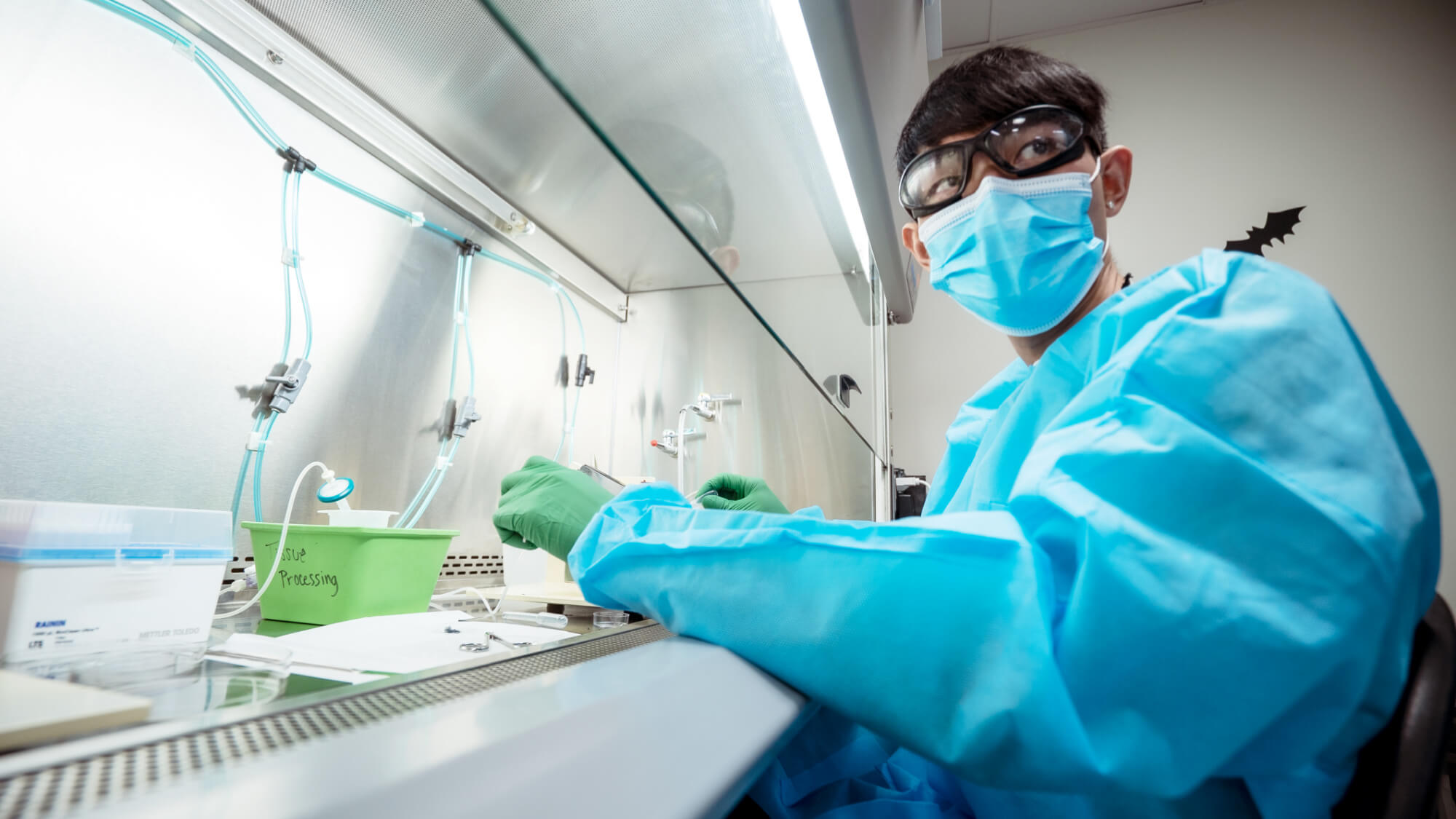
Lab technician in protective gear working in biosafety cabinet with medical equipment

He’s been in the lab since 7:00, preparing reagents and tools. The patient’s surgery was scheduled for 7:40, but there were delays. Finally, a small white van pulls into the loading dock in the Allen Institute garage. Michael Clark, who’s also a researcher on the tissue processing team, jumps out of the passenger seat to retrieve the van’s precious cargo.
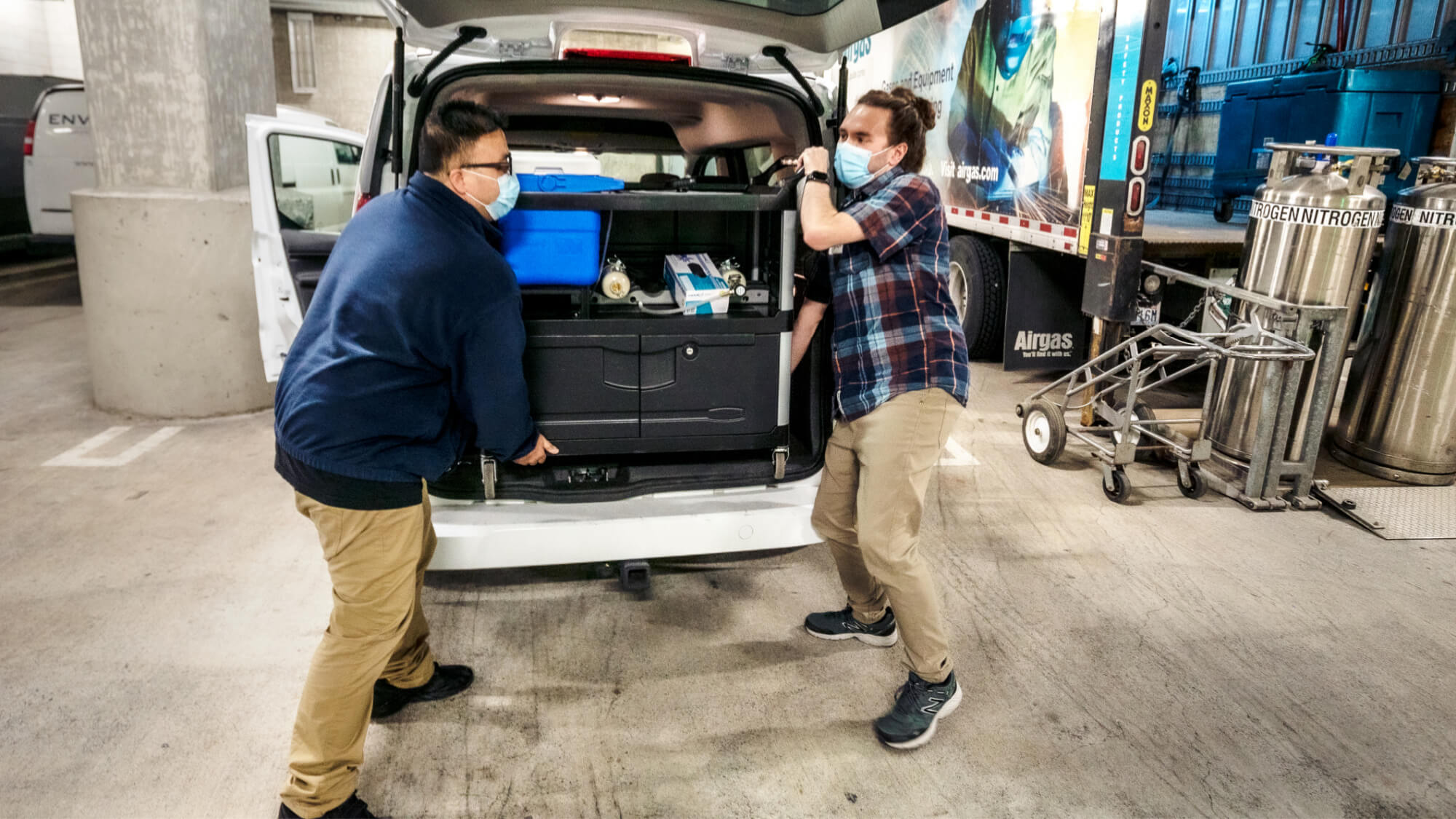
Two masked workers unloading equipment from open van cargo area in industrial warehouse facility.

Mo Hatsabout and Clark unload a wheeling cart from the back of a van in the loading dock of the Allen Institute on Friday, March 11, 2022. The cart contains a small cooler with a tiny piece of human brain nestled inside.
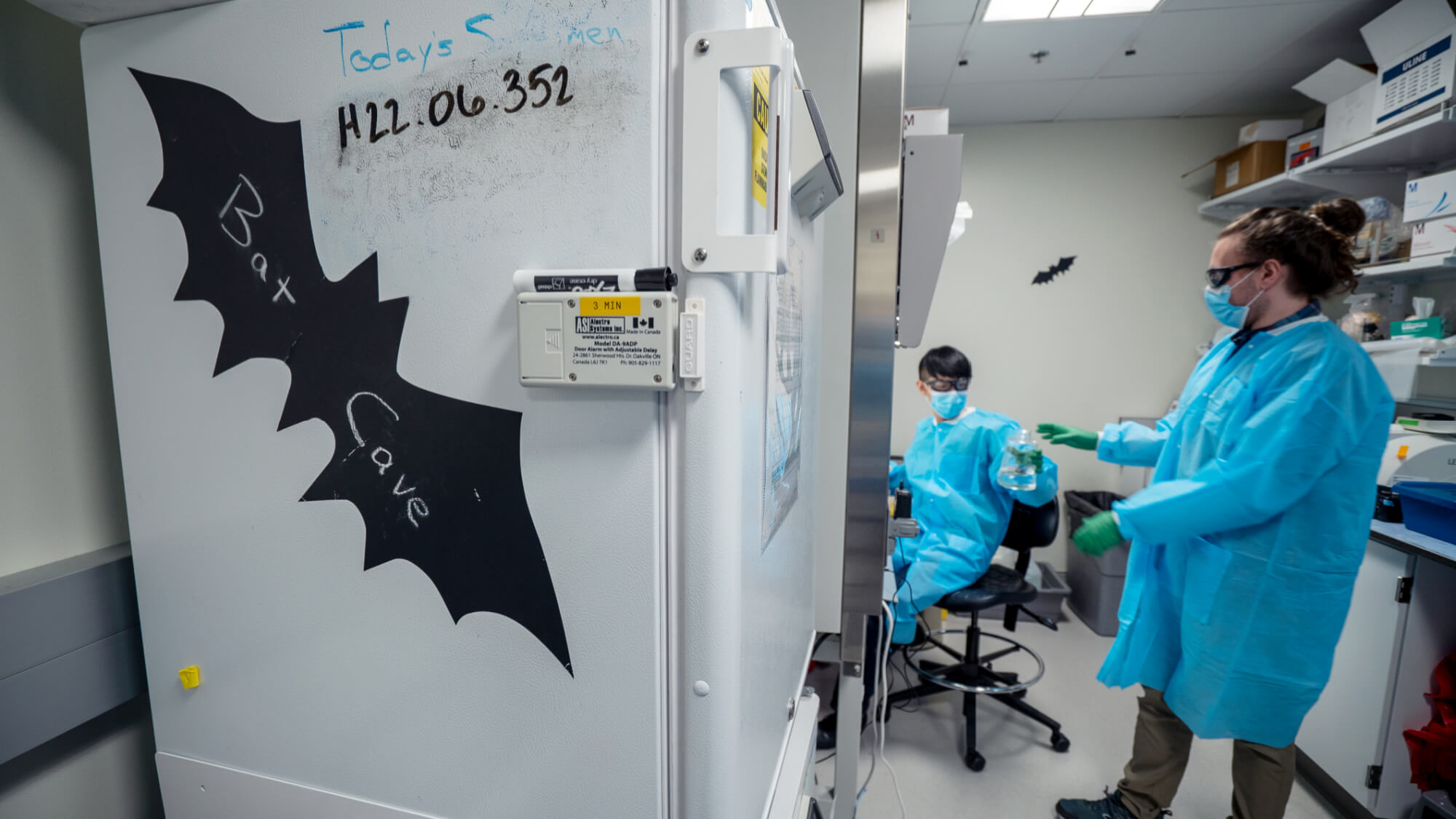
Laboratory workers in protective gear handling samples in a biosafety cabinet with bat silhouette drawings.

“Y’all ready?” Clark asks. In the tissue processing lab, which the team has affectionately dubbed the bat cave, Clark and Ho have unpacked the cooler from the van, which contains a bottle of clear liquid packed on ice. Floating in the liquid, a special buffer Ho made fresh that morning, is a small blob of tissue, pink and beige.
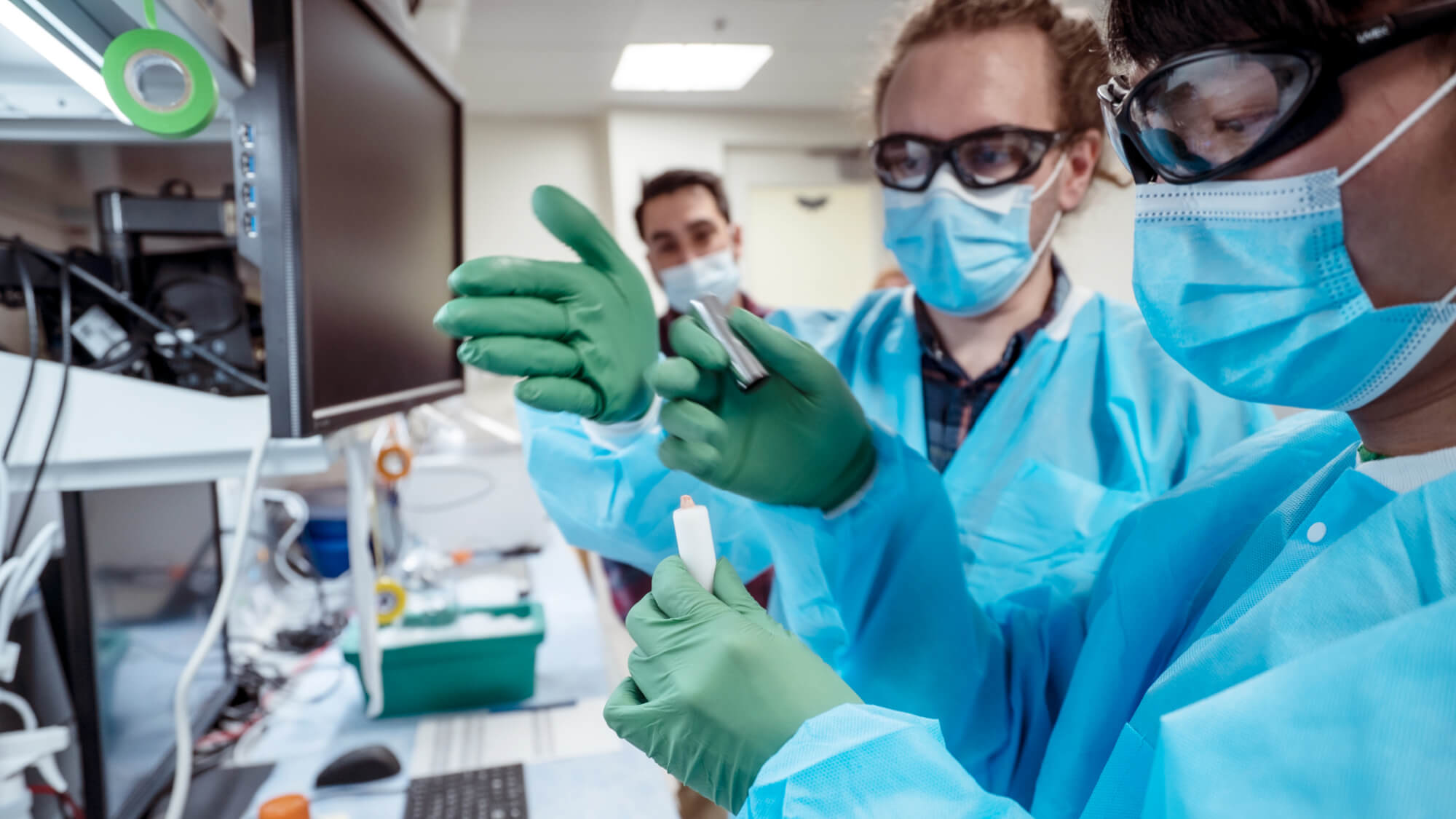
Scientists in lab coats and masks examining samples with green gloves in laboratory setting.

It’s a still-alive piece of a person’s brain, removed during surgery less than an hour before and donated by the patient to science. In the course of operating to remove a brain tumor, the patient’s surgeon needed to remove a small section of healthy brain to reach their disease. With the patient’s consent, this section of healthy tissue is preserved in liquid and rushed across town to the Allen Institute laboratories.
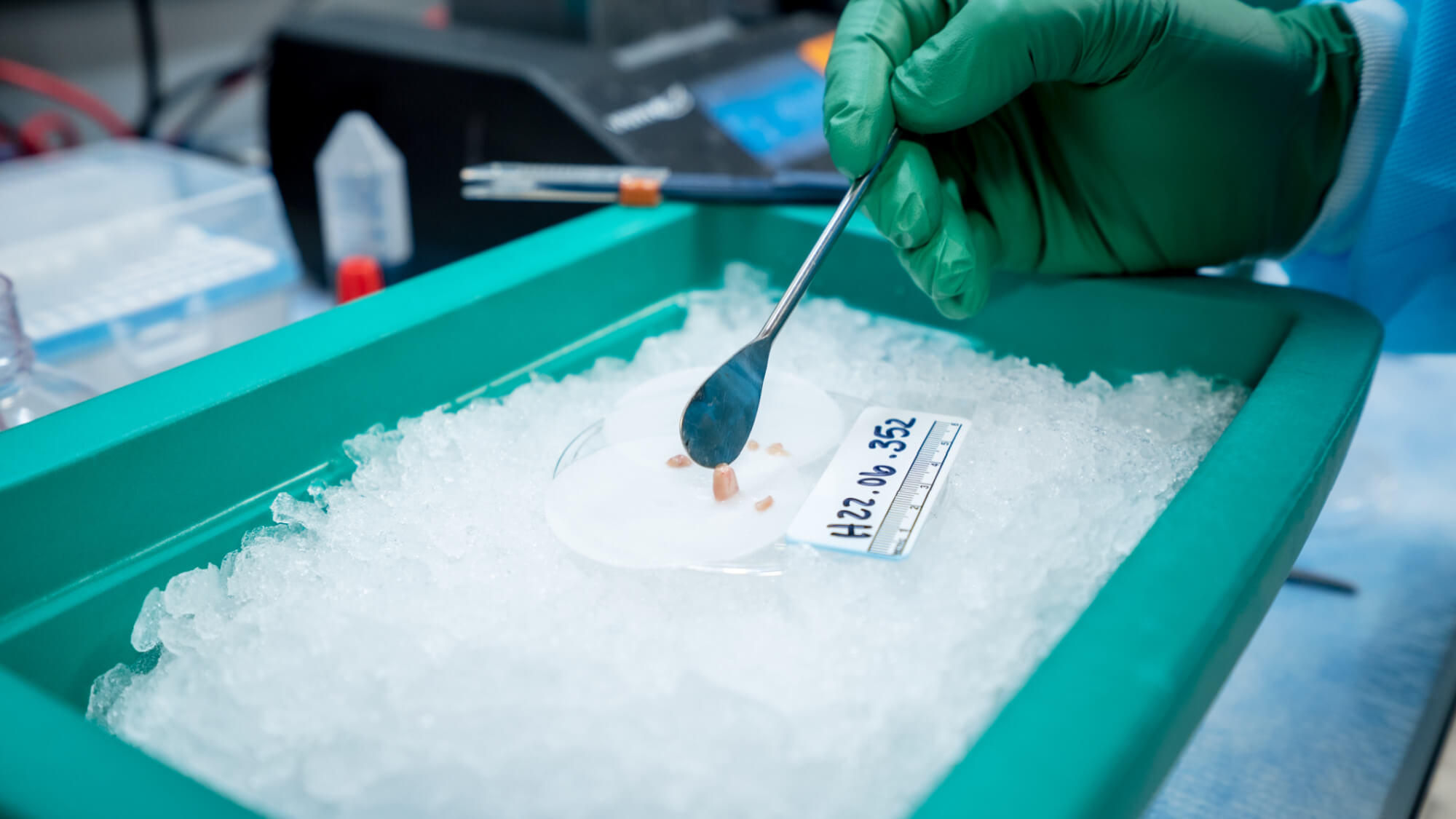
Scientist in green gloves uses brush to examine specimen in ice-filled laboratory tray.

Clark carefully ladles the tissue chunk out of the bottle and slides it onto a small dish on ice that Ho has prepared. The pair spend several minutes examining and discussing the piece. Their morning task: to mount and slice the tiny piece into even smaller slices, ready for different teams at the Institute to perform experiments on.

Five slices are slated to go to the electrophysiology lab, also known as e-phys, the neuroscientists who capture electrical activity from living neurons using specialized microscope rigs outfitted with tiny electrodes. E-phys gets the best of the best, Clark says. Two slices go to histology, the team that takes images. One slice is to be frozen.
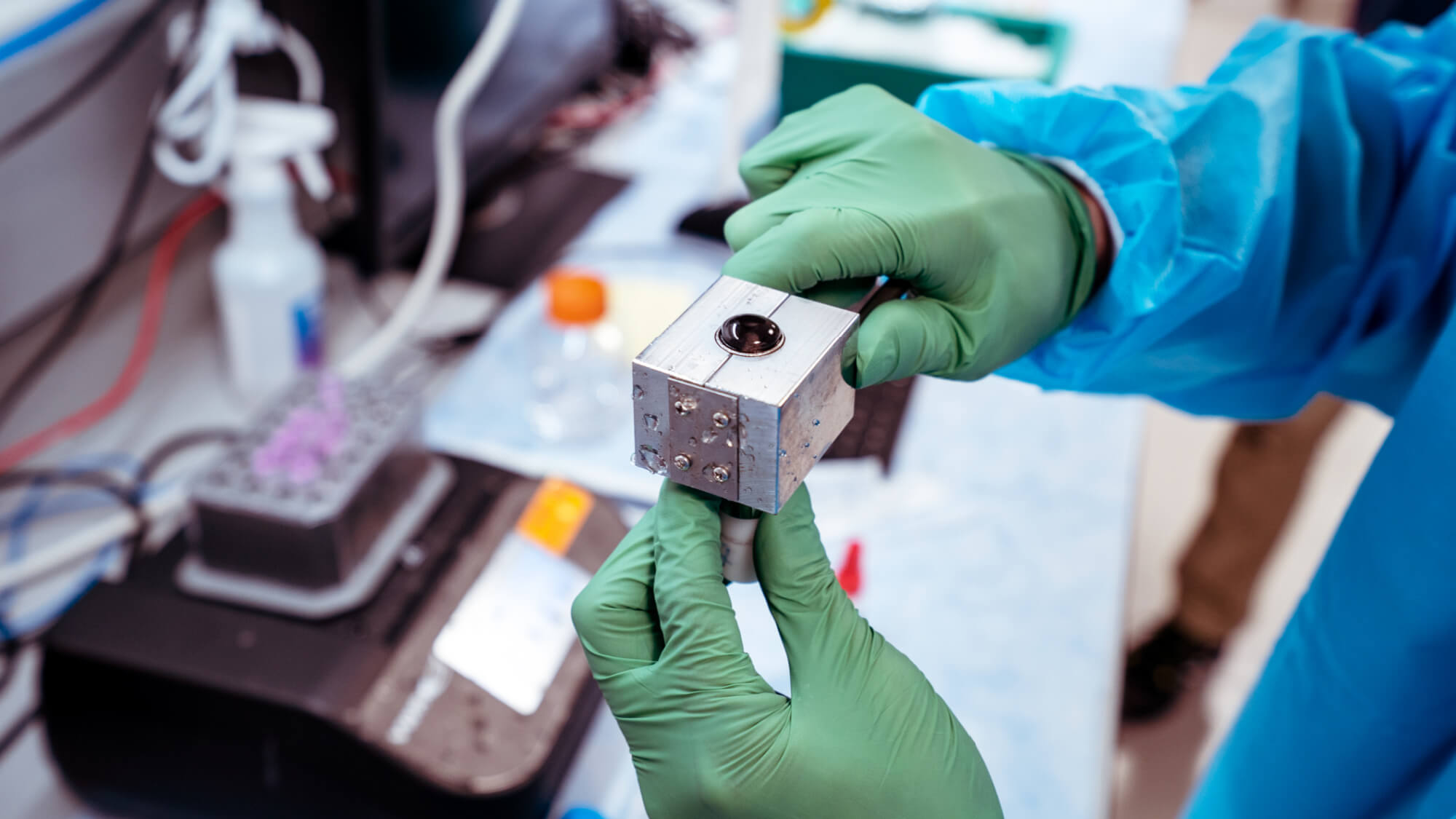
Scientist in green gloves holds metal component in laboratory setting with electronics.

Today, Ho is doing the cutting. He preps the piece of brain in a small blob of agar, a gelatinous substance that stabilizes the brain while it’s being cut. The agar plus brain gets slotted into an automatic slicing machine called a compresstome, which slowly shears incredibly thin slices into a pool of liquid. Ho carefully fishes them out.
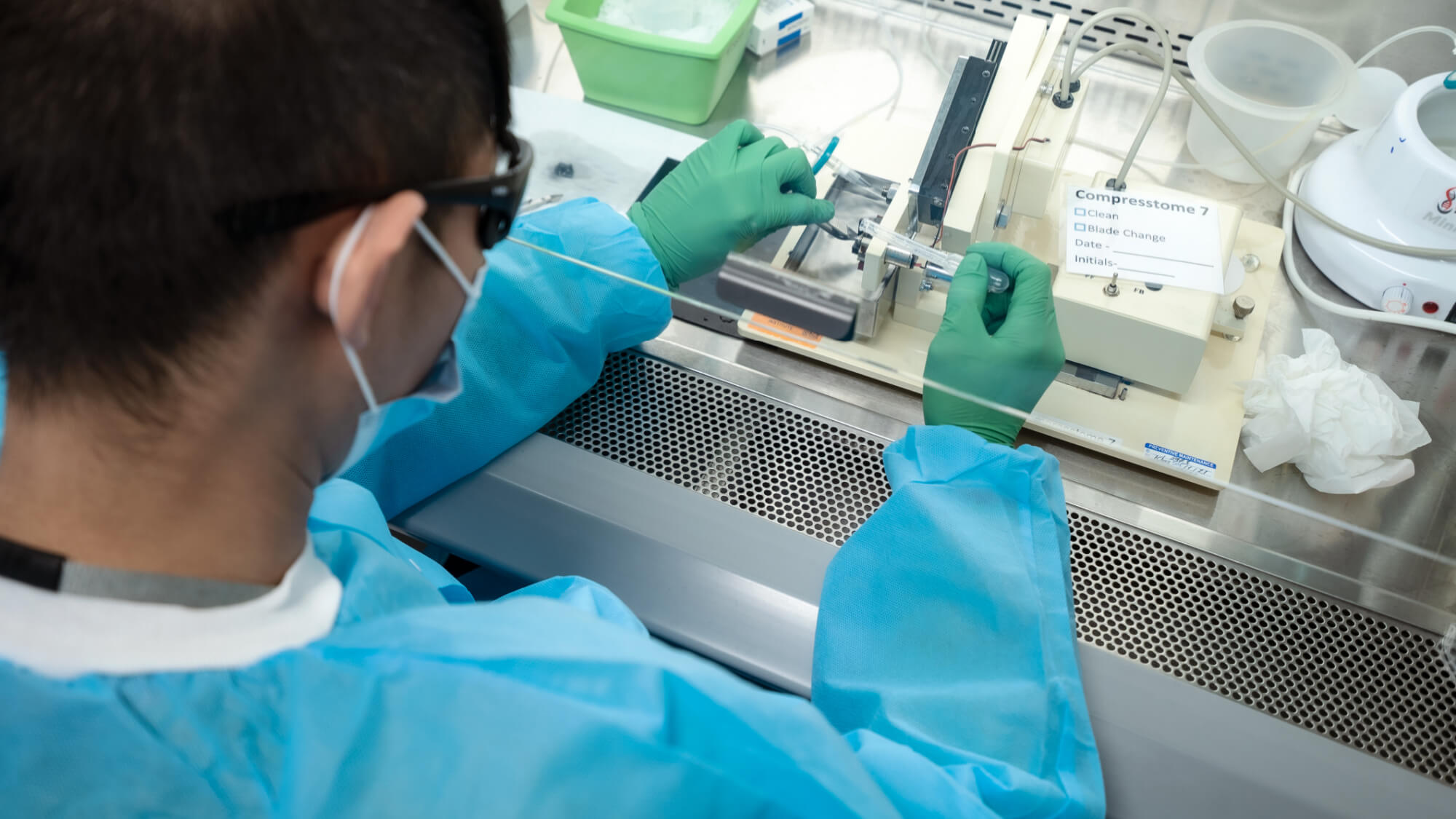
Laboratory technician in protective gear working with sample in biosafety cabinet.

Clark keeps track of the slices, watching over his shoulder. The whole thing feels like an incredibly slow and careful process, but it’s actually over within 45 minutes of the brain’s arrival at the building. Ho puts the slices of brain into a warm bath, bringing them back up to body temperature. “It helps them destress,” he says. The cells, still alive, have been through a lot already this morning.
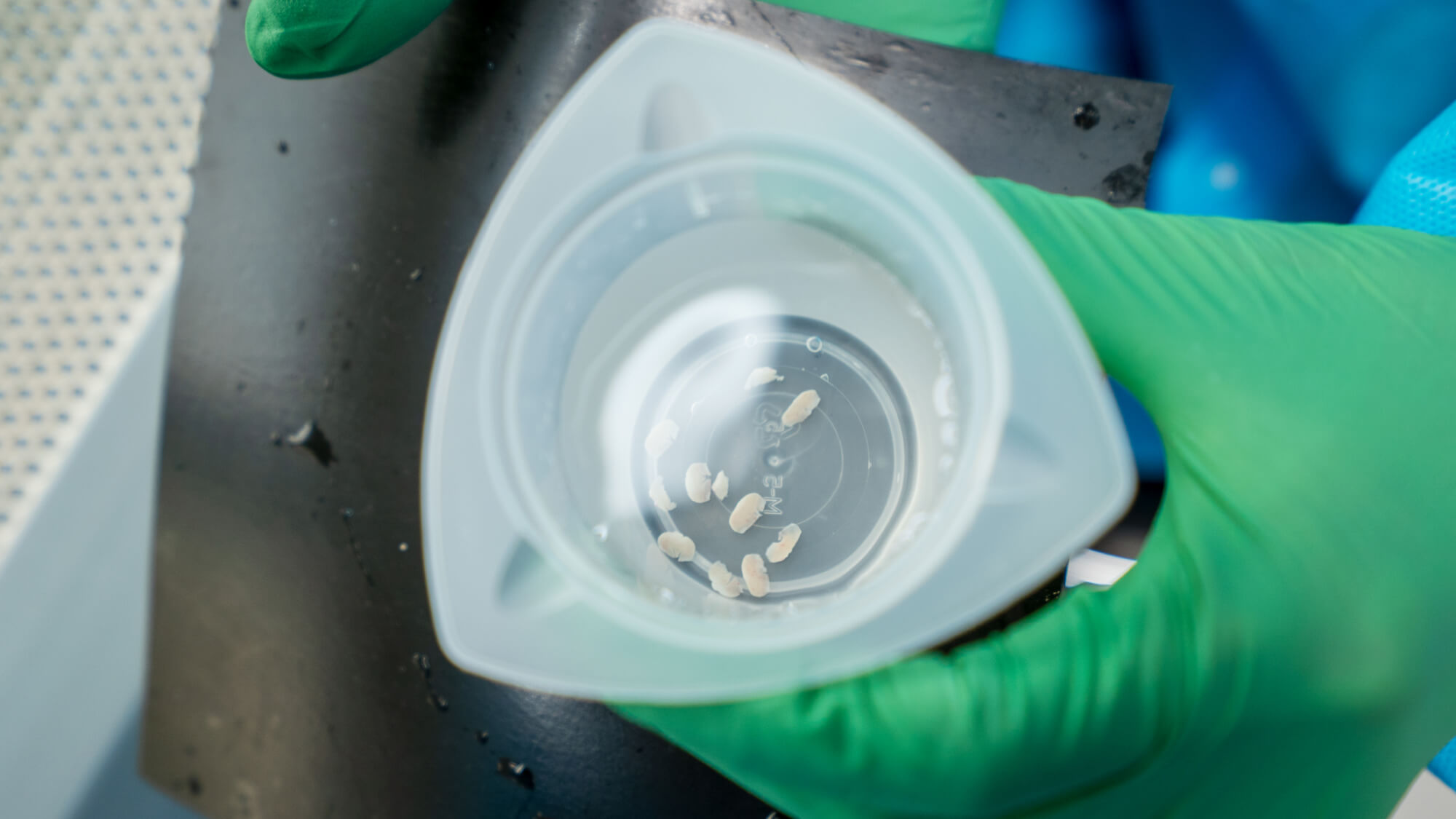
Close-up of petri dish with bacterial colonies held by gloved hand

The tissue processing team doesn’t work only on human brains – they process other kinds of brains frequently – but the fresh, human surgical samples are special, they said.
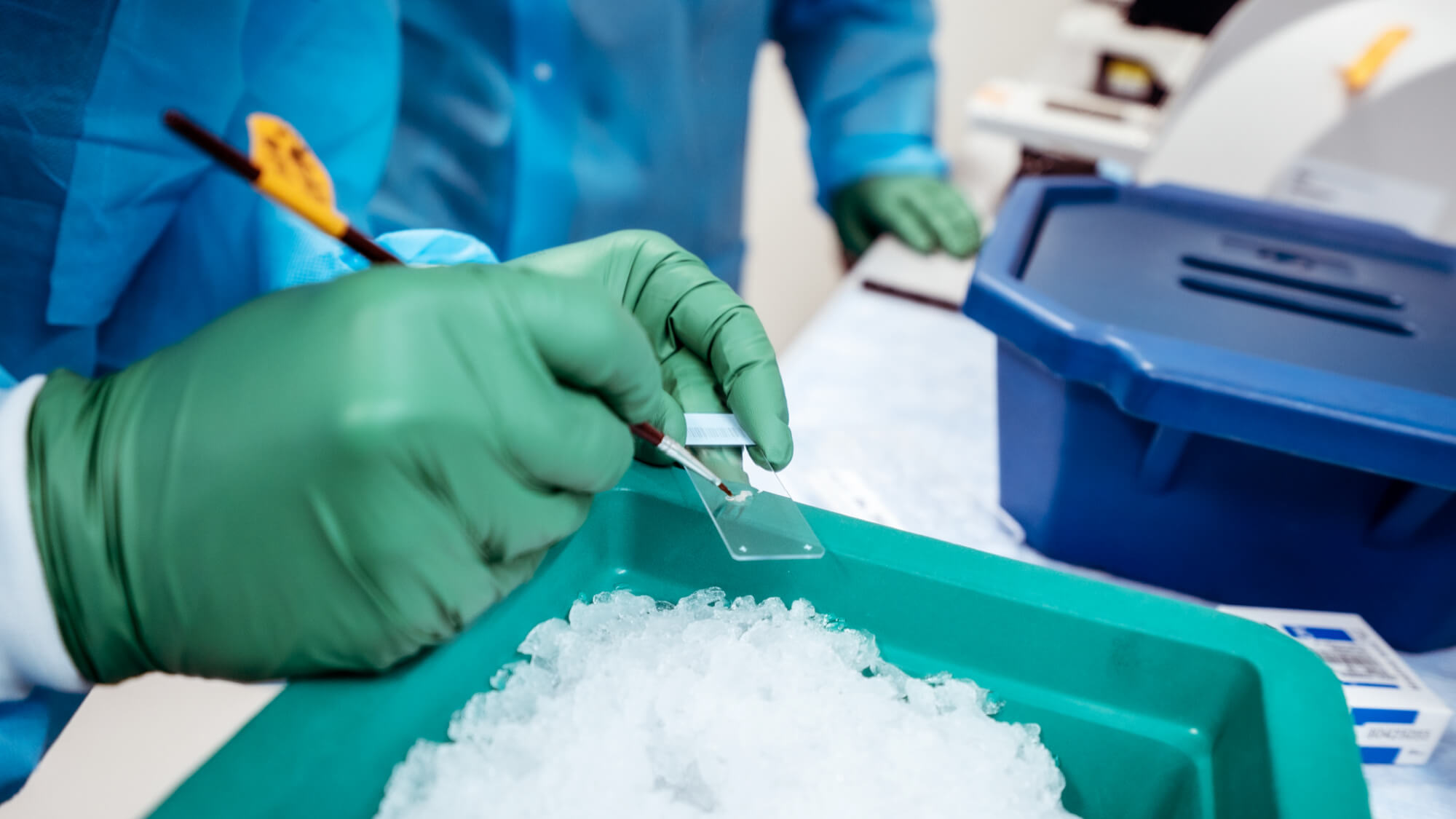
Scientist in green gloves preparing biological sample on ice in laboratory setting

“It’s a bit stressful,” Clark said. “This tissue is so precious, and you want to treat it with as much respect as possible.”

The hardest part of their job? The paperwork, Ho jokes. Their days are generally about half brain-slicing and half data entry. Slicing is by far the more exciting part.

Photos by Erik Dinnel, Senior Producer at the Allen Institute.

Citations
No items found.

about the allen institute

The Allen Institute is an independent, 501(c)(3) nonprofit research organization founded by philanthropist and visionary, the late Paul G. Allen. The Allen Institute is dedicated to answering some of the biggest questions in bioscience and accelerating research worldwide. The Institute is a recognized leader in large-scale research with a commitment to an open science model. For more information, visit alleninstitute.org.
explore related stories

explore more stories
news 
“Computational crystal ball” helps predict cell behavior
New technology could lead to better treatments for cancer by allowing scientists to perform virtual experiments
news 
Neuropixels Opto sheds new light into deepest regions of the brain
A single tool measures and manipulates brain cell communication and democratizes advanced neuroscience
news 
Mind trip: How psilocybin changes the brain
New research may help improve psychedelic therapy for neuropsychiatric disorders
news 
Computer model predicts aspects of cognitive performance
The Allen Human Brain Atlas helped researchers design a model that looked at “intrinsic neural timescales”
Allen Impact 2025
Technology and innovation are fueling discovery in science like never before we’re proud to be leading the way. 2025 was a year of tremendous impact...
Scientists unveil the world's most comprehensive AI-powered tool for neuroscience: Brain Knowledge Platform
Massive, first-of-its-kind data resource aims to accelerate medical breakthroughs in brain diseases like Alzheimer’s and Parkinson's
we acceleratedevelopcatalyzeimpact

science done differently. shared with the world.

explore our accelerators

brain science

Mapping every cell, connection, and circuit in the brain—openly shared with the world.

cell science

Decoding how cells become tissues, then programming that knowledge into powerful new research tools.

neural dynamics

Revealing the brain's hidden algorithms that transform neural activity into real-world behavior.

immunology

Creating the deepest open reference for the healthy human immune system ever built.

synthetic biology

Engineering cells to record their own histories, transforming how we understand disease over time.

research

Big questions, open answers, and science built to be shared.

education

Inspiring the next generation of scientists through open science resources.

impact

Our science is empowering researchers and advancing health worldwide.
advancing science through open, collaborative research
Get the allen institute newsletter
Stay informed on the latest breakthroughs in neuroscience, bioscience, and AI-driven research.
allen institute
impactpeople & teamscareers & opportunitiesalumnihistory & founder
science resources
allencell.orgallenimmunology.orgallenneuraldynamics.orgbrain-bican.orgbrain-map.orgmicrons-explorer.org
research
brain sciencecell scienceneural dynamicsimmunologysynthetic biologypublications
education
science educationfield tripsprofessional developmenteducation resources
quick links
newseventsopen sciencepodcastscience resourceshuman brain donationvisit uscontact
follow us/

allen institute, 615 Westlake Ave North, Seattle, WA 98109 +12065487055

© 0000 allen institute. all rights reserved.
privacy policyterms of usecitation policyemployee portalpolicy & compliance