in this article
ASAP and Allen Institute are teaming up to help researchers unlock insights into Parkinson’s and other neurodegenerative diseases. Through this collaboration, we are uniting Collaborative Research Network (CRN) Cloud data from 3 million human cells across 9 brain regions from individuals with Parkinson’s into the Allen Brain Cell (ABC) Atlas visualization tool, which already contains 6.4 million human cells.
This data expansion is an increase of nearly 50%, and marks the first time data from patients with Parkinson’s disease is included in the ABC Atlas.
Explore the expanded, open-access ABC Atlas today!
Keep reading to learn more details about this new effort.
What are the specifics of the collaboration?
Through an expanded research tool, we are uniting data from millions of human brain cells to help researchers explore the brain at unprecedented resolution using a common language for labeling cell types – key to accelerating discovery.
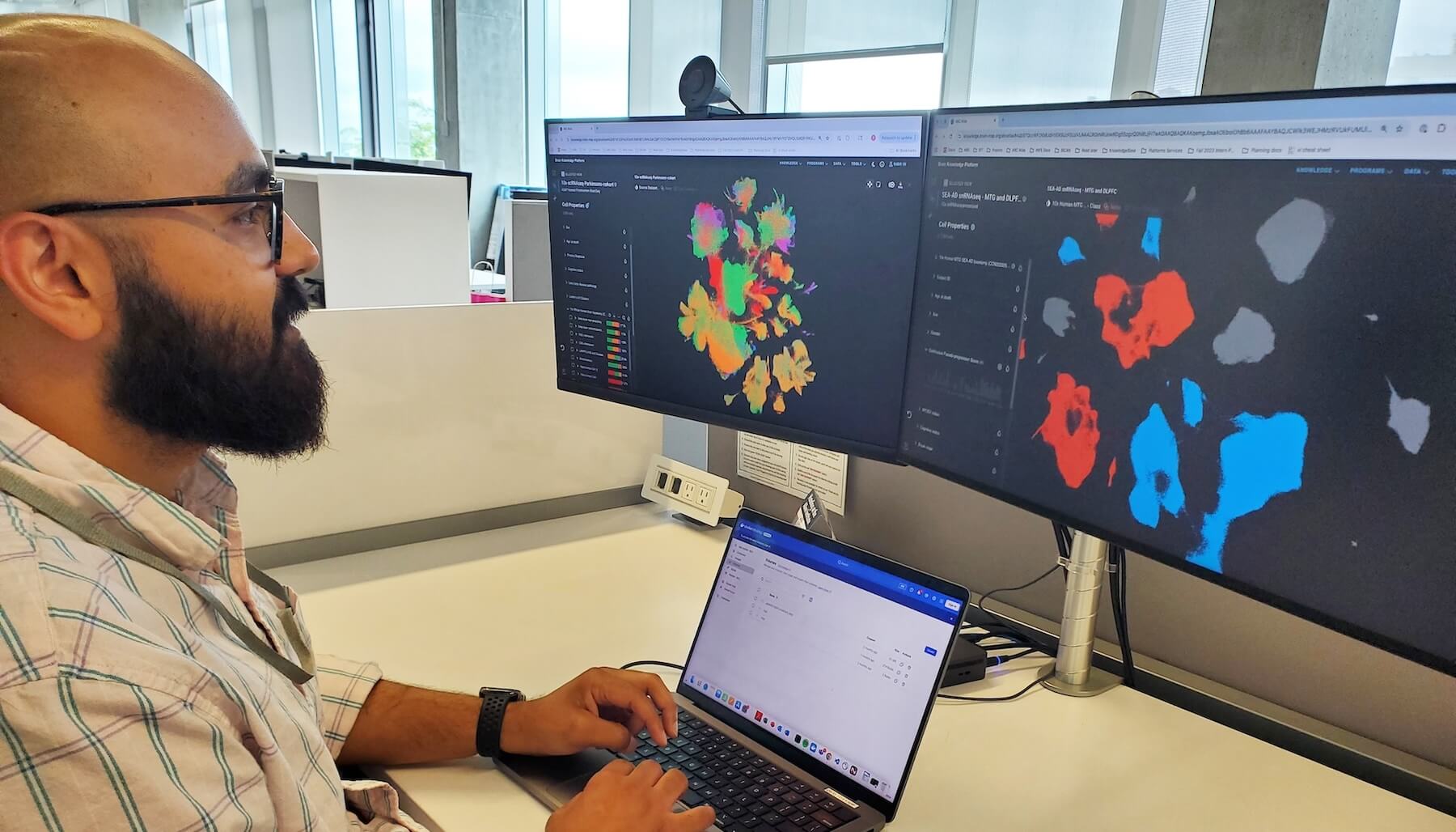
In this way, researchers who access the ABC Atlas, which provides intuitive data visualization and exploration tools for scientists to find, analyze, and understand brain cell types and gene expression, can now explore curated omics data from the ASAP CRN Cloud global hub.
ASAP is also working with The Michael J. Fox Foundation for Parkinson’s Research (MJFF) to implement its programs and manage the performance of the CRN Cloud
What inspired ASAP and Allen Institute to pursue this collaboration?
Our two organizations have a shared vision to advance discoveries and breakthroughs in neuroscience through collaboration and open-access data sharing.
Understanding the brain and neurodegenerative diseases is complex because conditions like Parkinson’s and Alzheimer’s disrupt the brain’s intricate systems by altering gene expression, neural connectivity, and cellular function in ways that we still do not fully understand. At the same time, new findings highlight that neurodegenerative diseases have many clinical similarities, including difficulties with movement, changes in cognition, sleep disturbances, and autonomic symptoms, and may also share underlying pathobiology.
We believe that by adding high-value datasets from postmortem human brains to the ABC Atlas, researchers can better examine the relationship between Parkinson’s, Alzheimer’s, and other neurodegenerative disorders.
What goals do ASAP and Allen Institute hope to achieve together?
Alzheimer’s disease and Parkinson’s disease are the most common and fastest-growing neurodegenerative conditions worldwide. With this collaboration, researchers can access cross-disease data and a shared system for labeling cell types, which will allow them to unlock deeper insights into how cells, brain anatomy, and neurodegenerative conditions intersect. Ultimately, we aim to pave the way for the discovery of new biomarkers and more effective treatments of neurodegenerative diseases like Parkinson’s.
Why is postmortem brain data important to Parkinson’s research?
Postmortem human brain samples are a rare and precious resource, critical for advancing our understanding of neurodegenerative diseases like Parkinson’s. These samples are costly and time-intensive to collect and manage, which makes them especially valuable for scientific study.
Over the years, these brain samples have been instrumental in numerous discoveries in neuroscience. For example, the discovery that dopamine-producing neurons are the ones affected in Parkinson’s was first identified in postmortem brain tissue. This finding led to targeted therapies – including the development of dopamine replacement therapies, like L-dopa, the only effective treatment for Parkinson’s – and identifying biomarkers for disease diagnosis.
Because of this, it is vital that researchers have continued access to these samples and the ability to analyze the original brain data. When we at ASAP first launched the CRN Cloud platform in 2024, we believed that access to scarce patient brain samples would be a catalyst for discovery.
Why is it important to create a “common language” across neuroscience fields?
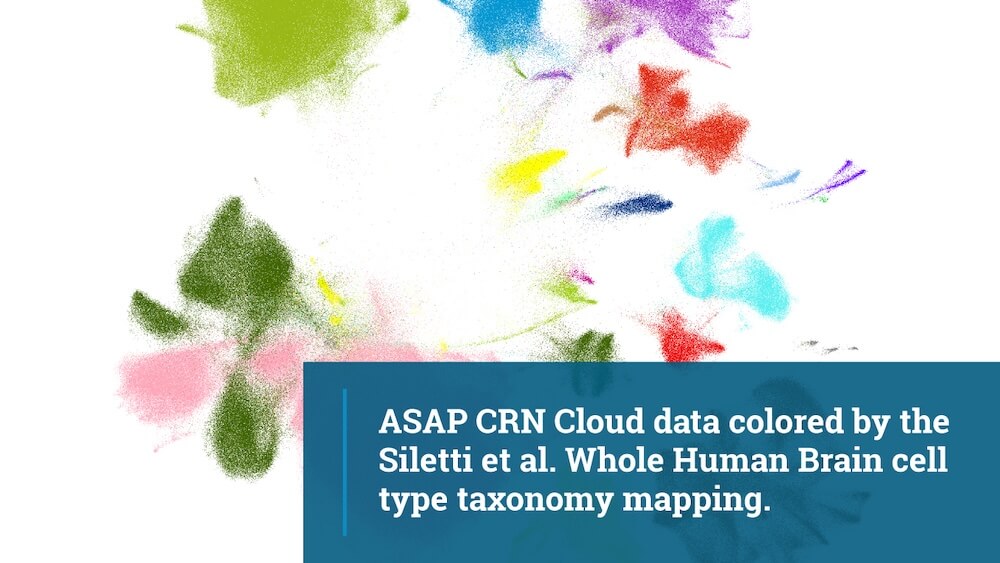
We believe that when researchers in the neuroscience community can collaborate with one another using open-access tools, they can unlock insights into how cell types, brain anatomy, and neurodegenerative diseases are connected.
Historically, labs and researchers have used different frameworks and data formats in their research, which makes it difficult for researchers to quickly analyze and understand the published findings. By harmonizing data and using a common language for labeling cell types, we’re setting a new standard for researchers to define and visualize different cell types of the brain.
How do you envision researchers leveraging this new collaboration within their everyday research?
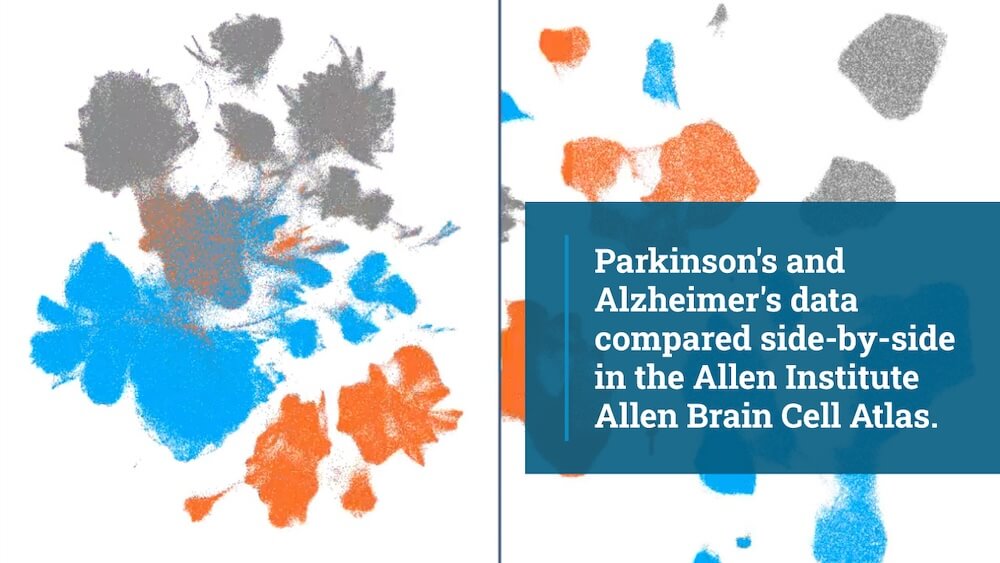
This collaboration gives researchers access to precious brain data they may not have had before. Not only will researchers be able to access the data, but they can also use Allen Institute’s newly developed high-resolution maps to gain deeper insights into gene expression changes that affect specific brain cell types that are impacted by neurodegenerative disease. Researchers will also be able to quickly compare datasets from patients with Parkinson’s with datasets from patients with Alzheimer’s and healthy individuals using the ABC Atlas.
How can researchers access the data/tool?
Researchers interested in accessing this comprehensive visualization tool should visit https://portal.brain-map.org/atlases-and-data/bkp/abc-atlas/asap-parkinsons.
Citations
about the allen institute
The Allen Institute is an independent, 501(c)(3) nonprofit research organization founded by philanthropist and visionary, the late Paul G. Allen. The Allen Institute is dedicated to answering some of the biggest questions in bioscience and accelerating research worldwide. The Institute is a recognized leader in large-scale research with a commitment to an open science model. For more information, visit alleninstitute.org.