in this article
The Allen Institute for Brain Science, in a project led by Stephen Smith, Ph.D., Senior Investigator, has been awarded an $8.7 million, five-year Transformative Research Award from the National Institutes of Health (NIH) to lead the creation of a publicly accessible model of synapse populations in mouse and human brains. Synapses play a crucial role in many brain diseases and disorders, and the Open Synaptome Project that will be generated through this grant promises to change the way researchers approach the study of those diseases.
Transformative Research Awards from the NIH recognize projects that have the potential to drive major advances in biomedical and behavioral research with their novel approaches and broad impact.
“We are thrilled that the powerful combination of the Allen Institute’s unique scientific approach with Stephen Smith’s celebrated leadership in the neuroscience field is being recognized as having transformative potential by the NIH,” says Allan Jones, CEO of the Allen Institute for Brain Science. “The consortium we will lead to study synapse diversity is poised to make important breakthroughs in how we think about the brain’s function in both health and disease.”
Synapses are the areas of connection and information transfer between individual neurons in the brain. A single neuron can have as many as ten thousand synapses, each of which is itself a complex signal-processing machine. Although many brain diseases and disorders are rooted in abnormalities of synapse populations, including neurotransmitter-related diseases like Parkinson’s and major depression, their tiny size and highly complex nature have made synapses historically challenging to study, and the related diseases difficult to diagnose and treat.
“Synapses are exceptionally complex and extremely important to how the brain processes information, and no two synapses are quite alike,” explains Smith. “Our grant will help illuminate that diversity—what we’re calling the ‘synaptome’—in order to shed much needed light onto the fundamental information processing mechanisms of mammalian brains.”
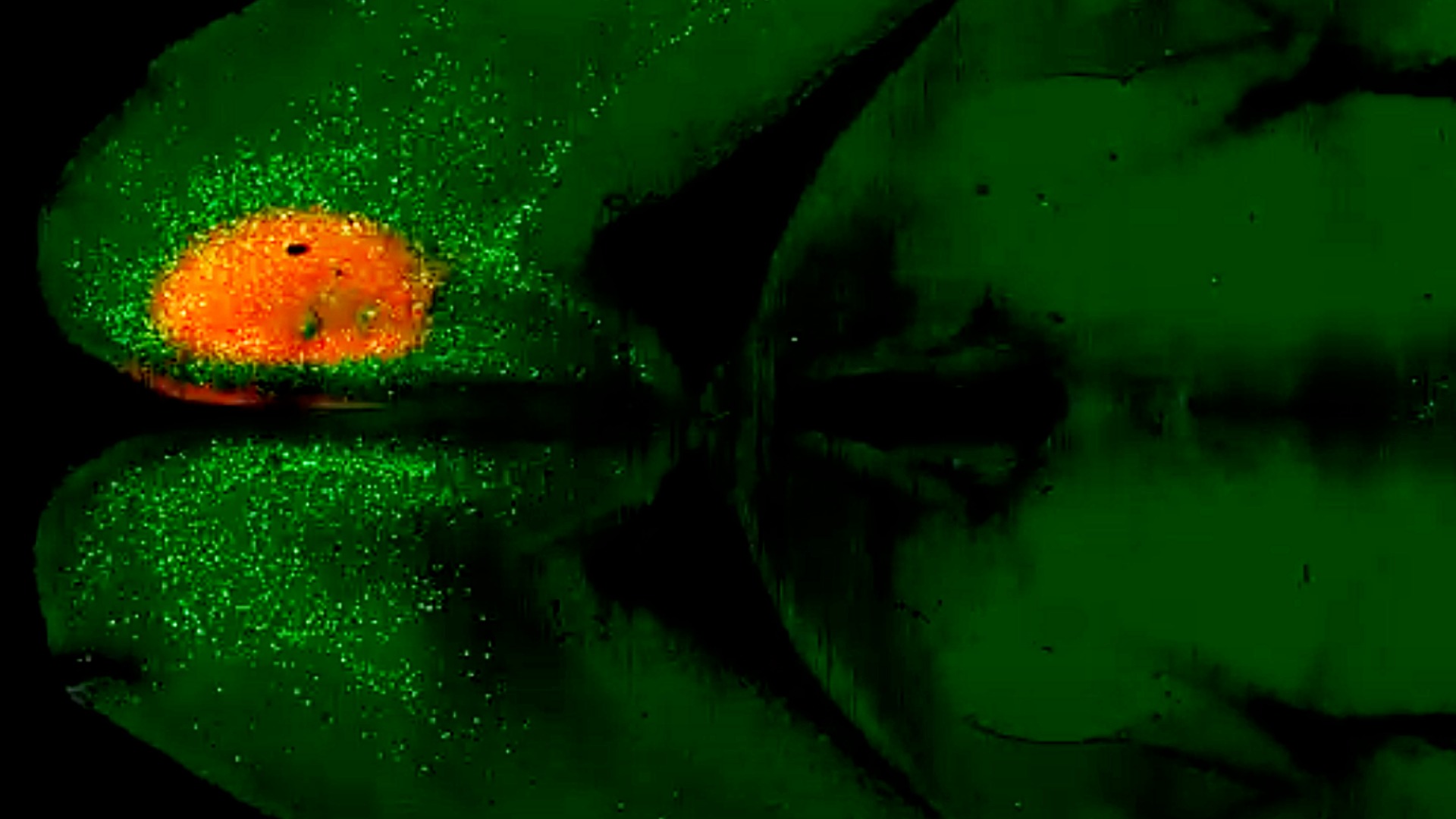
Researchers on this grant are part of an international consortium that includes neurobiologists, biophysicists, clinicians, mathematicians and computer scientists. They will use powerful new imaging technologies to measure, analyze and model synapse populations in both mouse and human brains. A three-dimensional imaging technique pioneered by Smith during his tenure at Stanford University called array tomography will be used to study the complex protein expression at each synapse site.
The outcome of the project will be the Open Synaptome Project, in which the data and tools for the study’s pipeline will be made publicly available for researchers around the world, enabling labs to more efficiently and effectively study synapse populations in other regions of the brain. Because the work funded by this grant will take place in both mouse and human brain samples, the resulting synaptome model will fuel our ability to translate knowledge from commonly used laboratory models into treatments for human disorders.
Randal Burns, Ph.D., of Johns Hopkins University, is the co-Principal Investigator on the grant. Other co-investigators are Mark A. Chevillet, Ph.D., of the Johns Hopkins University Applied Physics Laboratory, Ed S. Lein, Ph.D., of the Allen Institute for Brain Science, Guillermo Sapiro, D.Sc., of Duke University, William W. Seeley, M.D., of the University of California, San Francisco, James S. Trimmer, Ph.D., of the University of California, Davis, Joshua T. Vogelstein, Ph.D., of Johns Hopkins University, and Richard Weinberg, Ph.D., of the University of North Carolina, Chapel Hill.
The project described was supported by award number R01NS092474 from the Office of the Director of National Institutes of Health, totaling $8.7M. The content is solely the responsibility of the authors and does not necessarily represent the official views of the National Institutes of Health. This project is funded with 100% federal funds. No non-government funds support the project.
About the Allen Institute for Brain Science
The Allen Institute for Brain Science is an independent, 501(c)(3) nonprofit medical research organization dedicated to accelerating the understanding of how the human brain works in health and disease. Using a big science approach, the Allen Institute generates useful public resources used by researchers and organizations around the globe, drives technological and analytical advances, and discovers fundamental brain properties through integration of experiments, modeling and theory. Launched in 2003 with a seed contribution from founder and philanthropist Paul G. Allen, the Allen Institute is supported by a diversity of government, foundation and private funds to enable its projects. Given the Institute’s achievements, Mr. Allen committed an additional $300 million in 2012 for the first four years of a ten-year plan to further propel and expand the Institute’s scientific programs, bringing his total commitment to date to $500 million. The Allen Institute’s data and tools are publicly available online at www.brain-map.org.
Citations
about the allen institute
The Allen Institute is an independent, 501(c)(3) nonprofit research organization founded by philanthropist and visionary, the late Paul G. Allen. The Allen Institute is dedicated to answering some of the biggest questions in bioscience and accelerating research worldwide. The Institute is a recognized leader in large-scale research with a commitment to an open science model. For more information, visit alleninstitute.org.