impact
impact
open science
subheadline
careers and opportunities
subheadline
people & teams
people & teams
subheadline
allenites
subheadline
allen institute advisors
subheadline
board of directors
subheadline
shanahan foundation fellowship
subheadline
next generation leaders
subheadline
research
overview
our approach
subheadline
publications
subheadline
open science
subheadline
accelerator
brain science
subheadline
cell science
subheadline
neural dynamics
subheadline
immunology
subheadline
synthetic biology
subheadline
education
education
science education
subheadline
education resources
subheadline
field trips
subheadline
open science
subheadline
open science quest
subheadline
news
news
stories
subheadline
podcast
subheadline
sign up for our newsletter
subheadline
events
events
all events
subheadline
conferences
subheadline
event code of conduct
subheadline
events
open science quest
subheadline
summer workshop on the dynamic brain
subheadline
open science week
subheadline
brain fest
subheadline
science resources
science resources
allencell.org
subheadline
allenimmunology.org
subheadline
allenneuraldynamics.org
subheadline
brain-bican.org
subheadline
brain-map.org
subheadline
microns-explorer.org
subheadline
impact
back to menu
impact
open science
subheading
careers and opportunities
subheading
people & teams
people & teams
subheading
allen institute advisors
subheading
board of directors
subheading
shanahan foundation fellowship
subheading
next generation leaders
subheading
research
back to menu
impact
Label
subheading
Label
subheading
people & teams
education
back to menu
research
Label
subheading
Label
subheading
Heading
news
back to menu
research
Label
subheading
Label
subheading
Heading
events
back to menu
research
Label
subheading
Label
subheading
Heading
science resources
back to menu
science resources
allencell.org
subheading
allenimmunology.org
subheading
allenneuraldynamics.org
subheading
brain-bican.org
subheading
brain-map.org
subheading
microns-explorer.org
subheading
search
stories
news

Allen Institute for Brain Science announces mapping of the mouse cortex in 3D

The Allen Institute for Brain Science has completed the three-dimensional mapping of the mouse cortex as part of the Allen Mouse Common Coordinate...

October 27, 2016
 min read
share/
Allen Institute Common Coordinate Framework
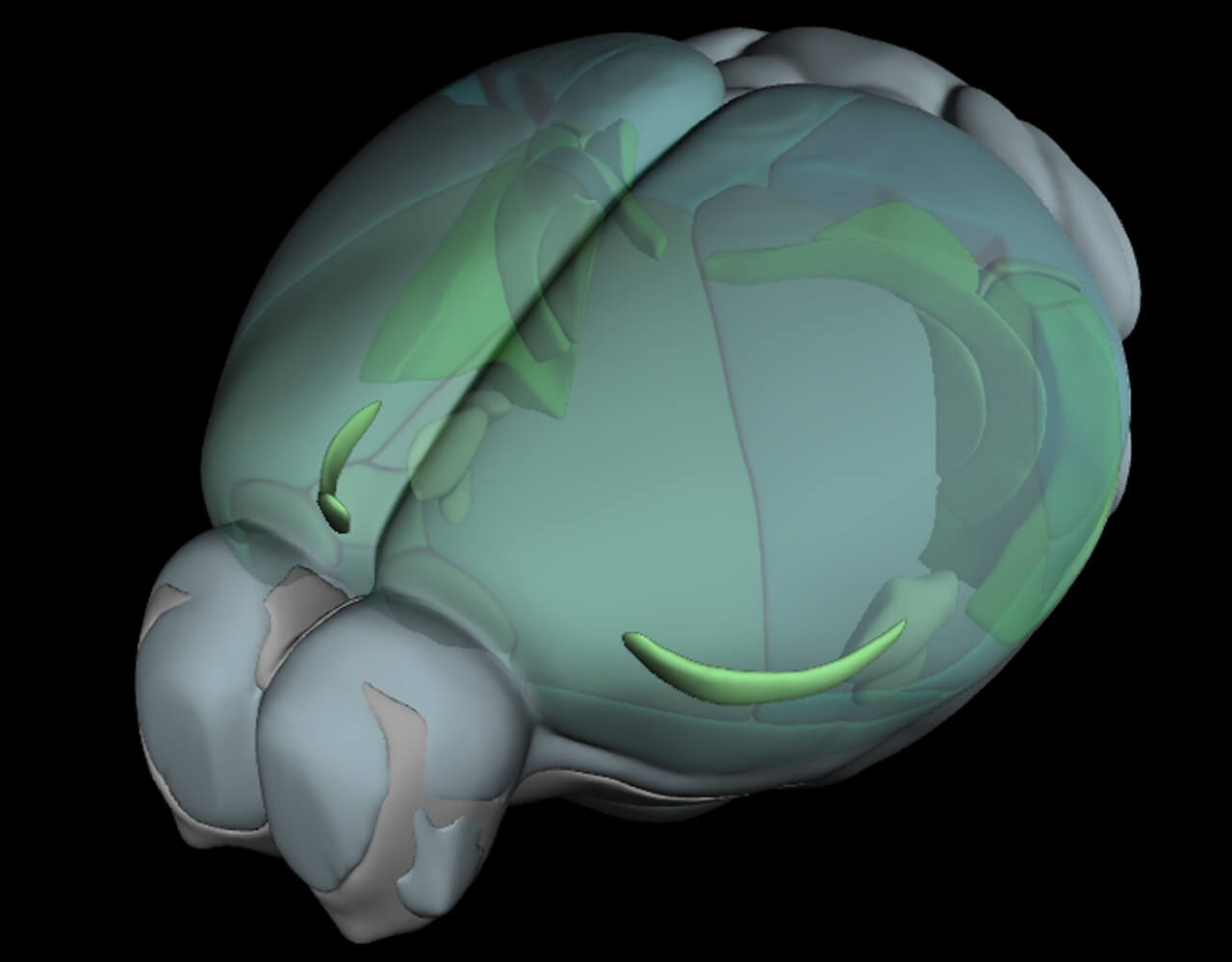
The Allen Institute for Brain Science has completed the three-dimensional mapping of the mouse cortex as part of the Allen Mouse Common Coordinate Framework (CCF): a standardized spatial coordinate system for comparing many types of data on the brain from the suite of Allen Brain Atlas resources.
Thank you! Your submission has been received!
Oops! Something went wrong while submitting the form.

in this article

table of contents will display on published page only
set h2 to populate the table of contents here

The Allen Institute for Brain Science has completed the three-dimensional mapping of the mouse cortex as part of the Allen Mouse Common Coordinate Framework (CCF): a standardized spatial coordinate system for comparing many types of data on the brain from the suite of Allen Brain Atlas resources.

Allen Mouse Common Coordinate Framework

“Maps of the brain have always been created in two dimensions, but even a stack of flat maps sitting on top of each other does not necessarily align with the complex three-dimensional nature of the brain,” says Christof Koch, Ph.D., President and Chief Scientific Officer of the Allen Institute for Brain Science. “The Common Coordinate Framework is a remarkable effort to capture a typical mouse brain in its true three dimensions, and serves as a valuable platform on which to present many of our other data resources.”

“Annotating the cortex in three dimensions was no small task,” says Lydia Ng, Ph.D., Senior Director of Technology at the Allen Institute for Brain Science. “It required the expertise of both technologists and anatomists working closely and for many long hours to generate the data. The CCF enables quantification and comparison of many types of data, including gene expression, connectivity, single cell characterization and functional imaging. This is a truly unique resource for the neuroscience community to understand the structure and function of the mouse brain.”

The Common Coordinate Framework was built by carefully averaging the anatomy of 1,675 specimens from the Allen Mouse Brain Connectivity Atlas. Researchers used transgenic mouse lines and data from viral tracers to draw boundaries between 43 regions of the cortex.

The end result is a template brain rendered faithfully in three dimensions, which serves as a useful guide to mouse brain anatomy as well as a platform for comparing data across many Allen Brain Atlas resources.

The October data release also includes updates to several other resources. The Allen Brain Observatory, launched in May, received a back-end overhaul that enables robust search and the addition of more than 30 new datasets and additional engineered mouse lines. The Allen Cell Types Database and the Allen Mouse Brain Connectivity Atlas are also updated with new data.

Citations
No items found.

about the allen institute

The Allen Institute is an independent, 501(c)(3) nonprofit research organization founded by philanthropist and visionary, the late Paul G. Allen. The Allen Institute is dedicated to answering some of the biggest questions in bioscience and accelerating research worldwide. The Institute is a recognized leader in large-scale research with a commitment to an open science model. For more information, visit alleninstitute.org.

explore related stories

explore more stories
news 
“Computational crystal ball” helps predict cell behavior
New technology could lead to better treatments for cancer by allowing scientists to perform virtual experiments
news 
Neuropixels Opto sheds new light into deepest regions of the brain
A single tool measures and manipulates brain cell communication and democratizes advanced neuroscience
news 
Mind trip: How psilocybin changes the brain
New research may help improve psychedelic therapy for neuropsychiatric disorders
news 
Computer model predicts aspects of cognitive performance
The Allen Human Brain Atlas helped researchers design a model that looked at “intrinsic neural timescales”
Allen Impact 2025
Technology and innovation are fueling discovery in science like never before we’re proud to be leading the way. 2025 was a year of tremendous impact...
Scientists unveil the world's most comprehensive AI-powered tool for neuroscience: Brain Knowledge Platform
Massive, first-of-its-kind data resource aims to accelerate medical breakthroughs in brain diseases like Alzheimer’s and Parkinson's
we acceleratedevelopcatalyzeimpact

science done differently. shared with the world.

explore our accelerators

brain science

Mapping every cell, connection, and circuit in the brain—openly shared with the world.

cell science

Decoding how cells become tissues, then programming that knowledge into powerful new research tools.

neural dynamics

Revealing the brain's hidden algorithms that transform neural activity into real-world behavior.

immunology

Creating the deepest open reference for the healthy human immune system ever built.

synthetic biology

Engineering cells to record their own histories, transforming how we understand disease over time.

research

Big questions, open answers, and science built to be shared.

education

Inspiring the next generation of scientists through open science resources.

impact

Our science is empowering researchers and advancing health worldwide.
advancing science through open, collaborative research
Get the allen institute newsletter
Stay informed on the latest breakthroughs in neuroscience, bioscience, and AI-driven research.
allen institute
impactpeople & teamscareers & opportunitiesalumnihistory & founder
science resources
allencell.orgallenimmunology.orgallenneuraldynamics.orgbrain-bican.orgbrain-map.orgmicrons-explorer.org
research
brain sciencecell scienceneural dynamicsimmunologysynthetic biologypublications
education
science educationfield tripsprofessional developmenteducation resources
quick links
newseventsopen sciencepodcastscience resourceshuman brain donationvisit uscontact
follow us/

allen institute, 615 Westlake Ave North, Seattle, WA 98109 +12065487055

© 0000 allen institute. all rights reserved.
privacy policyterms of usecitation policyemployee portalpolicy & compliance