in this article
Your brain enables different kinds of responses to visual information. There’s the conscious response to what you see, which is what allows you to read and understand words, check the weather through a window, follow a complicated movie. But you can also respond subconsciously to the visual world through instinctive reactions like jumping away from something scary.
There are two interconnected sections of the brain thought to play a role in those instinctive responses: A small section of the brainstem, known as the superior colliculus, and the pulvinar, which is part of the thalamus and is nestled deep in the middle of the brain. These two structures, which both predate the evolution of mammals, have been implicated in intuitive responses to vision, but it was unclear how the pulvinar was responding to visual information.
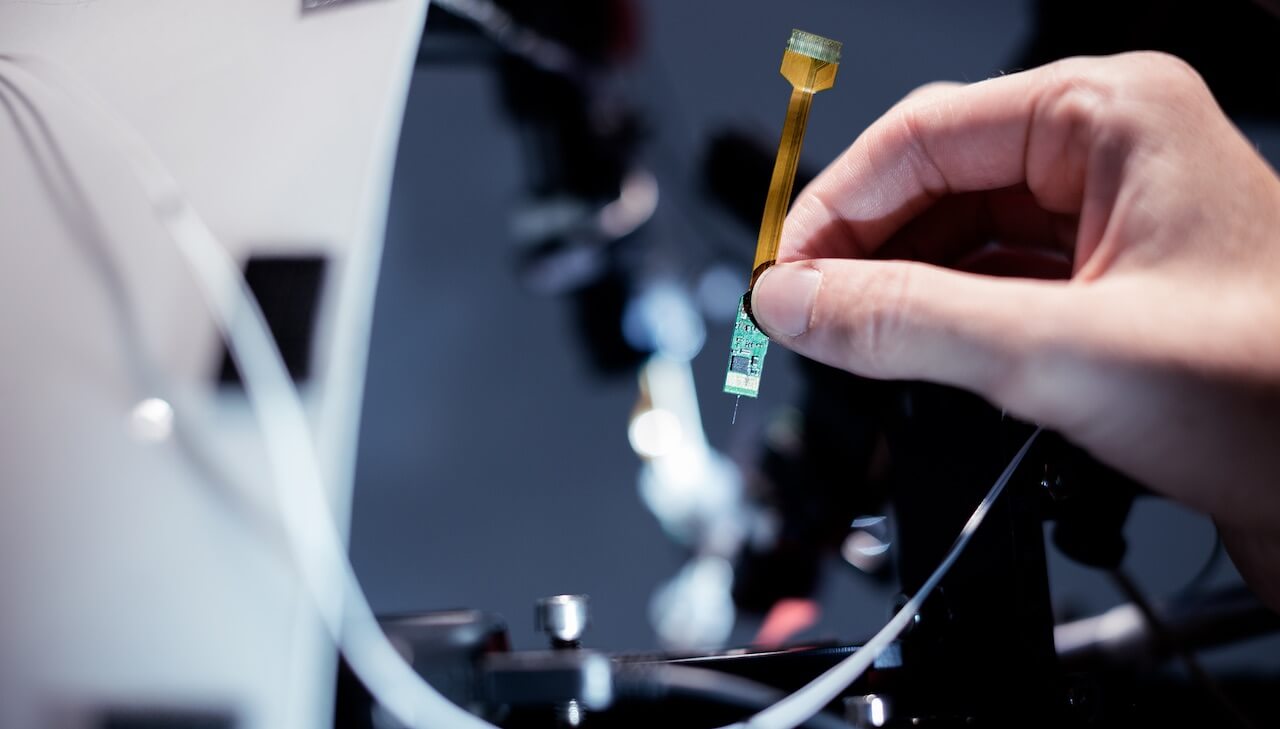
Now, a new study of the mouse visual system led by Allen Institute researchers has shown that certain visual information passes from the eyes through these parts of the brain in mammals, rather than through the canonical neural pathway previously thought to be responsible for trafficking everything we see. The study, which was published Tuesday in the journal Neuron, relied on recordings of electrical activity from more than 1,500 neurons in the mouse brain using a newly developed type of silicon probe, Neuropixels.
Previously, researchers had speculated that the brainstem and pulvinar might play a supporting role in allowing the cortex, the outermost shell of the brain responsible for most higher cognitive function, to process what it had seen.
“In this study, we’ve found that the pulvinar is not just a relay for parts of the cortex to communicate with each other,” said Sam Gale, Ph.D., one of the lead authors on the paper and a neuroscientist at the Allen Institute for Brain Science, a division of the Allen Institute. “It’s actually carrying information from the brainstem to the cortex.”
The more well-studied visual pathway does not involve the brainstem, passing instead from the retina directly to a different part of the thalamus known as the LGN, and then to the visual cortex. The researchers don’t know why mammals would have evolved to have two distinct pathways for processing vision in the brain.
“It looks like these two pathways might be carrying complementary visual information,” said Corbett Bennett, Ph.D., a neuroscientist at the Allen Institute for Brain Science and co-lead author on the study. “Ultimately, they could be important for different kinds of visual behavior.”
A mysterious brain region
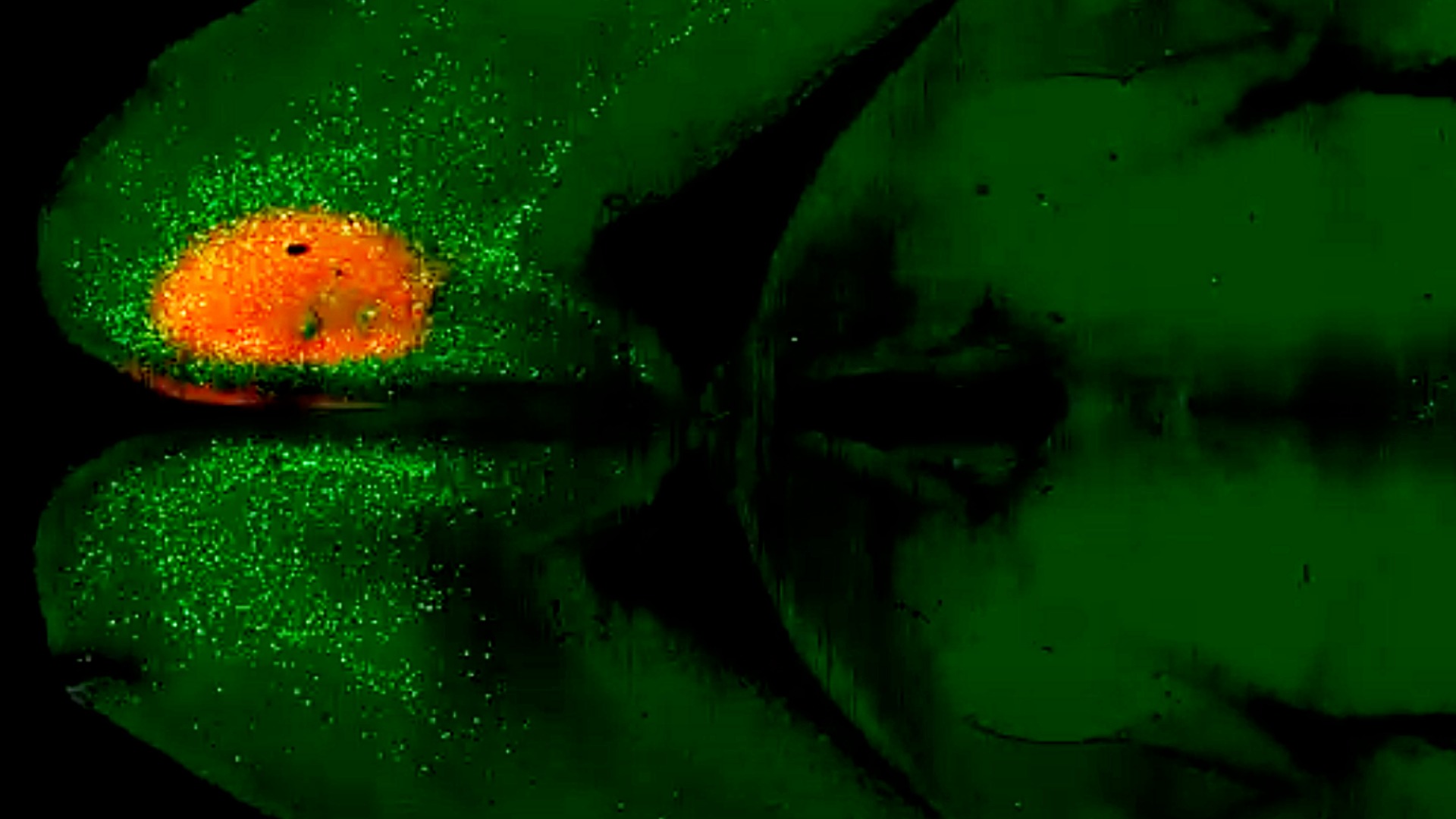
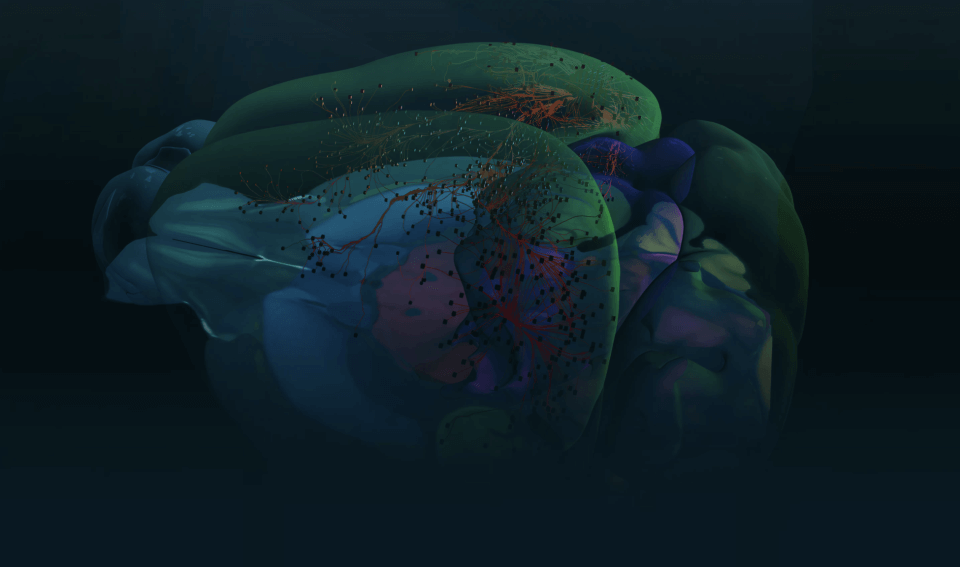
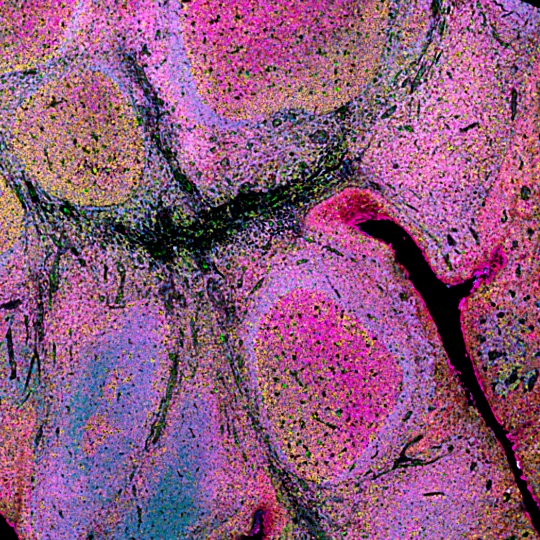
The Allen Institute researchers traced the connections that neurons in the mouse pulvinar send and receive using the Allen Mouse Brain Connectivity Atlas, a brain-wide map of neural wiring, together with new data collected with collaborators from the Salk Institute for Biological Studies. These data showed them a strong neural pathway running from the eyes to the superior colliculus to one specific region of the pulvinar, and then finally to the cortex.
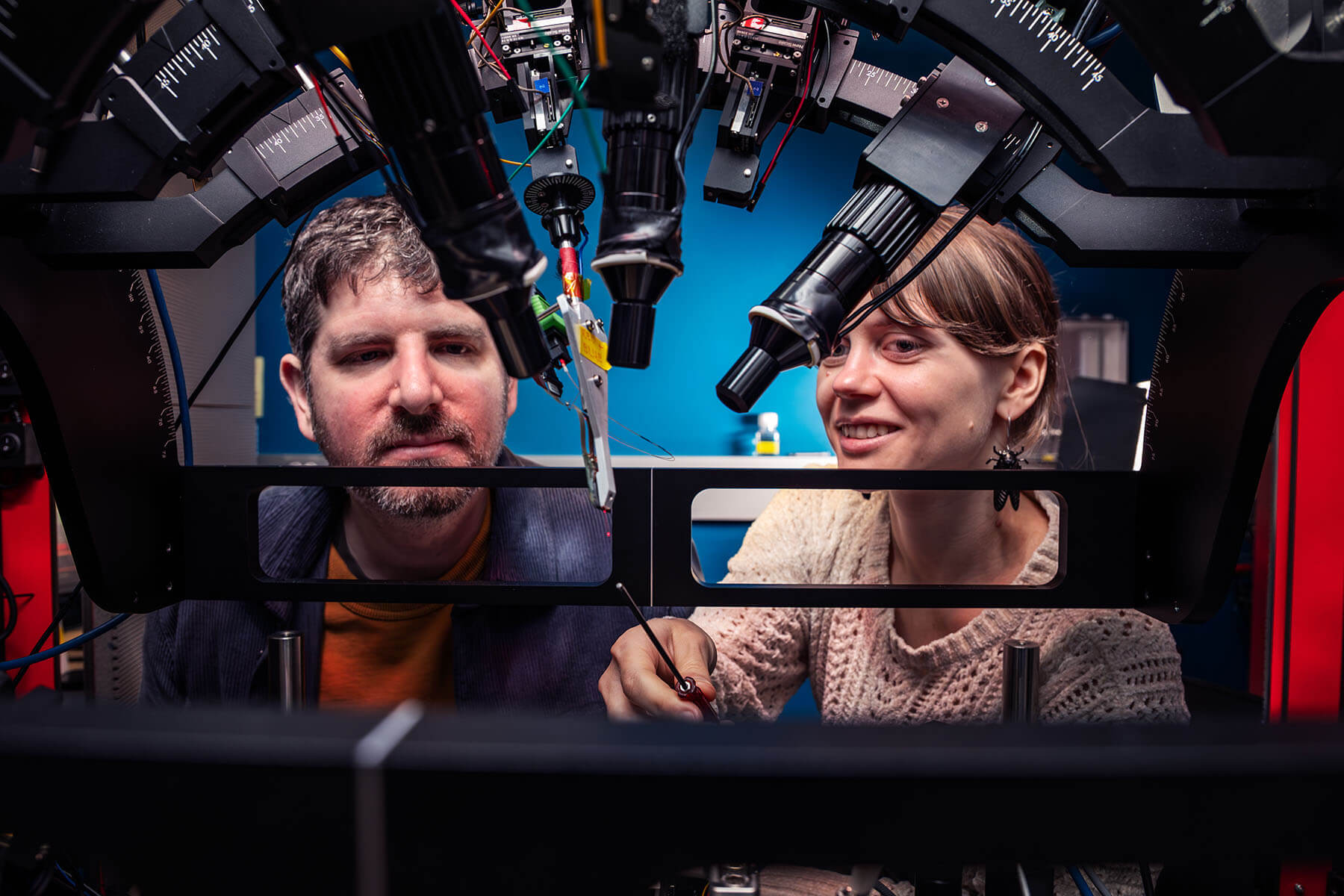
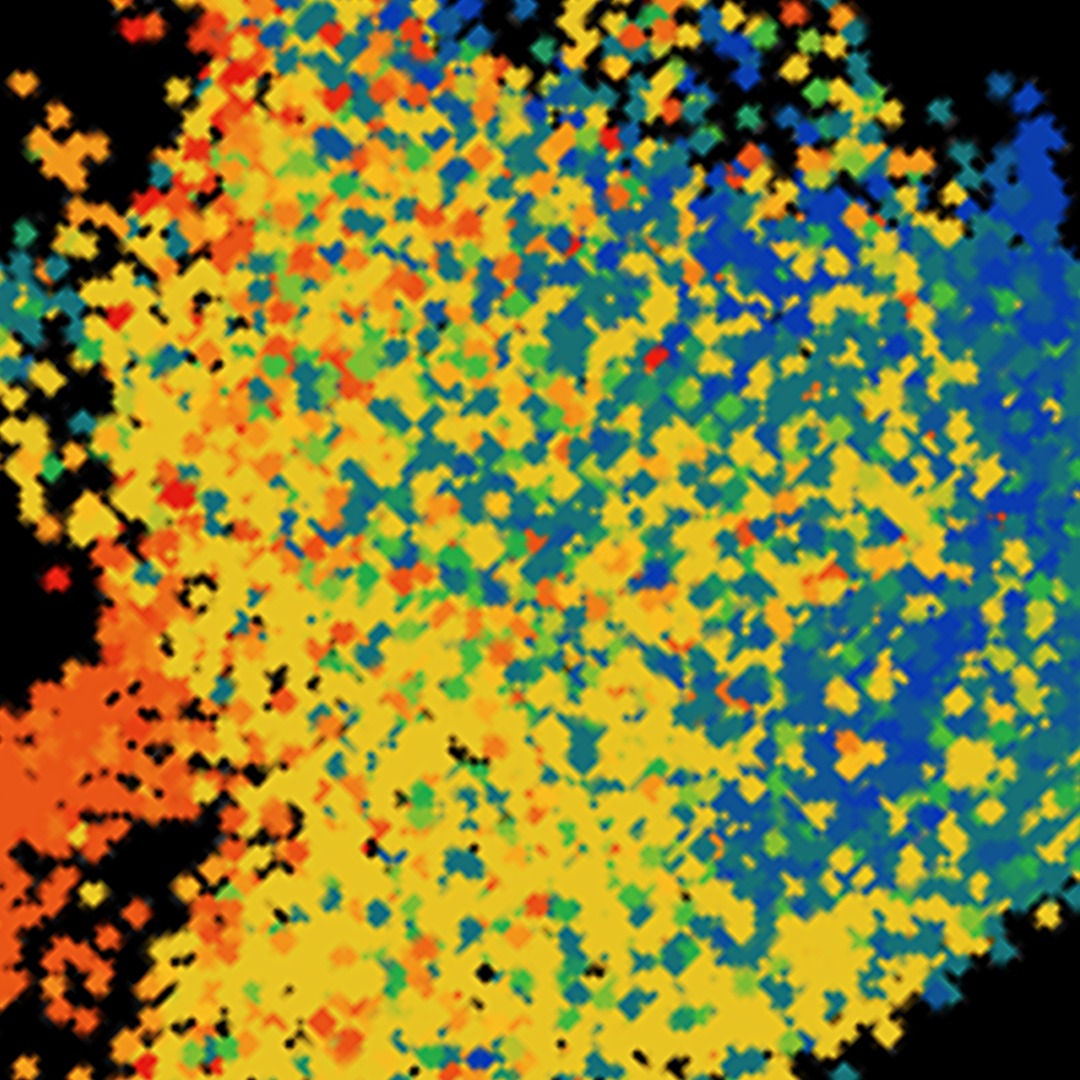
Using Neuropixels, tiny brain probes developed in a large collaboration that included the Allen Institute and which can detect electrical activity from hundreds of neurons at a time, the research team then studied the activity of the neurons in this part of the pulvinar. By surveying more than 1,500 pulvinar neurons as animals watched different moving images, they found that these cells respond most strongly to small moving objects or to stimuli that mimic an approaching object. When the researchers silenced the part of the brainstem that connects to the pulvinar, the superior colliculus, these neurons were no longer active when mice watched the moving images.
“It seems like these might be useful cells for responding to small objects,” Gale said. “For mice, that could be a predatory bird in the sky off in the distance, or insects that the mouse wants to hunt and eat.”
This study hasn’t directly shown that the pulvinar is involved in these instinctive responses. To get at that question, the next step would be to silence parts of the pulvinar-mediated brain pathway and ask if animals’ prey-capturing or predator-avoidance behavior is affected. But there are intriguing hints from other animals — including humans — that the pulvinar might play a role in subconscious reactions to things we see.
In monkeys, the pulvinar houses neurons that respond to images of snakes. In humans, the pulvinar has been implicated in a phenomenon known as “blindsight,” where people with damage to their visual cortex can still navigate visually through the world even though they’ve lost the ability to consciously realize they are seeing anything.
“The pulvinar is a complicated brain region, and it’s probably involved in many aspects of vision,” Bennett said. “Hopefully our data help to show how its pieces fit together.”
Other authors on the study include: Marina Garrett, Gabe Murphy and Shawn Olsen of the Allen Institute for Brain Science; and Melissa Newton and Edward Callaway of the Salk Institute for Biological Studies. Research described in this article was partially funded by National Institutes of Health awards EY022577 and MH063912 to the Callaway lab.
Citations
about the allen institute
The Allen Institute is an independent, 501(c)(3) nonprofit research organization founded by philanthropist and visionary, the late Paul G. Allen. The Allen Institute is dedicated to answering some of the biggest questions in bioscience and accelerating research worldwide. The Institute is a recognized leader in large-scale research with a commitment to an open science model. For more information, visit alleninstitute.org.