impact
impact
open science
subheadline
careers and opportunities
subheadline
people & teams
people & teams
subheadline
allenites
subheadline
allen institute advisors
subheadline
board of directors
subheadline
shanahan foundation fellowship
subheadline
next generation leaders
subheadline
research
overview
our approach
subheadline
publications
subheadline
open science
subheadline
accelerator
brain science
subheadline
cell science
subheadline
neural dynamics
subheadline
immunology
subheadline
synthetic biology
subheadline
education
education
science education
subheadline
education resources
subheadline
field trips
subheadline
open science
subheadline
open science quest
subheadline
news
news
stories
subheadline
podcast
subheadline
sign up for our newsletter
subheadline
events
events
all events
subheadline
conferences
subheadline
event code of conduct
subheadline
events
open science quest
subheadline
summer workshop on the dynamic brain
subheadline
open science week
subheadline
brain fest
subheadline
science resources
science resources
allencell.org
subheadline
allenimmunology.org
subheadline
allenneuraldynamics.org
subheadline
brain-bican.org
subheadline
brain-map.org
subheadline
microns-explorer.org
subheadline
impact
back to menu
impact
open science
subheading
careers and opportunities
subheading
people & teams
people & teams
subheading
allen institute advisors
subheading
board of directors
subheading
shanahan foundation fellowship
subheading
next generation leaders
subheading
research
back to menu
impact
Label
subheading
Label
subheading
people & teams
education
back to menu
research
Label
subheading
Label
subheading
Heading
news
back to menu
research
Label
subheading
Label
subheading
Heading
events
back to menu
research
Label
subheading
Label
subheading
Heading
science resources
back to menu
science resources
allencell.org
subheading
allenimmunology.org
subheading
allenneuraldynamics.org
subheading
brain-bican.org
subheading
brain-map.org
subheading
microns-explorer.org
subheading
search
stories
news

Canadian Ph.D. student, Sam Mestern, wins first MapMySpikes challenge

The Allen Institute for Brain Science's MapMySpikes challenge aimed to address a key challenge in neuroscience by making connections between...

December 9, 2024
 min read
share/
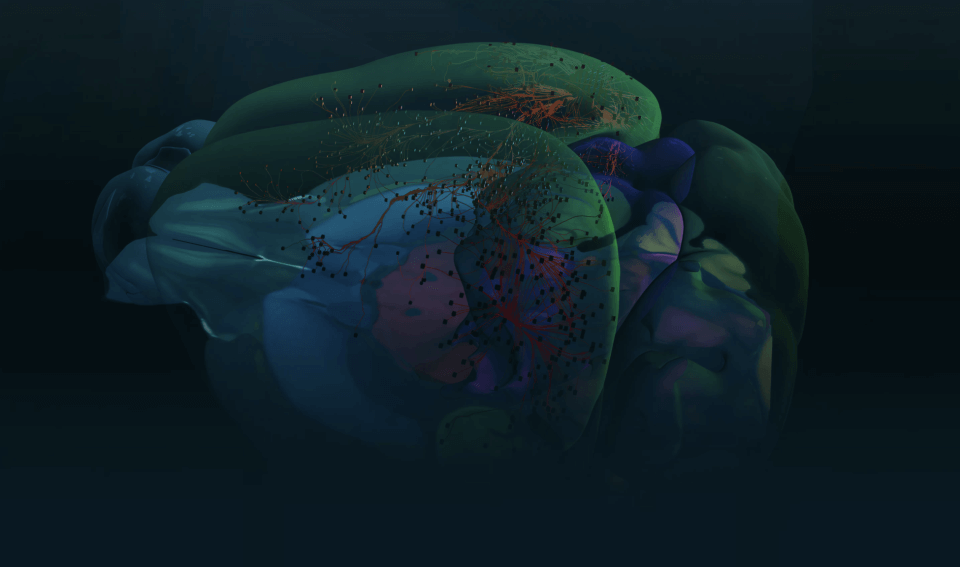
The Allen Institute for Brain Science's MapMySpikes challenge aimed to address a key challenge in neuroscience by making connections between cells' electrical and molecular properties.
Thank you! Your submission has been received!
Oops! Something went wrong while submitting the form.

in this article

table of contents will display on published page only
set h2 to populate the table of contents here

authors

Rachel Hostetler
Scientist I

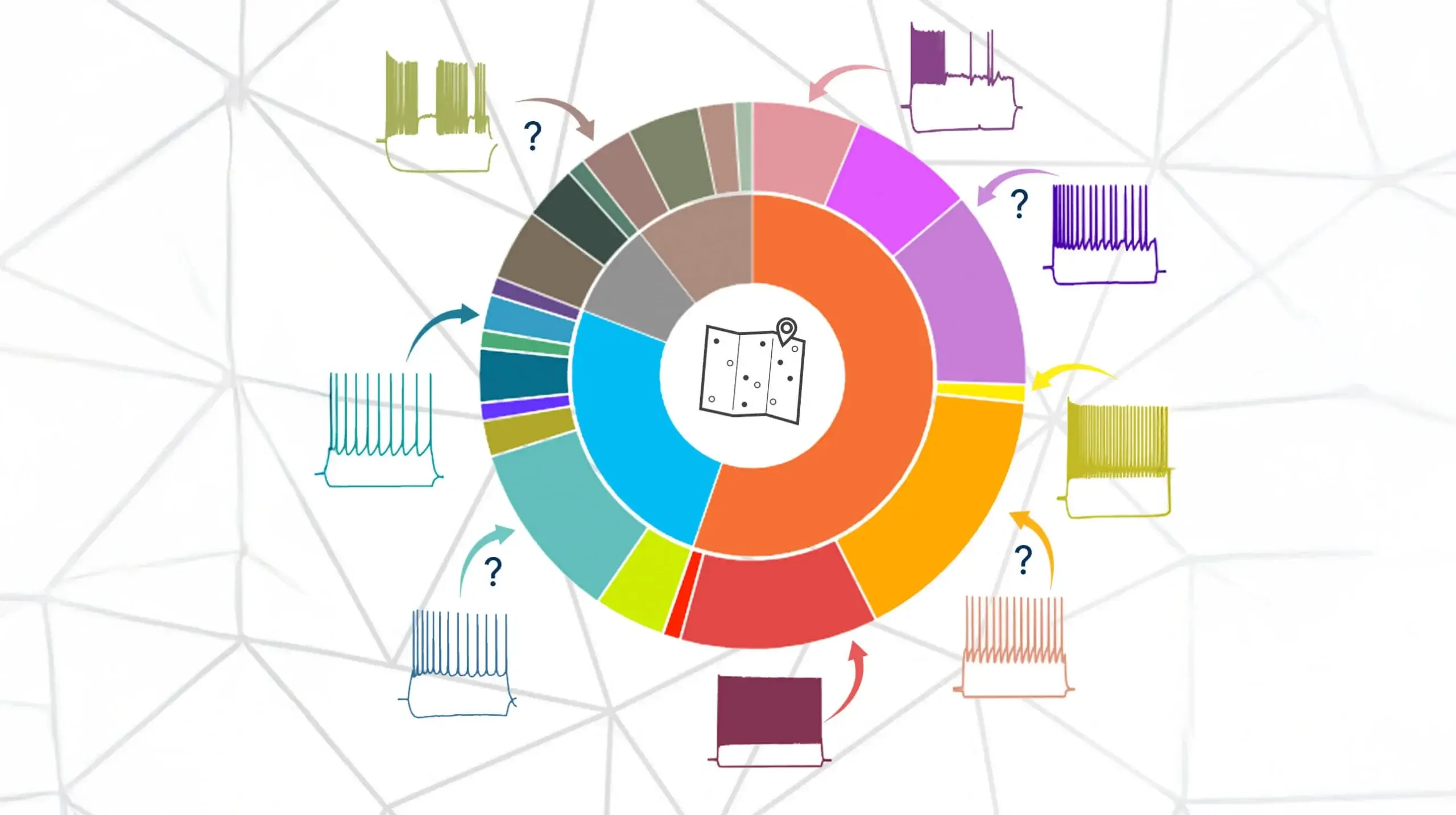
This year, the Allen Institute for Brain Science (AIBS) hosted a unique data challenge called MapMySpikes where participants were tasked with mapping “mystery” datasets featuring electrophysiological data from individual cells onto AIBS Patch-seq datasets, which include both electrophysical data and transcriptomic data.

They were challenged to create an algorithm and user-friendly tool to map the data, and the goal was to make connections between cells’ electrical and molecular properties—a current challenge in the neuroscience field.
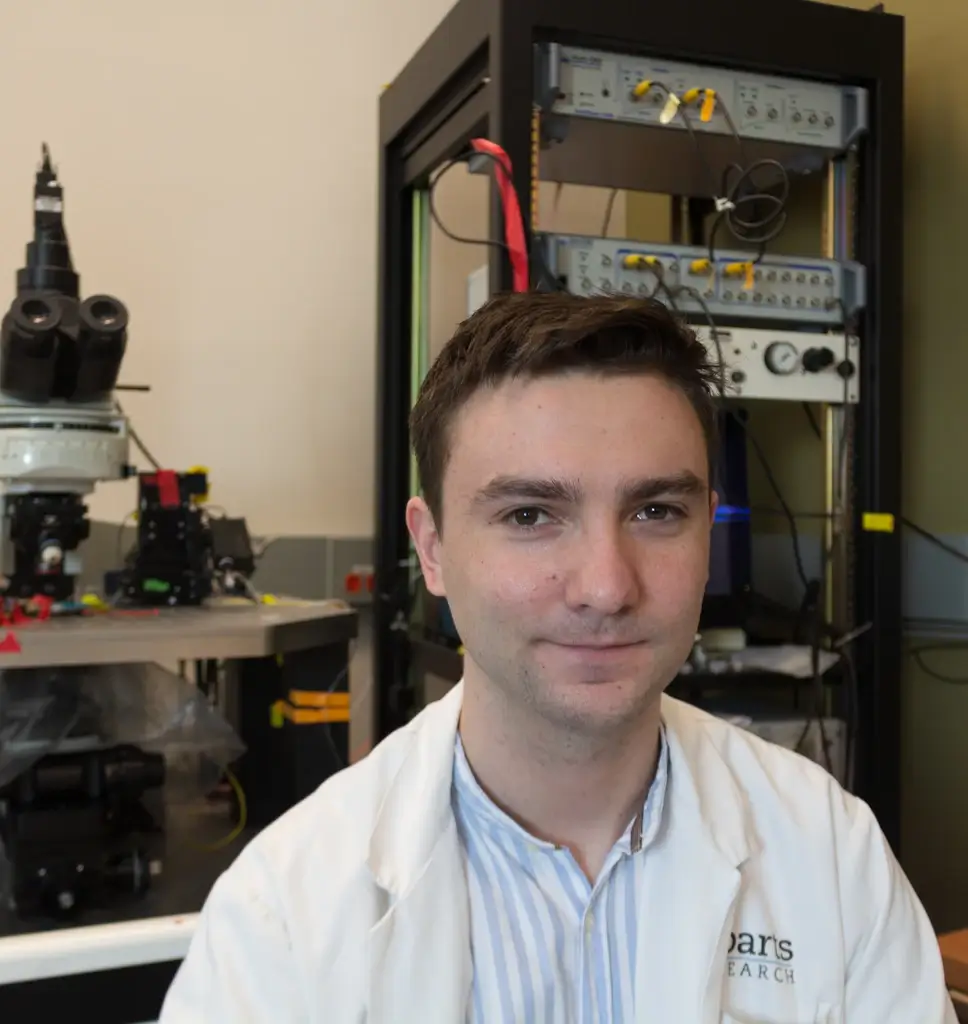
Man in lab coat smiles in laboratory with scientific equipment and 3D printer visible.
Sam Mestern is a Ph.D. student at Western University (Ontario, Canada) in Dr. Wataru Inoue’s lab

This was a tricky task, including for the winner, Sam Mestern. “The most challenging aspect was handling the differences between the datasets as a result of different [chemical] solutions, temperatures, and everything. I really didn’t know if it was possible when I started out.”

Sam’s winning solution PatchOTDA (Patch Clamp Optimal Transport Domain Adaptation) won both parts of the data challenge; it had the highest accuracy for mapping the mystery cells onto the AIBS Patch-seq datasets and was voted the most user-friendly tool by our judging panel. Sam is a Ph.D. student at Western University (Ontario, Canada) in Dr. Wataru Inoue’s lab, using electrophysiology (in vitro patch clamp and dynamic clamp) and in silico modeling to study how stress neurons in the hypothalamus perform computations.

To align the electrophysiology datasets, he turned to techniques used in other neuroscience fields. “My solution was most inspired by the transcriptomic field. They do a lot of research related to integrating data from across species and labs. I wanted to look there to see how they’re accomplishing their data integration and that led me into the field of domain adaptation,” he said. “I wondered if this is a problem where we see a shift in the data distribution, so we can probably use optimal transport-based solutions to get things aligned and integrated together.” Domain adaptation is a technique in machine learning focused on adapting a model trained on one dataset to work on others.
Abstract line art profile of human head facing right with parallel contour lines

I think data challenges like this can bring a lot of fresh ideas and perspectives since they are call-outs to the major neuroscience community—it can bring in a lot of people who are maybe on the outskirts.

Sam Mestern

Ph.D. student at Western University

Upon hearing about the challenge, he was excited as it was relevant to his research and he was already familiar with Allen Institute data. “We use it at all stages of research from theorizing, to hypothesis generation, to validation. We use the Connectivity Atlas and the ISH Atlas when we’re planning injections for circuit tracing. Most of our analysis code for electrophysiology is based off of the Allen Institute’s open electrophysiological analysis tools,” said Mestern.

“Overall, the Allen Institute tools have made my work much more efficient and much more straightforward—they’ve eased a lot of my anxiety because I know I have them to reference when I want to validate something or make sure the tool is working like intended.”

Making the science accessible

Even though Sam is a proponent of open science having used many open datasets, tools, and code himself, it was a new experience being a contributor, as the data challenge involved creating a user-friendly tool. “Learning to package, build, document my code and write it in a way that the public could use and comprehend was a whole new challenge for me, because most of the research code I write here I just use personally,” said Mestern.

He also commented on the benefits of open data challenges like MapMySpikes: “I think data challenges like this can bring a lot of fresh ideas and perspectives since they are call-outs to the major neuroscience community—it can bring in a lot of people who are maybe on the outskirts.”

Sam was invited to give a live webinar on November 20 where he showcased PatchOTDA, which features a Python package and a web-based tool.

Although the data challenge has ended, Sam plans to continue working with his PatchOTDA algorithm. “We’ve always been interested in integrating datasets across species and labs, and we’re really interested in applying this technique I developed to our electrophysiology data and hopefully drive some novel insights.”

The MapMySpikes data challenge was supported by the National Institute of Neurological Disorders and Stroke of the National Institutes of Health under Award Number U24NS133077. The content is solely the responsibility of the authors and does not necessarily represent the official views of the National Institutes of Health.

Citations
No items found.

about the allen institute

The Allen Institute is an independent, 501(c)(3) nonprofit research organization founded by philanthropist and visionary, the late Paul G. Allen. The Allen Institute is dedicated to answering some of the biggest questions in bioscience and accelerating research worldwide. The Institute is a recognized leader in large-scale research with a commitment to an open science model. For more information, visit alleninstitute.org.
explore related stories

explore more stories
news 
“Computational crystal ball” helps predict cell behavior
New technology could lead to better treatments for cancer by allowing scientists to perform virtual experiments
news 
Neuropixels Opto sheds new light into deepest regions of the brain
A single tool measures and manipulates brain cell communication and democratizes advanced neuroscience
news 
Mind trip: How psilocybin changes the brain
New research may help improve psychedelic therapy for neuropsychiatric disorders
news 
Computer model predicts aspects of cognitive performance
The Allen Human Brain Atlas helped researchers design a model that looked at “intrinsic neural timescales”
Allen Impact 2025
Technology and innovation are fueling discovery in science like never before we’re proud to be leading the way. 2025 was a year of tremendous impact...
Scientists unveil the world's most comprehensive AI-powered tool for neuroscience: Brain Knowledge Platform
Massive, first-of-its-kind data resource aims to accelerate medical breakthroughs in brain diseases like Alzheimer’s and Parkinson's
we acceleratedevelopcatalyzeimpact

science done differently. shared with the world.

explore our accelerators

brain science

Mapping every cell, connection, and circuit in the brain—openly shared with the world.

cell science

Decoding how cells become tissues, then programming that knowledge into powerful new research tools.

neural dynamics

Revealing the brain's hidden algorithms that transform neural activity into real-world behavior.

immunology

Creating the deepest open reference for the healthy human immune system ever built.

synthetic biology

Engineering cells to record their own histories, transforming how we understand disease over time.

research

Big questions, open answers, and science built to be shared.

education

Inspiring the next generation of scientists through open science resources.

impact

Our science is empowering researchers and advancing health worldwide.
advancing science through open, collaborative research
Get the allen institute newsletter
Stay informed on the latest breakthroughs in neuroscience, bioscience, and AI-driven research.
allen institute
impactpeople & teamscareers & opportunitiesalumnihistory & founder
science resources
allencell.orgallenimmunology.orgallenneuraldynamics.orgbrain-bican.orgbrain-map.orgmicrons-explorer.org
research
brain sciencecell scienceneural dynamicsimmunologysynthetic biologypublications
education
science educationfield tripsprofessional developmenteducation resources
quick links
newseventsopen sciencepodcastscience resourceshuman brain donationvisit uscontact
follow us/

allen institute, 615 Westlake Ave North, Seattle, WA 98109 +12065487055

© 0000 allen institute. all rights reserved.
privacy policyterms of usecitation policyemployee portalpolicy & compliance