
impact
impact
open science
subheadline
careers and opportunities
subheadline
people & teams
people & teams
subheadline
allenites
subheadline
allen institute advisors
subheadline
board of directors
subheadline
shanahan foundation fellowship
subheadline
next generation leaders
subheadline
research
overview
our approach
subheadline
publications
subheadline
open science
subheadline
accelerator
brain science
subheadline
cell science
subheadline
neural dynamics
subheadline
immunology
subheadline
synthetic biology
subheadline
education
education
science education
subheadline
education resources
subheadline
field trips
subheadline
open science
subheadline
open science quest
subheadline
news
news
stories
subheadline
podcast
subheadline
sign up for our newsletter
subheadline
events
events
all events
subheadline
conferences
subheadline
event code of conduct
subheadline
events
open science quest
subheadline
summer workshop on the dynamic brain
subheadline
open science week
subheadline
brain fest
subheadline
science resources
science resources
allencell.org
subheadline
allenimmunology.org
subheadline
allenneuraldynamics.org
subheadline
brain-bican.org
subheadline
brain-map.org
subheadline
microns-explorer.org
subheadline
impact
back to menu
impact
open science
subheading
careers and opportunities
subheading
people & teams
people & teams
subheading
allen institute advisors
subheading
board of directors
subheading
shanahan foundation fellowship
subheading
next generation leaders
subheading
research
back to menu
impact
Label
subheading
Label
subheading
people & teams
education
back to menu
research
Label
subheading
Label
subheading
Heading
news
back to menu
research
Label
subheading
Label
subheading
Heading
events
back to menu
research
Label
subheading
Label
subheading
Heading
science resources
back to menu
science resources
allencell.org
subheading
allenimmunology.org
subheading
allenneuraldynamics.org
subheading
brain-bican.org
subheading
brain-map.org
subheading
microns-explorer.org
subheading
search
stories
news

New technique sorts out what different kinds of neurons do in the brain

Study pinpoints a mouse neuron’s role in sensing touch

January 7, 2022
 min read
share/
A new study led by researchers at Boston University in collaboration with scientists at the Allen Institute for Brain Science, a division of the Allen Institute, describes a method aimed at addressing those questions. The study, published Friday in the journal Science, also pinpoints new functions for one kind of mouse neuron that’s involved in sensing touch.
Thank you! Your submission has been received!
Oops! Something went wrong while submitting the form.

in this article

table of contents will display on published page only
set h2 to populate the table of contents here

authors

Rachel Tompa
Senior Editor
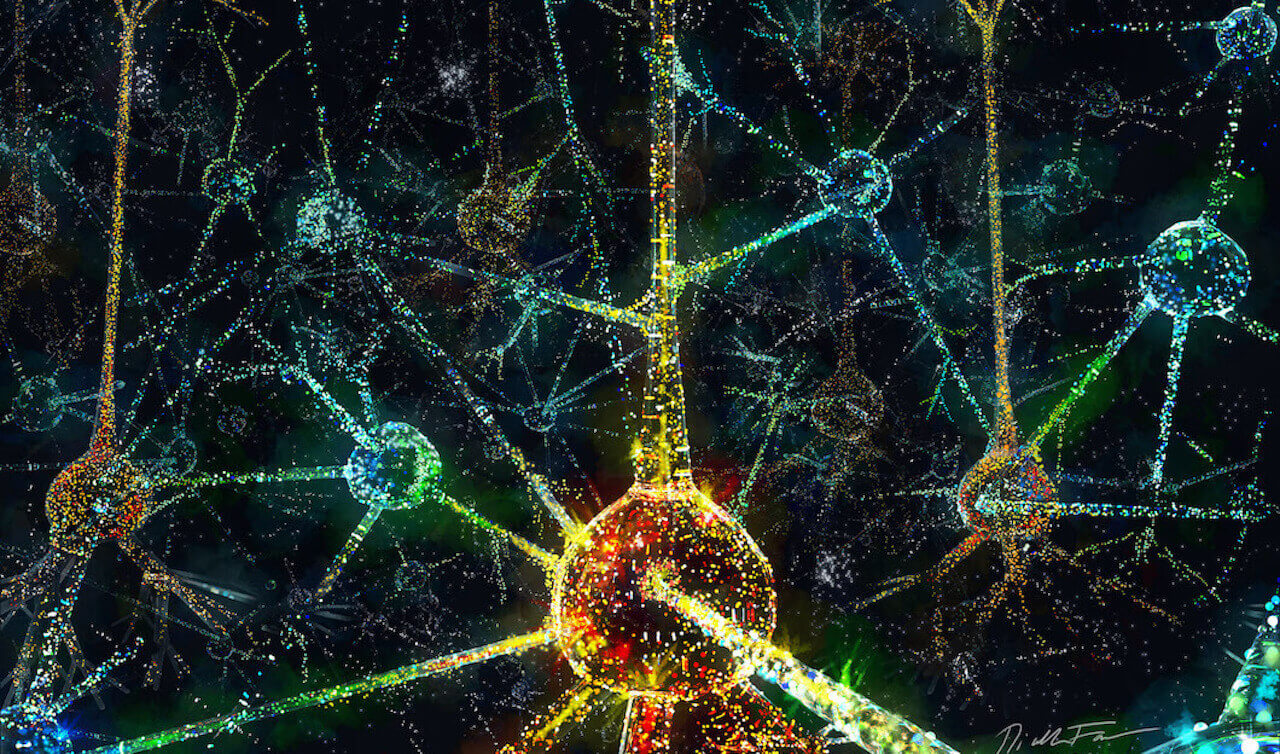
Glowing network nodes with connected pathways in vibrant cyan, green, and yellow lights

Our brains are made up of a confusing tangle of hundreds of different kinds of cells, wired together in an even larger number of different combinations.

While scientists are making headway at sorting out the number and types of neurons and other cells that are the building blocks of the mammalian brain, broader questions remain largely unanswered: Why do we have so many kinds of neurons? What do they all do?

A new study led by researchers at Boston University in collaboration with scientists at the Allen Institute for Brain Science, a division of the Allen Institute, describes a method aimed at addressing those questions. The study, published Friday in the journal Science, also pinpoints new functions for one kind of mouse neuron that’s involved in sensing touch.

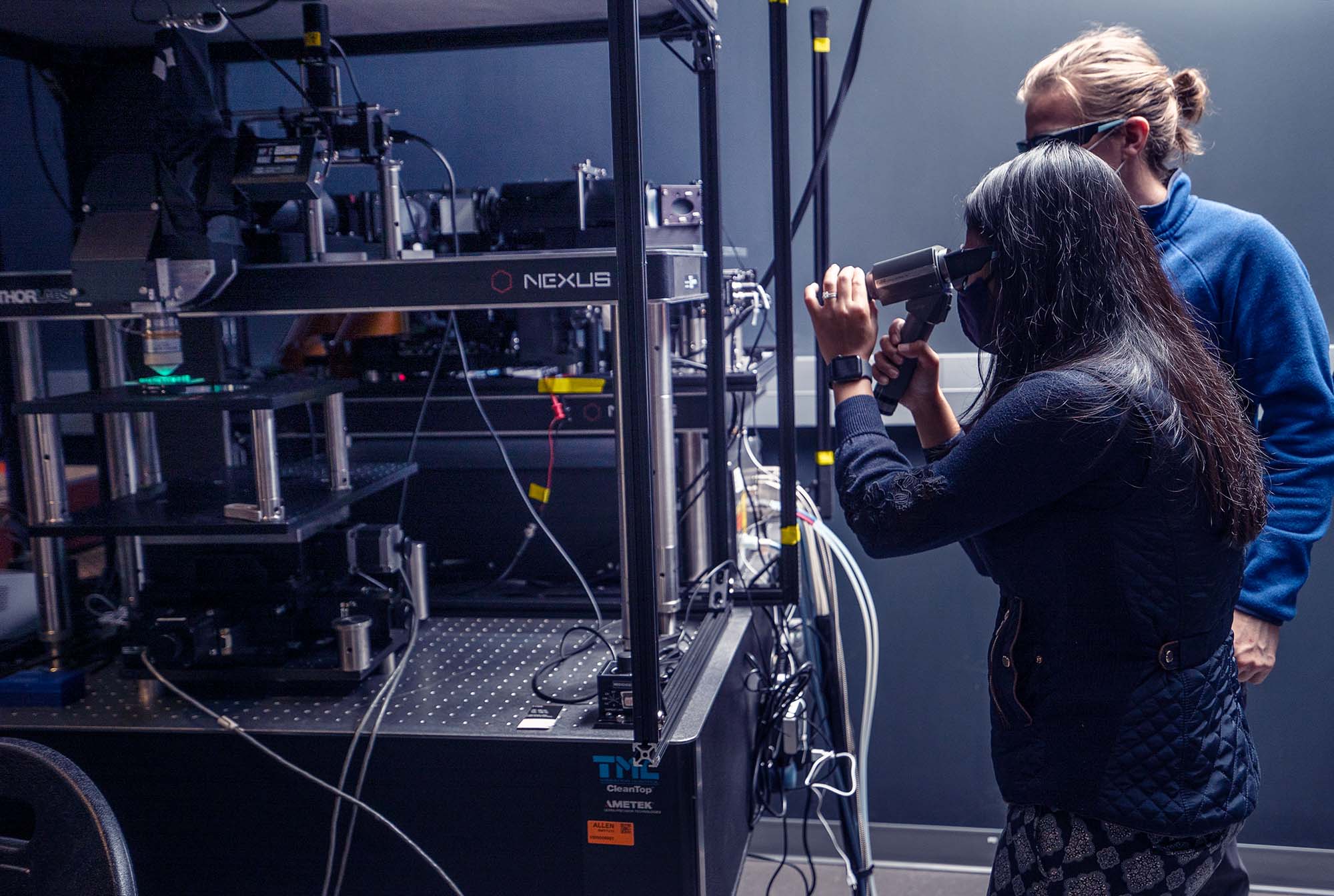
While techniques exist to capture the activity of individual neurons in the brain, scientists usually know very little about what type of neuron they’re watching. The new method, developed by Jerry Chen, Ph.D., an assistant professor of biology at Boston University, uses Allen Institute catalogs of brain cell types married with a technique to study the neural activity of those specific types.

The catalogs of brain cell types were generated by measuring the full suite of genes switched on in a single cell and then cataloging the cell types based on this measure of gene activity, also called single-cell transcriptomics. Chen and his colleagues used a subset of these genes together with another technique that measures neurons’ activity under the microscope as animals are performing different tasks to link neuron types with their function. The project grew from Chen’s experience as an Allen Institute Next Generation Leader, an advisory council at the Institute comprised of early-career neuroscientists.

“The field is absolutely ready for these kinds of data,” said Bosiljka Tasic, Ph.D., Director of Molecular Genetics at the Allen Institute for Brain Science and one of the study co-authors. “We have cell types that we define based on these molecular signatures, and now we want to know what they do.”

Neurons tuned to important sensations

Chen and his team used the technique to examine neurons in a part of the brain that respond to and process touch. Using laboratory mice that were trained to respond to their whiskers being touched in a certain way, the scientists looked for neural activity that correlated to specific kinds of touch. They found that one neuron type, named Baz1a based on a gene it expresses, seems to act as a kind of coordinating hub for neural circuits related to touch and memory.

“Let’s say you’re rummaging through your bag feeling for your car keys with your fingers. You know what you’re looking for, because you’ve learned what a car key feels like, so there are certain features that will probably jump out at you,” Chen said. “I think that’s what these Baz1a cells are doing. If anything salient is perceived, those cells are activated and they recruit the rest of the network to start to fill in the gaps and process information.”

They also found that Baz1a neurons have persistent expression of genes associated with plasticity, or the brain’s ability to adapt in response to new information and memory, meaning these cells might be primed to remember old sensory information while accommodating new details. The Boston University team is now looking through the Allen Institute datasets for other neuron types that have similar genetic features to understand whether cells with plasticity genes persistently switched on might play a general role in learning and memory.

The research described in this article was partially funded by award U19Mh414830 from the National Institutes of Health’s National Institute of Mental Health. The content is solely the responsibility of the authors and does not necessarily represent the official views of NIH and its subsidiary institutes.

Citations
No items found.

about the allen institute

The Allen Institute is an independent, 501(c)(3) nonprofit research organization founded by philanthropist and visionary, the late Paul G. Allen. The Allen Institute is dedicated to answering some of the biggest questions in bioscience and accelerating research worldwide. The Institute is a recognized leader in large-scale research with a commitment to an open science model. For more information, visit alleninstitute.org.

explore related stories

explore more stories
news 
“Computational crystal ball” helps predict cell behavior
New technology could lead to better treatments for cancer by allowing scientists to perform virtual experiments
news 
Neuropixels Opto sheds new light into deepest regions of the brain
A single tool measures and manipulates brain cell communication and democratizes advanced neuroscience
news 
Mind trip: How psilocybin changes the brain
New research may help improve psychedelic therapy for neuropsychiatric disorders
news 
Computer model predicts aspects of cognitive performance
The Allen Human Brain Atlas helped researchers design a model that looked at “intrinsic neural timescales”
Allen Impact 2025
Technology and innovation are fueling discovery in science like never before we’re proud to be leading the way. 2025 was a year of tremendous impact...
news 
Scientists develop new way to “listen in” on the brain’s hidden language
Paradigm-shifting technology is changing how researchers do neuroscience
we acceleratedevelopcatalyzeimpact

science done differently. shared with the world.

explore our accelerators

brain science

Mapping every cell, connection, and circuit in the brain—openly shared with the world.

cell science

Decoding how cells become tissues, then programming that knowledge into powerful new research tools.

neural dynamics

Revealing the brain's hidden algorithms that transform neural activity into real-world behavior.

immunology

Creating the deepest open reference for the healthy human immune system ever built.

synthetic biology

Engineering cells to record their own histories, transforming how we understand disease over time.

research

Big questions, open answers, and science built to be shared.

education

Inspiring the next generation of scientists through open science resources.

impact

Our science is empowering researchers and advancing health worldwide.
advancing science through open, collaborative research
Get the allen institute newsletter
Stay informed on the latest breakthroughs in neuroscience, bioscience, and AI-driven research.
allen institute
impactpeople & teamscareers & opportunitiesalumnihistory & founder
science resources
allencell.orgallenimmunology.orgallenneuraldynamics.orgbrain-bican.orgbrain-map.orgmicrons-explorer.org
research
brain sciencecell scienceneural dynamicsimmunologysynthetic biologypublications
education
science educationfield tripsprofessional developmenteducation resources
quick links
newseventsopen sciencepodcastscience resourceshuman brain donationvisit uscontact
follow us/

allen institute, 615 Westlake Ave North, Seattle, WA 98109 +12065487055

© 0000 allen institute. all rights reserved.
privacy policyterms of usecitation policyemployee portalpolicy & compliance