in this article
Investor and philanthropist Paul G. Allen today announced a commitment of $100 million in seed money dedicated to brain research and unveiled the creation of the Allen Institute for Brain Science in Seattle. Founded as an innovative and unprecedented resource for neuroscientists around the world, the nonprofit Allen Institute – and its inaugural project the Allen Brain Atlas – will combine the disciplines of neuroscience and genomics to create a map of the mammalian brain at the cellular level. Through a collection of gene expression maps, brain circuitry and cell location, the Atlas will illustrate the functional anatomy of the brain. Building a publicly-accessible research tool that overlays structural imagery of the brain with specific details about the locations and functions of active genes will be carried out on an unprecedented scale, representing an immense advance in brain science. Long-term, the research will contribute to the work of scientists, medical researchers and educators around the world, supporting the development of new insights into normal brain function, as well as fundamental clues about the development and treatment of brain-related disorders, emotion, cognition, learning and memory. The findings will also provide valuable support for third-party research into the treatment and prevention of diseases such as Alzheimer’s, schizophrenia, clinical depression, autism, addiction disorders and more.
In addition to Allen’s significant investment of seed money, other sources of private and government funding are being explored. The 501(c)(3) Allen Institute for Brain Science is a private nonprofit organization.
“Over the last decade I have become increasingly interested in the fields of genomics and neuroscience, and their important role in human development, behavior, and health – and ultimately, understanding more about how the brain actually works,” said Paul G. Allen. “It’s awe-inspiring how a genome with only 30,000 genes can create the brain – a highly complex system of an estimated trillion nerve cells linked in an extraordinarily intricate network. We conceived the Institute and Atlas projects with a group of eminent neuroscience and genetics researchers, and are funding much-needed research efforts that will have a positive and lasting impact on all areas of brain science. By making the Atlas data accessible in the public domain, and by collaborating with scientific experts around the world, we believe this is a historic opportunity to unite the genome and the brain – and use the data and technology to tackle the challenges of neurodevelopmental, neurodegenerative and psychiatric disease.”
“This is yet another creative masterstroke by Paul Allen, who once again has thought up an unconventional but valuable outlet for his philanthropy,” said Dr. Steven Pinker, Johnstone Professor of Psychology at Harvard University and an advisor to the Allen Institute. “Paul asked the experts a simple question – how can a smallish genome build a complex brain? – and discovered that the answer required a new synthesis between neuroscience, genomics, and psychology that is unlikely to take place without a strategic nudge. The Allen Institute is like nothing else out there, and it could help to give rise to a whole new field of human knowledge.”
The Allen Institute for Brain Science
Based in Seattle, the Allen Institute for Brain Science is being founded to identify and address key issues in neuroscience, specifically those that can ultimately advance the study of human behavior. Through strategic partnerships and collaborations, the Institute will focus its efforts and resources on multidisciplinary research and development projects in neuroscience, psychology and behavioral studies, with an emphasis on understanding cognition, language, emotion and memory.
The Allen Brain Atlas
The first endeavor of the Allen Institute for Brain Science is the Allen Brain Atlas project, the planning for which has been underway for two years. For decades, scientists have been eager for an intense, focused effort to develop a compendium of information that could serve as a foundation for general brain research. Instead of researching genes one at a time, the Allen Brain Atlas project will give scientists an unprecedented view of that portion of the genome that is active in the brain. This comprehensive view will help scientists quickly, cheaply and effectively translate the burgeoning knowledge of the human and other genomes into much-needed biological and medical advances. Completion of the Atlas project is anticipated to take approximately five years, with the first release of data scheduled for the first quarter of 2004.
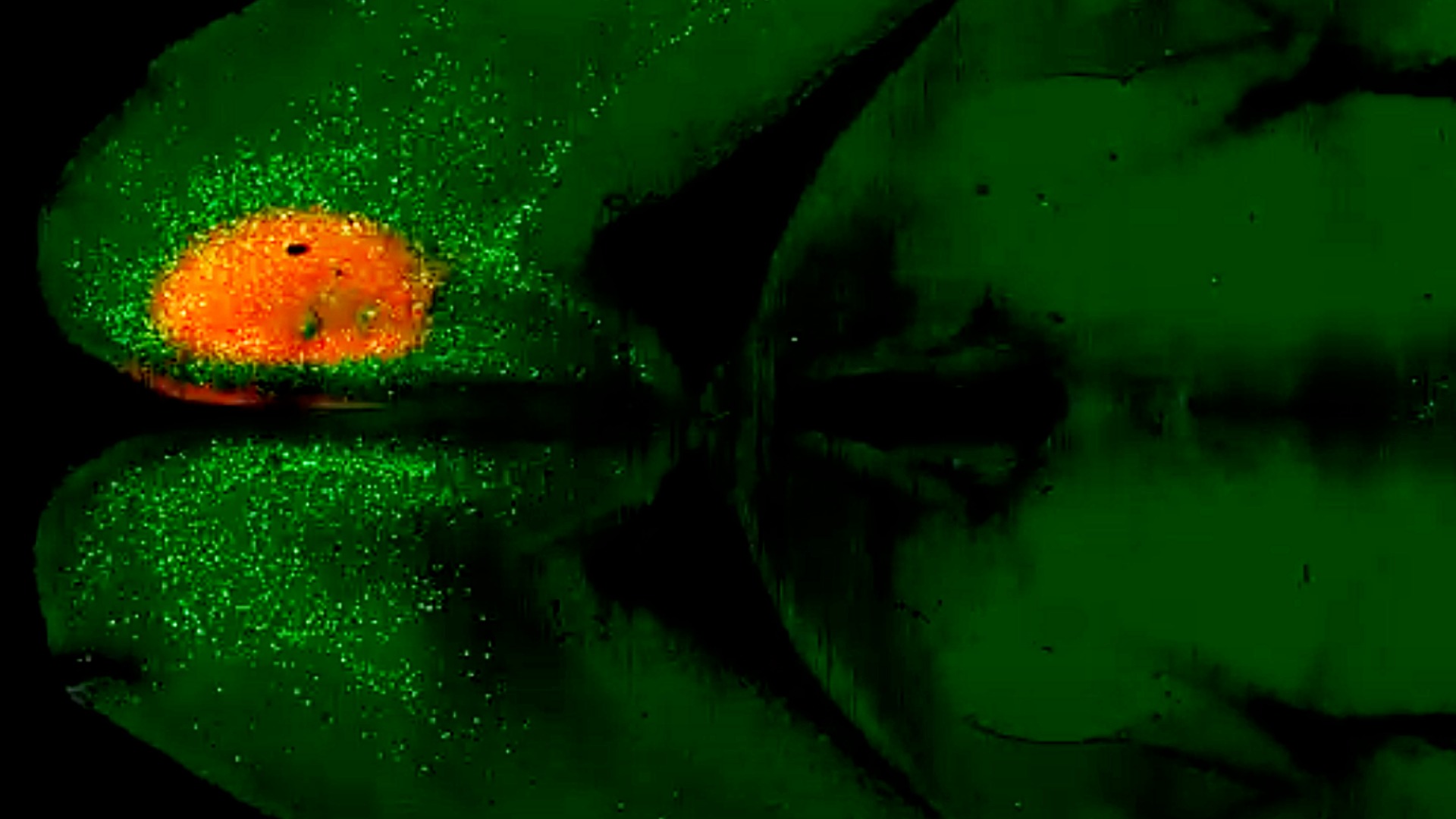
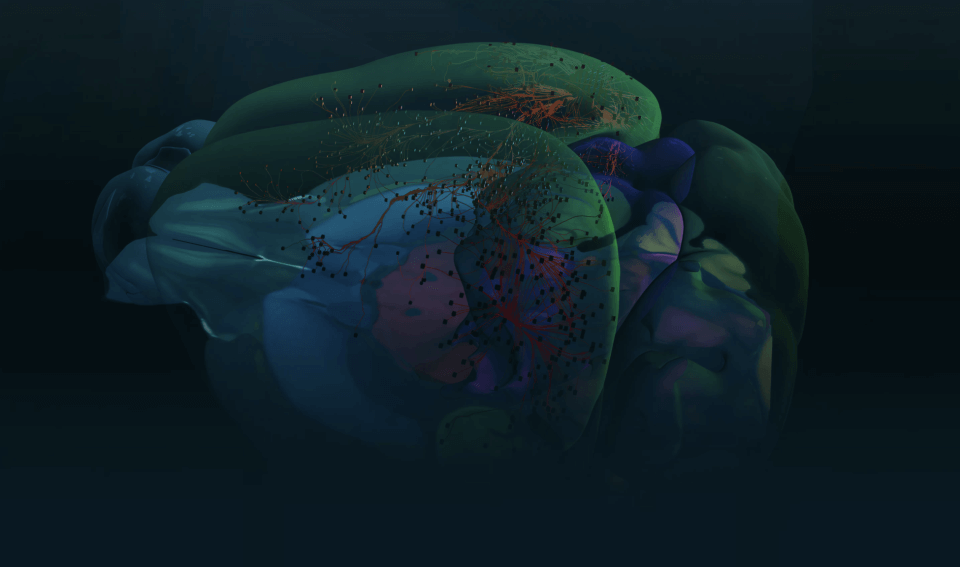
Initially, the Allen Brain Atlas project will build a gene expression atlas of the brain of a mouse – an animal that has long been a human surrogate for biomedical research and whose genome map became available just one year after the human genome was completed. Through the process of comparative genomics, many of the findings in the mouse brain will be transferable to humans since both have approximately 30,000 remarkably similar genes. Discovering which genes are active in different regions of the brain is a first step toward understanding functional differences between neurons on the cellular and molecular level, and what percentage of the human genome is involved in building and operating the human brain. Because the brain is our most complex organ, it is estimated that up to 20,000 genes (2/3 of the entire genome) may play a critical role in the development and functioning of a healthy human brain. With a goal to comprehensively define the unique molecular properties of brain cells that may underlie neural functions such as learning, memory, emotions and cognition, the Allen Brain Atlas project will also add a new dimension to classical anatomy by defining molecular anatomy at a cellular scale of resolution and a genome scale of scope. The Atlas will also enhance the ability of scientists to build other types of maps, including those based upon proteomics (the study of large numbers of individual proteins) and functional imaging. Learn more about the Allen Brain Atlas online at www.brainatlas.org.
Project Team and Scientific Advisory Board
The Atlas project team is under the leadership of Allen Institute co-founder Jo Allen Patton, and comprises a multidisciplinary group of scientists and information technology specialists recruited from both academia and industry. Together, these experts are designing a database and a collection of software tools that will combine state-of-the-art technologies for information processing, storage and data mining, enabling Allen Institute researchers, and scientists everywhere, to exploit the data in their research.
In addition to the expert project team, the Atlas project has an international and illustrious board of scientific advisors, including: David Anderson from California Institute of Technology; Gregor Eichele from the Max Planck Institute; Richard Gibbs of Baylor College of Medicine; Steven Paul of Lilly Research Laboratories; Gregory Schuler from the National Center for Biotechnology Information; Joseph Takahashi of Northwestern University; Marc Tessier-Lavigne of Genentech, Inc.; and, Arthur Toga from the Laboratory of Neuro Imaging at UCLA. In addition, James Watson (who co-discovered the double helix structure of DNA) and Steven Pinker are advisors to the Allen Institute. Over the next several years, staffing plans include hiring approximately 75 more scientists, technology experts and other professionals to work on the Atlas project as well as additional initiatives of the Allen Institute for Brain Science.
Citations
about the allen institute
The Allen Institute is an independent, 501(c)(3) nonprofit research organization founded by philanthropist and visionary, the late Paul G. Allen. The Allen Institute is dedicated to answering some of the biggest questions in bioscience and accelerating research worldwide. The Institute is a recognized leader in large-scale research with a commitment to an open science model. For more information, visit alleninstitute.org.