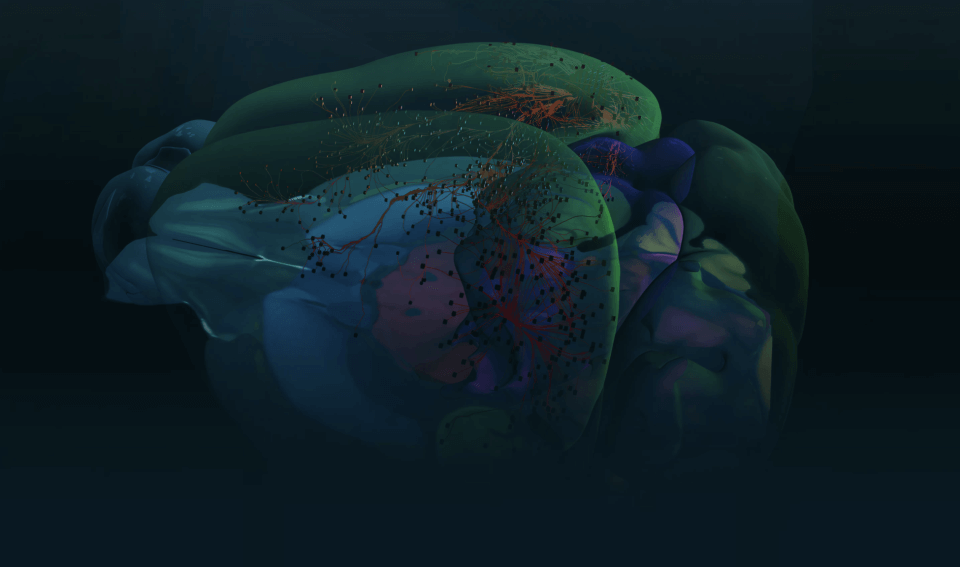

A complete map of all the connections in an entire mammalian brain may be in sight. Allen Institute researchers have just launched three new projects to construct large, detailed maps of neuronal connections of the mouse and macaque brains, with an eye toward creating full wiring diagrams of these animals’ brains in the future. These projects are funded by the National Institutes of Health’s Brain Research Through Advancing Innovative Neurotechnologies® (BRAIN) Initiative.
Allen Institute research teams will use the funding to:
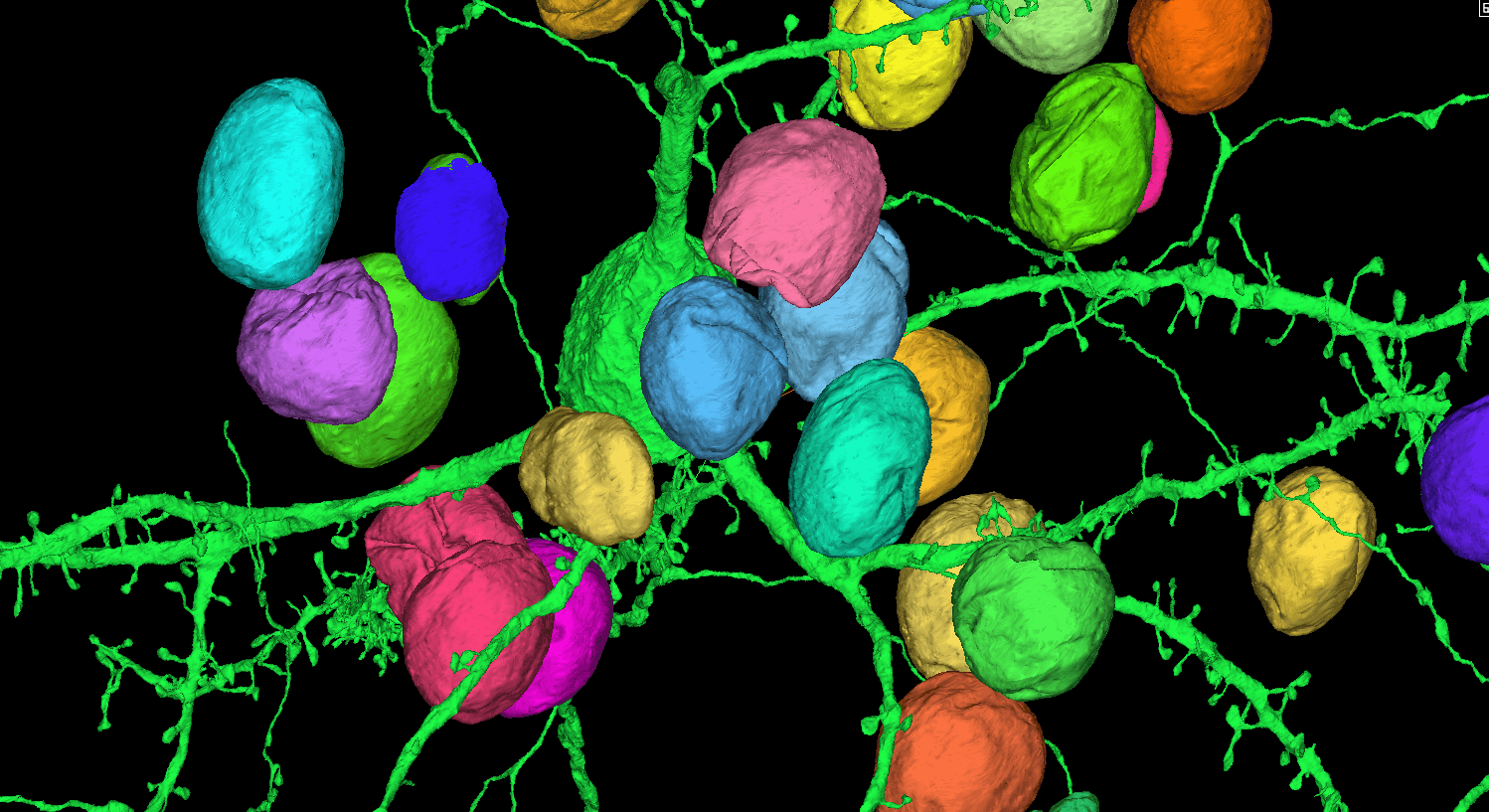
- map the fine structures and connections in a 10mm3 piece of the mouse brain using electron microscopy;
- apply new, cutting-edge techniques known as BARseq and BRICseq to map the long-range connections of hundreds of thousands of neurons in the macaque brain; and
- scale up techniques that characterize neurons by their inter-areal projections, 3D shape, electrical properties, and gene expression to better understand different types of cells across the whole mouse brain.
Project 1: Enhancing transmission electron microscopy techniques to visualize brain cell shape and cell-to-cell connection networks of the mouse brain
Researchers will aim to scale and optimize a transmission electron microscopy (TEM) pipeline. The goal will be to use this pipeline to image an entire hemisphere of a mouse brain at 120 nanometer resolution and the cortical basal ganglia thalamic loop (up to 10 mm3) in very fine detail to better understand how the mouse brain functions. Researchers will then assess whether this technology can be used to image an entire mouse brain—a significant accomplishment that could provide a valuable roadmap for global neuroscience.
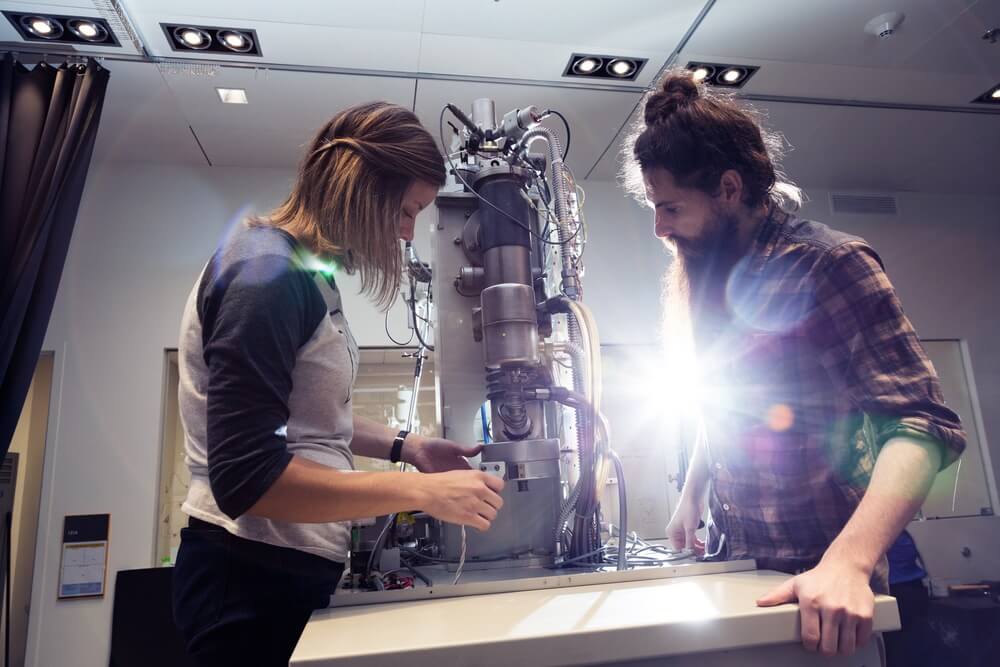
Transmission electron microscopy (TEM) is a technique in which a beam of electrons is shot through a tissue sample to create an extremely detailed image. “It’s become more and more clear over the last few years that most computations of the brain are actually happening, not in isolated areas, but in distributed networks that are brain wide; and so if we’re really going to understand how those kinds of computations work, we need to see the whole network, which means we need to see connections across the whole brain,” said Forrest Collman, Ph.D., Assistant Investigator at the Allen Institute.
Associate Investigator Nuno da Costa, Ph.D., notes that the potential impact for the broader scientific community is significant: “Think of it as a ‘Google Maps’ of every road, house, and door. If done properly, it’s a contribution that will last forever.”
Project 2: Mapping how brain cells are connected to one another using barcoded connectomics
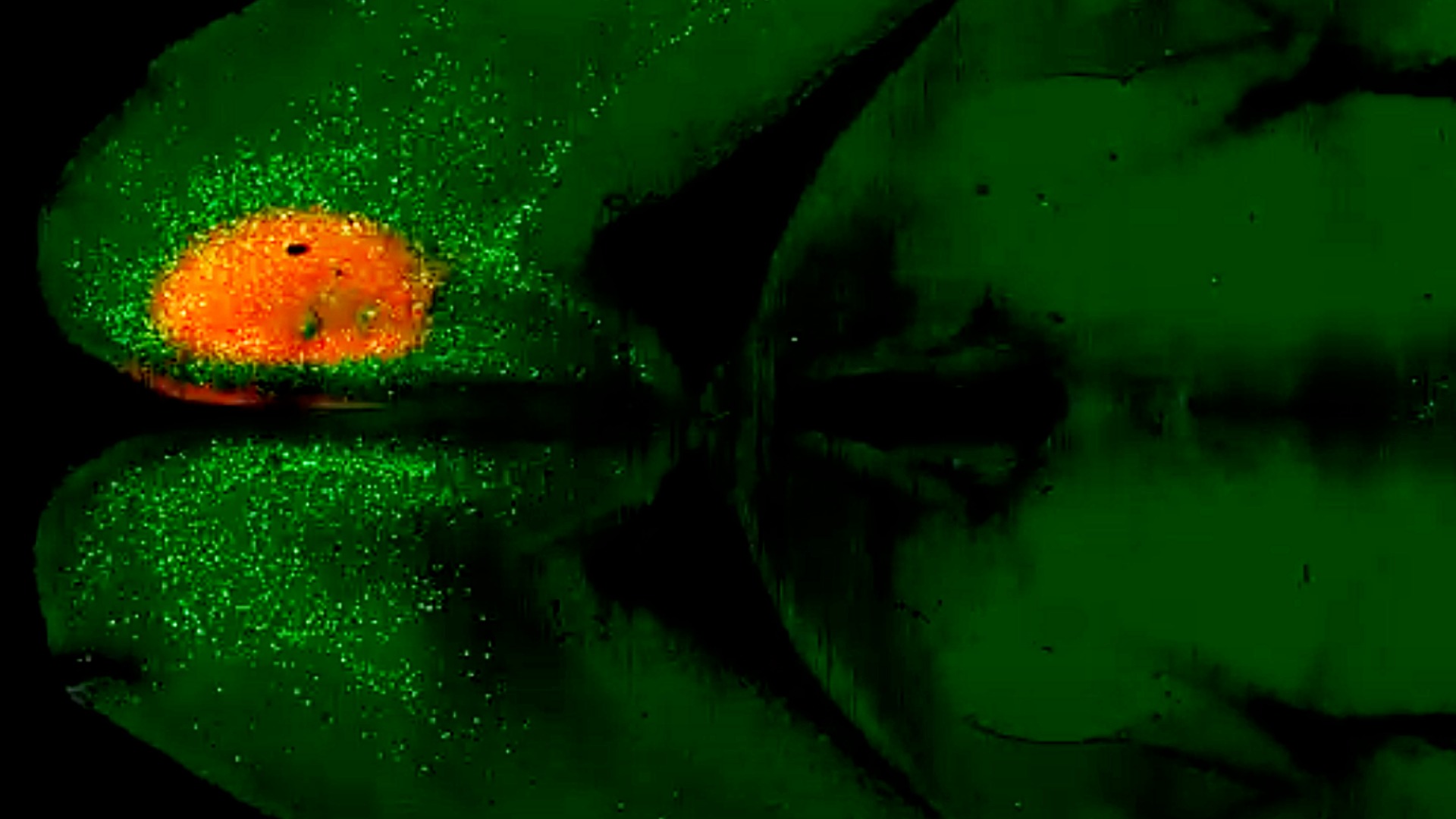
For this project, scientists will map brain-wide connections by tracing the winding paths that axons and dendrites make as they reach out and connect to other brain cells. Think of these as the long arms and fingers of the brain cell radiating out of the cell body and reaching out to other cells across the entire brain to create networks. Researchers will trace these intricate paths using an innovative technique known as BARseq, which stands for barcoded anatomy resolved by sequencing.

It works by tagging each cell with a unique RNA barcode that makes it stand out in a cell population. By “connecting the dots” between each barcode, you can trace where and how far a brain cell—namely its axons and dendrites—extend.
It is much faster and more efficient than other techniques and can be combined easily with other data. “We can actually map the whole macaque brain in a few years instead of 100 years. This is the main motivation,” said Xiaoyin Chen, Ph.D., Assistant Investigator at the Allen Institute.
Project 3: Enhancing a Patch-seq pipeline to yield more data, faster results, and link different datasets to uncover form and function in the whole mouse brain
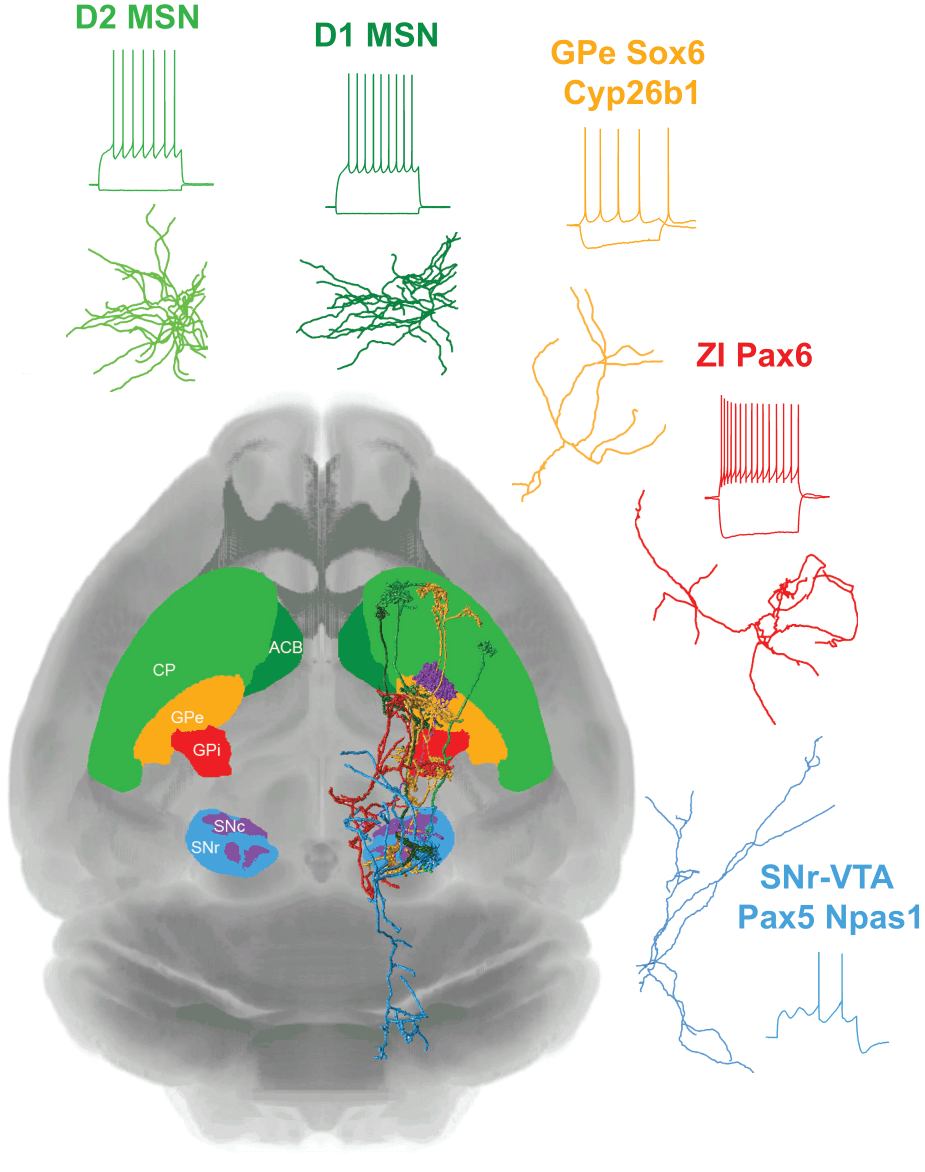
It is critical to develop tools that link genetically defined cell types to brain-wide circuit diagrams to understand brain function. In this project, researchers Tim Jarsky, Ph.D. (Allen Institute); Staci Sorensen, Ph.D. (Allen Institute); Uygar Sumbul, Ph.D. (Allen Institute), Zayd M. Khaliq, Ph.D. (National Institutes of Health) will work to link genetic and circuit datasets by scaling and sharing technologies that measure features common to both datasets across the entire mouse brain.
Specifically, this project aims to enhance the Allen Institute’s ability to generate multi-dimensional data, using the Patch-seq method, and to capture the full structure of neurons from whole brain images through automation, machine vision modeling, and advanced computational techniques. Another key aim of the project is to share the tools they develop with the broader researcher community so that experts across the field can contribute to characterizing cell types and circuits across the whole mouse brain.
“We will develop sophisticated machine learning-based approaches to bring the morphological descriptions of cell types into alignment with transcriptomics, connectomics, and long-range axonal projection data,” said Staci Sorensen, Ph.D., Associate Director of Neuroanatomy at the Allen Institute. “So far, we feel pretty excited about the results that we’re getting. I think it will work especially well at cell subclass levels.”
About the BRAIN Initiative®
The BRAIN Initiative aims to revolutionize our understanding of the human brain by accelerating the development of innovative neurotechnologies. Through the application and dissemination of these scientific advancements, researchers will be able to produce a revolutionary new dynamic picture of the brain that, for the first time, shows how individual cells and complex neural circuits interact in both time and space. The BRAIN Initiative® is a partnership between Federal and non-Federal partners, with the National Institutes of Health (NIH) serving as a central and leading role in achieving this ambitious goal. The NIH BRAIN Initiative is made up and managed by 10 Institutes and Centers whose missions and current research portfolios complement the goals of the BRAIN Initiative.
Citations
about the allen institute
The Allen Institute is an independent, 501(c)(3) nonprofit research organization founded by philanthropist and visionary, the late Paul G. Allen. The Allen Institute is dedicated to answering some of the biggest questions in bioscience and accelerating research worldwide. The Institute is a recognized leader in large-scale research with a commitment to an open science model. For more information, visit alleninstitute.org.