in this article
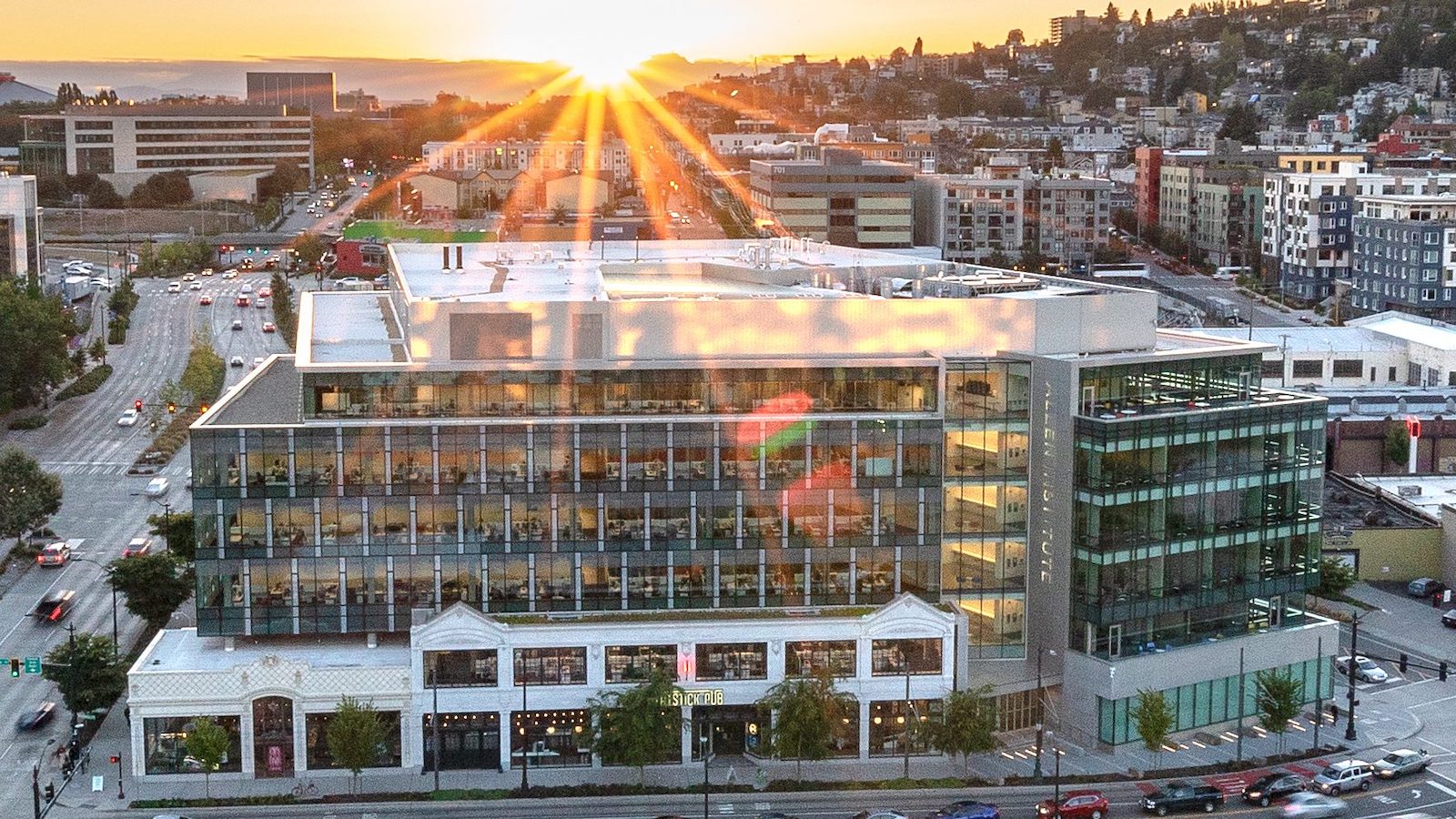
The Allen Institute houses some impressive statistics behind its glassy facade: more than 2.7 million high-resolution brain and cell science images and nearly 1,400 hours of movies of brain cell activity shared with the global scientific community.
Nearly 500 employees from 34 different fields of science. And, as of last month, 15 years of creating and sharing scientific discoveries, data and resources.
But in September 2003, when the research organization first launched, the numbers were slightly smaller. Four employees. Three-year job contracts. One small rented laboratory space.
And one (big) project, driven by one man’s vision: to map a single animal brain in a way the world had never seen.
The Human Genome Project had just completed, a massive research effort spanning laboratories around the world and 13 years of work to capture the string of letters that makes up humanity’s code of life. But that type of huge infrastructure, huge investment, huge win project was relatively rare in biological research.
It was just not done in neuroscience.
“When we were first starting, neuroscience was typically done as an individual lab, individual lead investigator way of operating,” said Michael Hawrylycz, Ph.D., a computational biologist and one of the first researchers hired at the Allen Institute. “Each group operated more as an island unto themselves.”
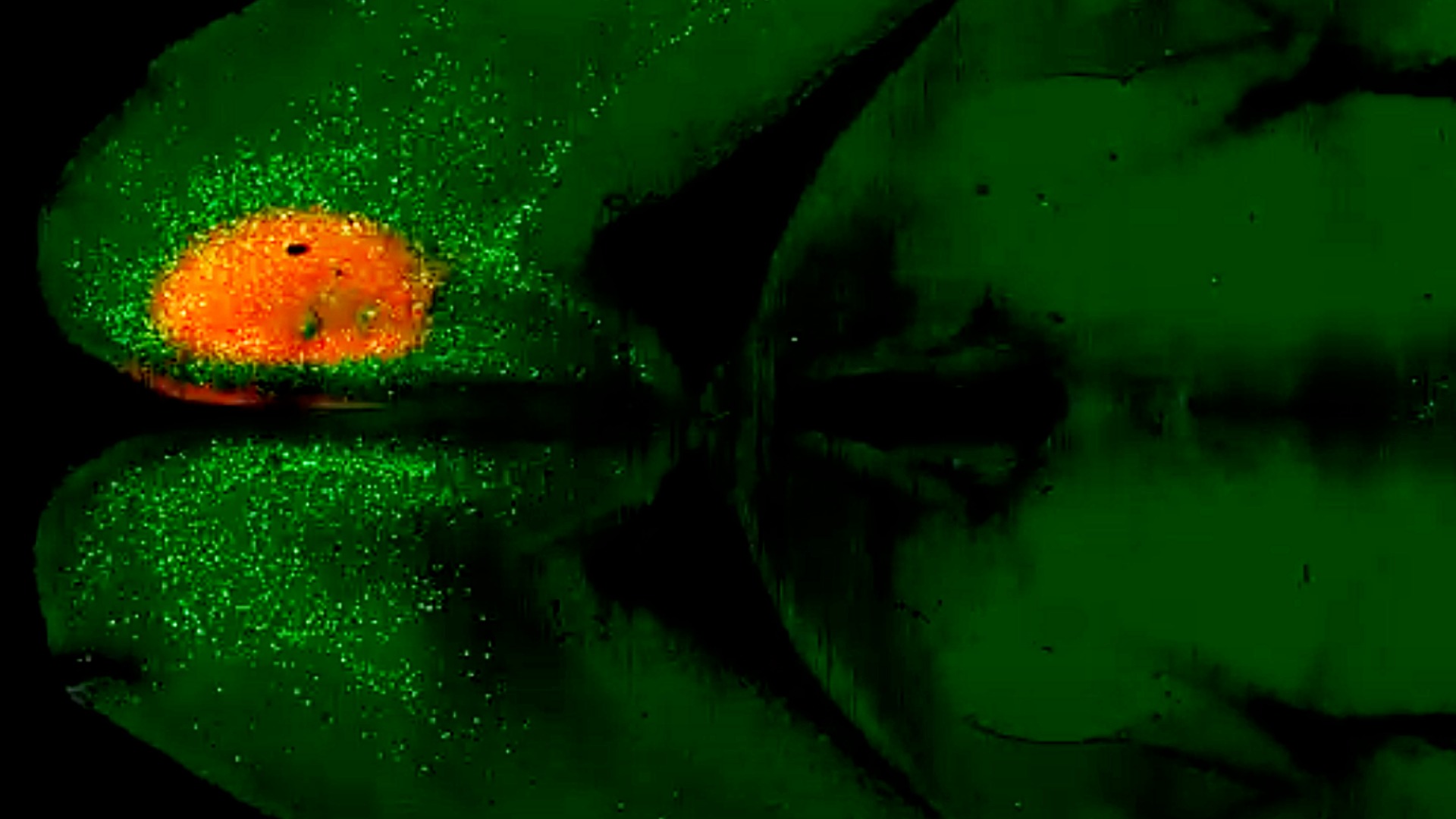
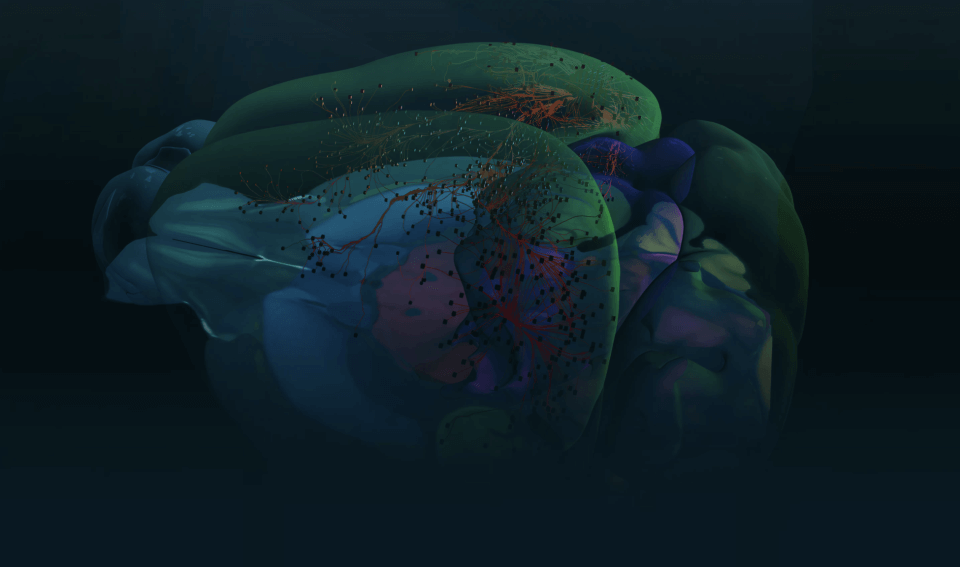
The Allen Institute — at the time, the Allen Institute for Brain Science — was charged by its founder, Paul G. Allen, to map where each of the adult mouse’s more than 20,000 genes was turned on or off across the animal’s entire brain, a project that would eventually be dubbed the Allen Mouse Brain Atlas.
“The technology had been developed, but nobody had really taken it to the degree to which we were going to do it,” said Allan Jones, Ph.D., President and Chief Executive Officer of the Allen Institute. “You could look at one or two genes, labs did this all the time, but to look at all 20,000 genes was unheard of.”
A rocky but urgent start
In its planning stages, the Allen Institute looked very different than it does today, Jones said. For one, Jones was not at its helm. His original title was “Research Alliance Manager” and he was tasked with coordinating experiments that would be conducted at a university lab in Texas with data analysis that would happen in another academic center in California. Originally, the new research organization was planned as more of a collaborative network than a physical institute, Jones said. But those plans were quickly scuttled after an early change of direction led the team to decide to set up a bricks and mortar institute in Seattle.
“Then instead of figuring out how we’re going to manage the data production in Texas, it was, how are we going to transfer all that technology to Seattle and get a team up and running on this very aggressive timeline,” Jones said.
Allen Institute CEO, Allan Jones, Ph.D., describes the Institute’s first project, the Allen Mouse Brain Atlas.
They had three years to deliver the completed Mouse Brain Atlas to their founder — and to the world — and the clock was already ticking.
If you ask Jones now, where did he think the Allen Institute would be in 15 years back in 2003? He’ll answer that at the beginning, he wasn’t entirely sure whether there would be an Allen Institute beyond that first project. It wasn’t a gaze-to-the-future period of his career.
“We were all hired on three-year contracts. There wasn’t anything guaranteed beyond three years and that first project,” he said. “We were much more concerned with the near-term work in the cross hairs.”
Paul Wohnoutka, who joined the Institute in 2003 to help build an automated laboratory environment for large-scale experiments and now directs facilities and operations, agreed.
“In 2003, I thought maybe we’d get to 30 people, and three years, and we’d be done,” Wohnoutka said. “Now we’re almost 500 employees and showing no signs of stopping.”
After those initial three years, the small team, which had grown to about 65 people by that time with Jones as the leader, pulled it off. The Allen Mouse Brain Atlas was completed and shared with the scientific community in 2006, on schedule. And the team looked to its next large-scale projects, on the developing mouse brain, the mouse spinal cord and the human brain, spurred by founder Allen’s enthusiasm.
“There was a meeting about two years in when he said, ‘So, when are we going to do the human brain?’” Jones said. “Then we all knew, OK, there is going to be a future here, there is going to be a what’s next.”
The outsiders with something to prove
The pressure to produce didn’t just come from within. The neuroscience community was watching them carefully, Jones said. He and the other original handful of researchers were mostly from the genomics research world. None of them were neuroscientists, and they thought they had come up with a new way to conduct neuroscience research? The community wanted them to prove it.
“We were viewed as outsiders,” Jones said. “It was viewed as a bit of arrogance on our parts: You genomics guys think you’re going to come in and tell us how to do brain science.”
Ed Lein, Ph.D., who joined the Allen Institute in 2004 to build and lead a team of neuroscientists, said there was definite cynicism from the community about what they were trying to do.
“We were viewed with some skepticism on three levels,” Lein said. “One was, can we pull it off? The second was, would it be any good if we did, would the data be high enough quality? And the third was that we were relative unknowns in the field.”
Once the Allen Mouse Brain Atlas was complete and publicly released, attitudes started to shift. The atlas’s 2007 publication in the journal Nature has since been cited by more than 2,100 other scientific articles, on research topics ranging from Alzheimer’s disease to basic neuroscience to eating disorders to alcohol abuse. And it continues to be one of the Allen Institute’s most widely used sources, 12 years after its release.
A new ecosystem
Amy Bernard, Ph.D., a neuroscientist at the Allen Institute for Brain Science.
But scientific citations only capture a small part of what that initial atlas project accomplished, said Amy Bernard, Ph.D., a neuroscientist who joined the Allen Institute in 2005. Bernard spends a lot of time traveling to scientific conferences to give talks about the Allen Institute’s resources, and the comments she hears make her realize that the Allen Mouse Brain Atlas and the other large-scale, openly available mapping projects that followed are now viewed as essential baseline sources of information in the research community.
Bernard likens the atlases’ influence to sowing wildflower seeds in a previously barren field. If you look at the field a decade later and see new flowers, grass, trees and animals that weren’t there before, could you determine the direct impact of the seeds you’d planted? Maybe not, but you could say things had changed because of what you’d done.
“It’s like a whole ecosystem. We’ve created an ecosystem that’s allowed all other types of science to flourish,” she said. “One of the most impactful of those is the open science movement, the idea that data is something to be shared and distributed and federated. That did not exist 10 years ago.”
“There’s an expectation that people share their data in a way that’s useful,” said Lydia Ng, Ph.D., a data scientist who joined the Allen Institute in 2004. “We want science not just to be that paper you publish, but a long-lasting resource.”
Today, the Allen Institute’s core principles are big science (large-scale projects akin to the Mouse Brain Atlas), team science (those projects require coordinated team effort from many different types of researchers) and open science (sharing data and other resources openly with the community, even before projects are completed). But of those three, open science was not an edict from the start, Jones said. There was a lot of back and forth initially about how and when to give the community access to their data once it was generated.
“We soon realized we needed to just share it; we’d have the most impact that way,” Jones said.
‘Another way to do science’
For Kimberly Smith, a molecular biologist who was the first bench scientist hired at the Allen Institute, her new job felt a lot like her previous positions in start-up companies and labs. She’d worked at both universities and biotech startups and said the Allen Institute’s early days definitely had that exciting, getting-something-big-off-the-ground type of vibe.
The key difference between this job and her previous biotech startup jobs, and the reason Smith has stayed at the Allen Institute for 15 years: the open science.
“It’s so refreshing to work here, knowing that the data you’re generating is helping so many other labs do very specialized research,” Smith said.
Kimberly Smith, a molecular biologist at the Allen Institute at the Allen Institute for Brain Science who was the first bench scientist to join the organization.
Lein and Bernard were also drawn to their positions by the idea of doing science a bit differently from their traditional academic backgrounds. They both came to the Allen Institute after doing postdoctoral fellowships in neuroscience.
Before he came to Seattle, Lein had been working on a research project that was like a tiny piece of the puzzle that would become the Allen Mouse Brain Atlas, he said.
“It was incredibly good fortune that I got a call about this new institute that wanted to take on this great project to understand the distribution of all gene products across the brain,” Lein said. “It was a risky endeavor, but the audacity of the idea and the fact that it would be a public resource to accelerate research across the whole community was extremely appealing to me.”
For Bernard, it was less about the specific research and more about the Allen Institute’s ethos.
“I always thought my perfect job would be to come together as part of a distributed team of people working toward a common goal on a research topic,” she said. When she heard about what the Allen Institute was trying to do, “I thought, I’ll do whatever they need me to do to help make this happen,” Bernard said. “I loved the idea that there was another way to do science.
Citations
about the allen institute
The Allen Institute is an independent, 501(c)(3) nonprofit research organization founded by philanthropist and visionary, the late Paul G. Allen. The Allen Institute is dedicated to answering some of the biggest questions in bioscience and accelerating research worldwide. The Institute is a recognized leader in large-scale research with a commitment to an open science model. For more information, visit alleninstitute.org.