
impact
impact
open science
subheadline
careers and opportunities
subheadline
people & teams
people & teams
subheadline
allenites
subheadline
allen institute advisors
subheadline
board of directors
subheadline
shanahan foundation fellowship
subheadline
next generation leaders
subheadline
research
overview
our approach
subheadline
publications
subheadline
open science
subheadline
accelerator
brain science
subheadline
cell science
subheadline
neural dynamics
subheadline
immunology
subheadline
synthetic biology
subheadline
education
education
science education
subheadline
education resources
subheadline
field trips
subheadline
open science
subheadline
open science quest
subheadline
news
news
stories
subheadline
podcast
subheadline
sign up for our newsletter
subheadline
events
events
all events
subheadline
conferences
subheadline
event code of conduct
subheadline
events
open science quest
subheadline
summer workshop on the dynamic brain
subheadline
open science week
subheadline
brain fest
subheadline
science resources
science resources
allencell.org
subheadline
allenimmunology.org
subheadline
allenneuraldynamics.org
subheadline
brain-bican.org
subheadline
brain-map.org
subheadline
microns-explorer.org
subheadline
impact
back to menu
impact
open science
subheading
careers and opportunities
subheading
people & teams
people & teams
subheading
allen institute advisors
subheading
board of directors
subheading
shanahan foundation fellowship
subheading
next generation leaders
subheading
research
back to menu
impact
Label
subheading
Label
subheading
people & teams
education
back to menu
research
Label
subheading
Label
subheading
Heading
news
back to menu
research
Label
subheading
Label
subheading
Heading
events
back to menu
research
Label
subheading
Label
subheading
Heading
science resources
back to menu
science resources
allencell.org
subheading
allenimmunology.org
subheading
allenneuraldynamics.org
subheading
brain-bican.org
subheading
brain-map.org
subheading
microns-explorer.org
subheading
search
stories
news

Scientists shoot lasers into brain cells to uncover how illusions work

Supported by the Allen Institute's OpenScope program, the findings could help us better understand neuropsychiatric disorders like schizophrenia and...

September 15, 2025
 min read
share/
Supported by the Allen Institute's OpenScope program, the findings could help us better understand neuropsychiatric disorders like schizophrenia and reshape our understanding of vision
Thank you! Your submission has been received!
Oops! Something went wrong while submitting the form.

in this article

table of contents will display on published page only
set h2 to populate the table of contents here

authors

Peter Kim
Associate Director, Communications & Media Relations

‍

‍

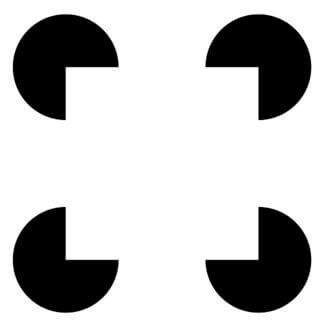
Four black quarter circles arranged in corners forming a centered white cross shape.
Kanizsa square

An illusion is when we see and perceive an object that doesn’t match the sensory input that reaches our eyes. In the case of the image to the left, the sensory input is four Pac Man–like black figures. But what we see or perceive is a white square—i.e., the illusion.

In a new study published in Nature Neuroscience, researchers from the University of California, Berkeley, working with teams at the Allen Institute, identified the key neural circuit and cell type that plays a pivotal role in detecting these illusions—more specifically, their outer edges or “contours”—and how this circuit works.

Hyeyoung Shin, Ph.D. (now with Seoul University), Hillel Adesnik, Ph.D., and their team discovered a special group of cells called IC–encoder neurons that tell the brain to see things that aren’t really there as part of a process called recurrent pattern completion.
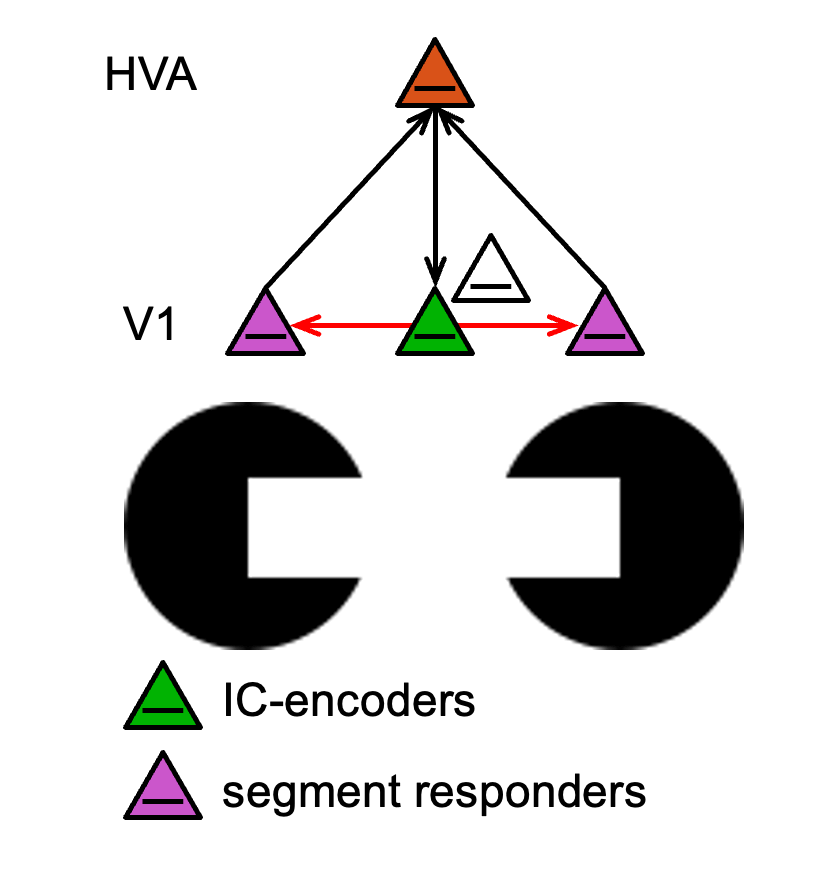
HVA network diagram showing IC-encoders and segment responders connected to parent node.
Diagram of the ‘recurrent pattern completion’ neural circuit. Lower visual areas (purple triangles) receive visual stimuli from the environment and send signals to higher visual areas of the brain (red triangle) which then interprets the data and sends signals back down to IC-encoder neurons (green triangle) in the lower visual areas, which then triggers brain activity pattern completion of visual imagery through the original visual sensing neurons. This may then cause the perception of the illusion.

“Because IC–encoder neurons have this unique capacity to drive pattern completion, we think that they might have specialized synaptic output connectivity that allows them to recreate this pattern in a very effective manner,” said Shin. “We also know that they receive top-down inputs from higher visual areas. The representation of the illusion arises in higher visual areas first and then gets fed back to the primary visual cortex; and when that information is fed back, it’s received by these IC–encoders in the primary visual cortex.” This is like a manager telling an entry level worker to complete a task: Instructions come from a higher-level and are then executed by lower-level staff. In this case, the instruction would be to see or perceive something that isn’t really there.
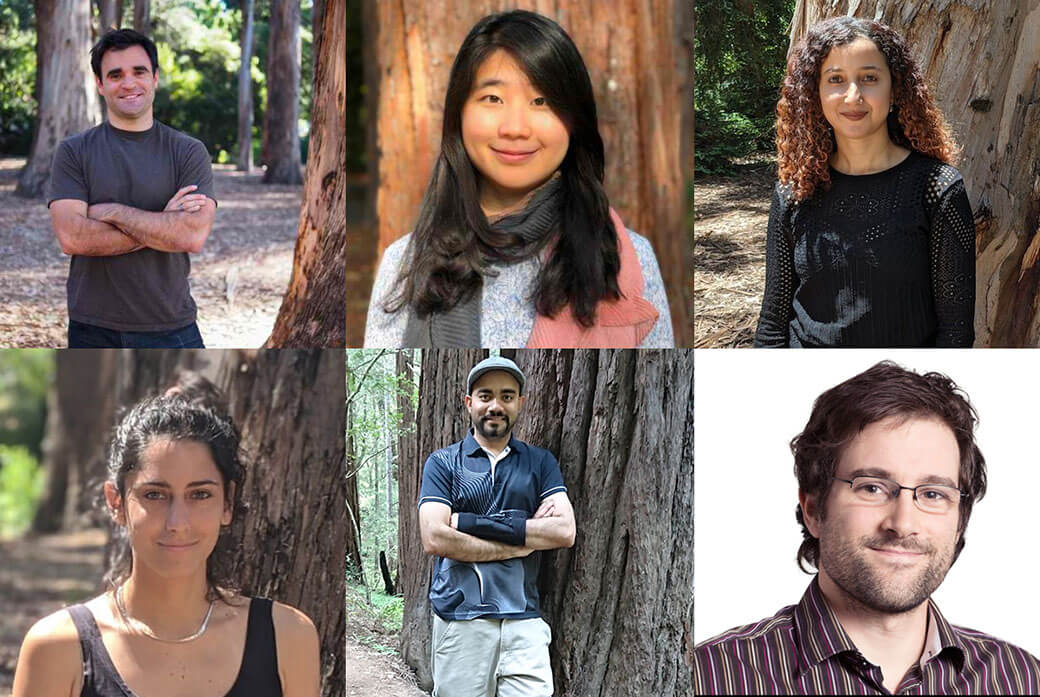
Six people posing for portraits outdoors among trees in a grid layout
Researchers involved in the study (from left to right beginning on top row: Hillel Adesnik, Hyeyoung Shin, Lamiae Abdeladim, Mora Orgando, Uday Jagadisan, Jerome Lecoq (Allen Institute)

In the context of the brain and vision—using the shape diagram presented earlier—higher levels of the brain interpret the image as a square and then tell the lower-level visual cortex to “see a square” even though the visual stimulus consists of four semi-complete black circles.

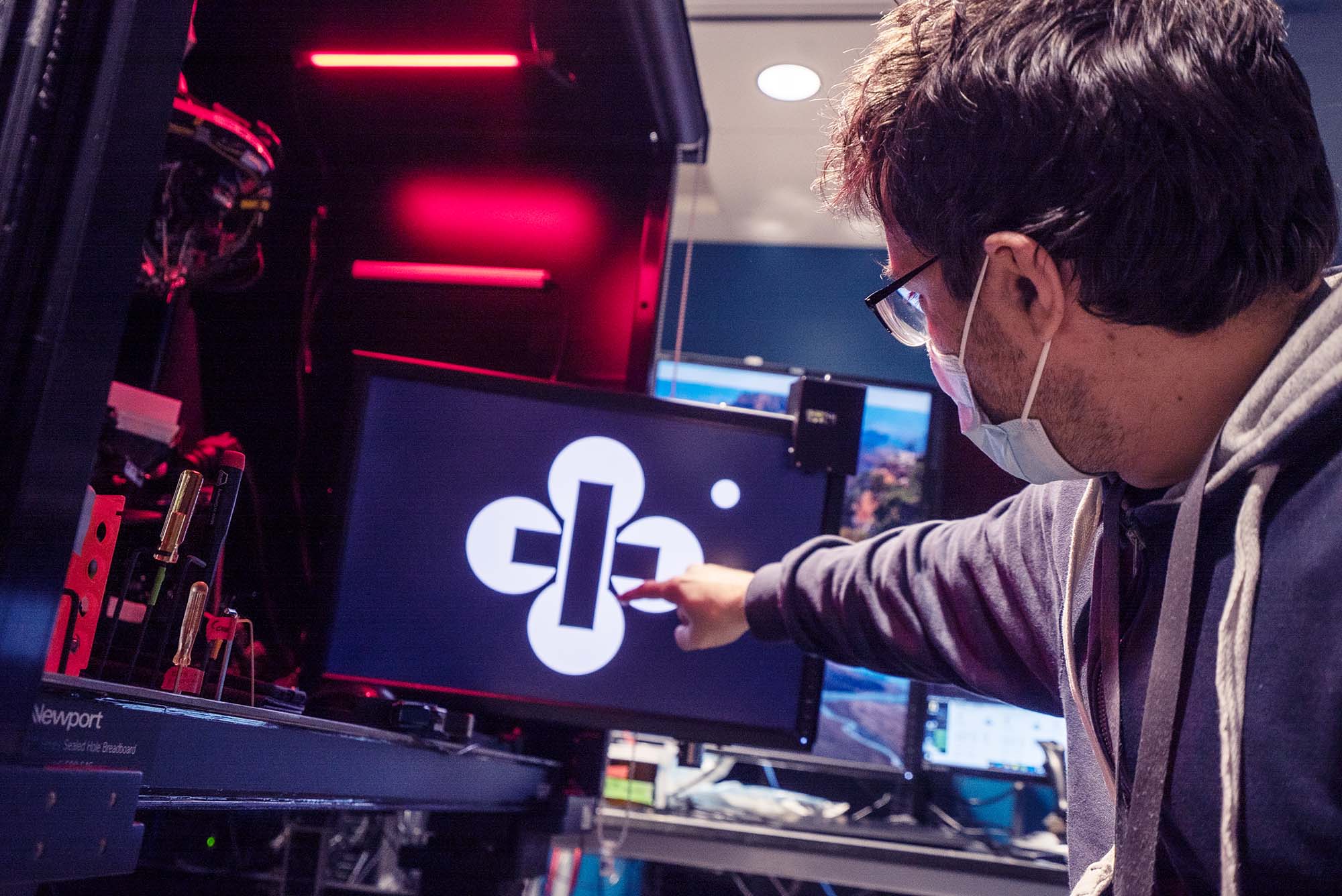
Shin, Adesnik, and their team made the discovery by observing the electrical brain activity patterns of mice when they were shown illusory images like the Kanizsa triangle. They then shot beams of light at the IC-encoder neurons, in a process called two-photon holographic optogenetics, when there was no illusory image present. When this happened, they noticed that even in the absence of an illusion, IC-encoder neurons triggered the same brain activity patterns that exist when an illusory image was present. They successfully emulated the same brain activity by stimulating these specialized neurons.

The findings shed light on how the visual system and perception work in the brain and have implications for diseases where this system malfunctions. “In certain diseases you have patterns of activity that emerge in your brain that are abnormal, and in schizophrenia these are related to object representations that pop up randomly,” said Jerome Lecoq, Ph.D., associate investigator at the Allen Institute. “If you don’t understand how those objects are formed and a collective set of cells work together to make those representations emerge, you’re not going to be able to treat it; so understanding which cells and in which layer this activity occurs is helpful.”

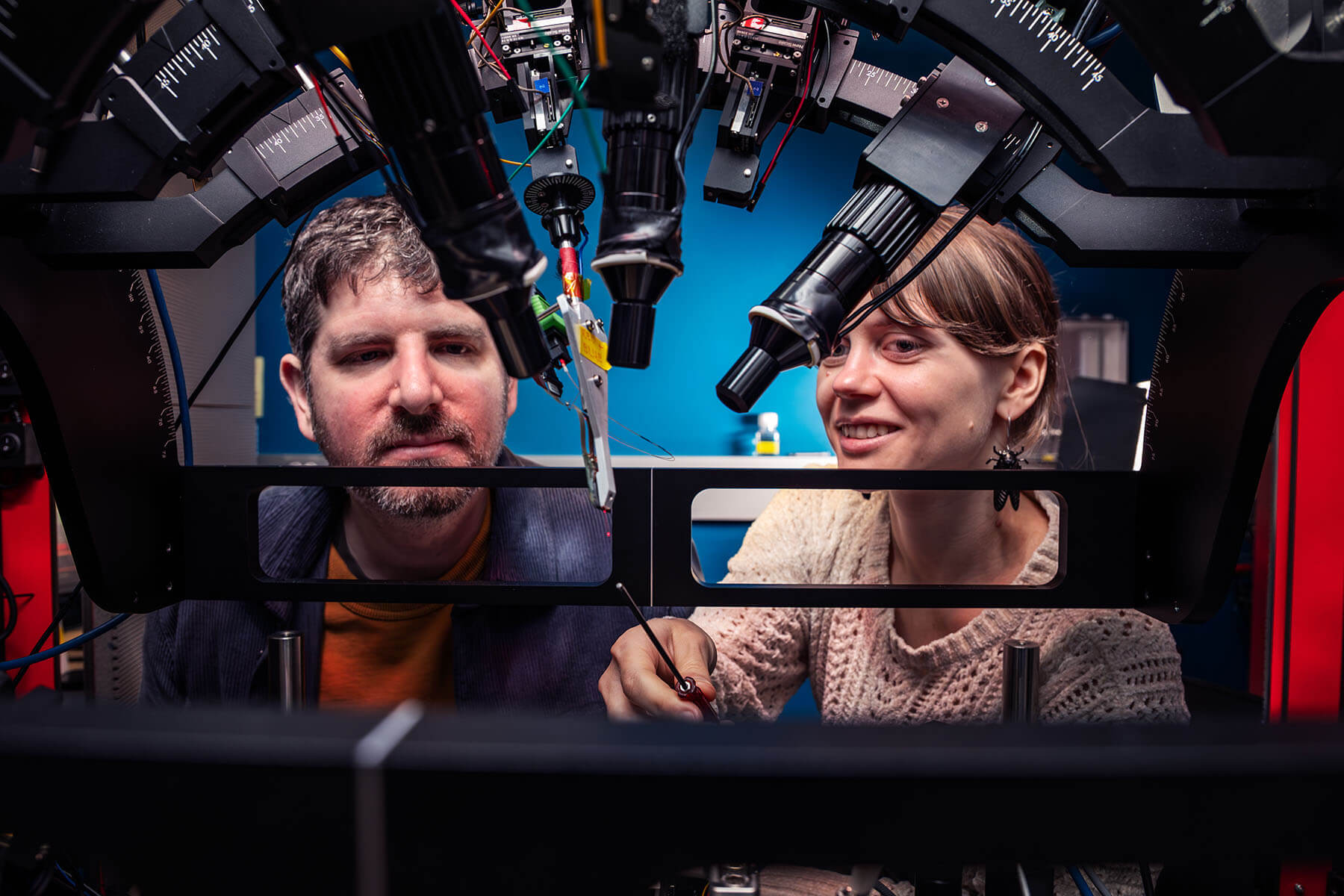
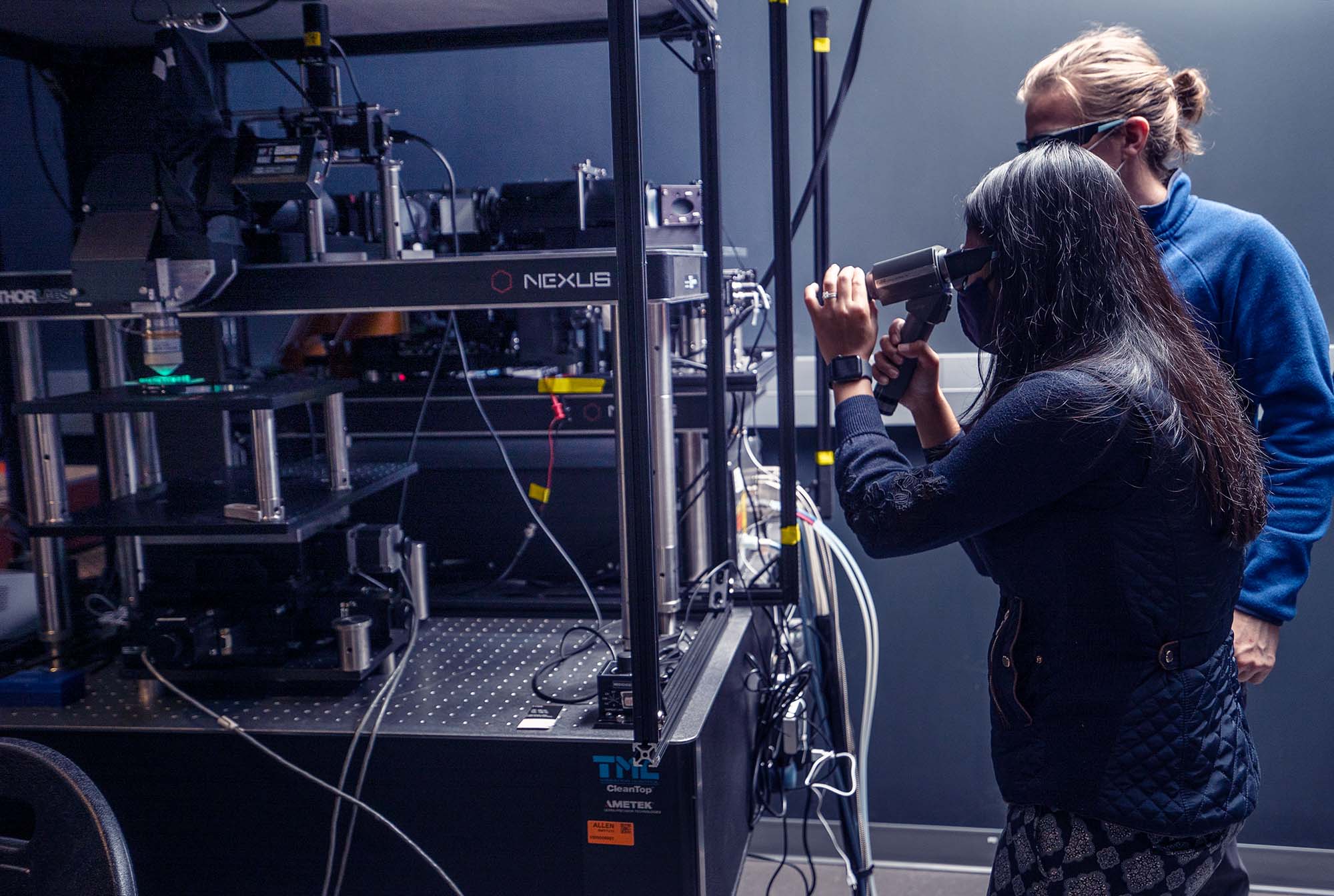
Researchers with the Allen Institute’s OpenScope program—which allows external scientists to propose experiments that can be done using the Institute’s cutting-edge tools and equipment—conducted some of the experiments that were part of this study. Their work showed for the first time that the brain activity “feedback loop” from higher order levels of the brain communicating to lower visual areas (where the IC-encoders neurons were) happens in mice.

“OpenScope provided access to unique brain-wide electrophysiological recordings to the team at Berkeley. With six Neuropixels probes distributed across the brain, they could see the feedback loops in action with millisecond resolution in real time,” said Lecoq.

The study findings change the paradigm of vision and perception as a passive process where we simply receive and “take in” information from the world around us to an active one where our perception of reality is interpreted and constructed by a series of complex brain calculations that then influence what we actually see. Our vision is less like a camera that simply views the world as it is, and more like a computer monitor that shows us a scene or image based on complex computations and interpretations of data based on past experiences. The latter implies there is more room to negotiate or manipulate what we actually “perceive.”

Citations
No items found.

about the allen institute

The Allen Institute is an independent, 501(c)(3) nonprofit research organization founded by philanthropist and visionary, the late Paul G. Allen. The Allen Institute is dedicated to answering some of the biggest questions in bioscience and accelerating research worldwide. The Institute is a recognized leader in large-scale research with a commitment to an open science model. For more information, visit alleninstitute.org.
explore related stories

explore more stories
news 
“Computational crystal ball” helps predict cell behavior
New technology could lead to better treatments for cancer by allowing scientists to perform virtual experiments
news 
Neuropixels Opto sheds new light into deepest regions of the brain
A single tool measures and manipulates brain cell communication and democratizes advanced neuroscience
news 
Mind trip: How psilocybin changes the brain
New research may help improve psychedelic therapy for neuropsychiatric disorders
news 
Computer model predicts aspects of cognitive performance
The Allen Human Brain Atlas helped researchers design a model that looked at “intrinsic neural timescales”
Allen Impact 2025
Technology and innovation are fueling discovery in science like never before we’re proud to be leading the way. 2025 was a year of tremendous impact...
news 
Scientists develop new way to “listen in” on the brain’s hidden language
Paradigm-shifting technology is changing how researchers do neuroscience
we acceleratedevelopcatalyzeimpact

science done differently. shared with the world.

explore our accelerators

brain science

Mapping every cell, connection, and circuit in the brain—openly shared with the world.

cell science

Decoding how cells become tissues, then programming that knowledge into powerful new research tools.

neural dynamics

Revealing the brain's hidden algorithms that transform neural activity into real-world behavior.

immunology

Creating the deepest open reference for the healthy human immune system ever built.

synthetic biology

Engineering cells to record their own histories, transforming how we understand disease over time.

research

Big questions, open answers, and science built to be shared.

education

Inspiring the next generation of scientists through open science resources.

impact

Our science is empowering researchers and advancing health worldwide.
advancing science through open, collaborative research
Get the allen institute newsletter
Stay informed on the latest breakthroughs in neuroscience, bioscience, and AI-driven research.
allen institute
impactpeople & teamscareers & opportunitiesalumnihistory & founder
science resources
allencell.orgallenimmunology.orgallenneuraldynamics.orgbrain-bican.orgbrain-map.orgmicrons-explorer.org
research
brain sciencecell scienceneural dynamicsimmunologysynthetic biologypublications
education
science educationfield tripsprofessional developmenteducation resources
quick links
newseventsopen sciencepodcastscience resourceshuman brain donationvisit uscontact
follow us/

allen institute, 615 Westlake Ave North, Seattle, WA 98109 +12065487055

© 0000 allen institute. all rights reserved.
privacy policyterms of usecitation policyemployee portalpolicy & compliance