
There’s a longstanding dogma in neuroscience that certain parts of our brain are more evolutionarily advanced, more human, while the structures that we have in common with more members of the animal kingdom are simpler and less advanced.
A new study from researchers at the Allen Institute found that — at least in terms of its cellular composition — one of these “older” parts of the brain, the hippocampal formation, is just as complex as a more recently evolved area of the mammalian brain, the neocortex.
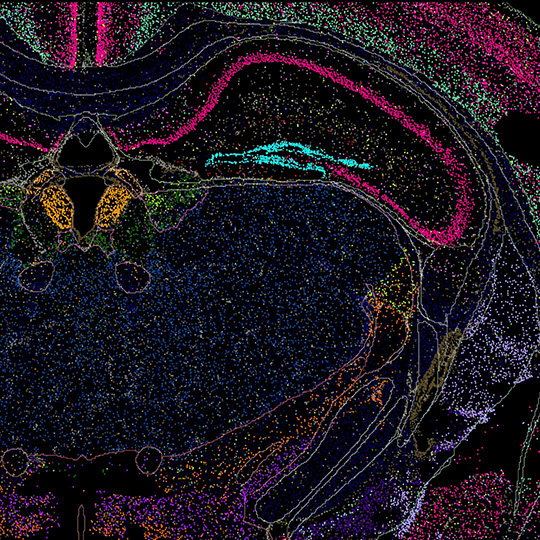
Their study maps all the types of neurons and many other types of brain cells in the adult mouse neocortex and hippocampal formation, two structures that are essential for the cognitive function of the mammalian brain. The study was published Monday in the journal Cell. These findings shed light on how the modern mammalian brain likely evolved and how it develops from embryo to adulthood, the authors said.

“By studying adult mouse brain cell types broadly and in depth, we are able to gain insights into evolution and development,” said Hongkui Zeng, Ph.D., Executive Vice President and Director of the Allen Institute for Brain Science, a division of the Allen Institute, and senior author on the publication. “The cells’ genomes contain marks labeling these historical events, and we’re just beginning to understand what they are telling us.”
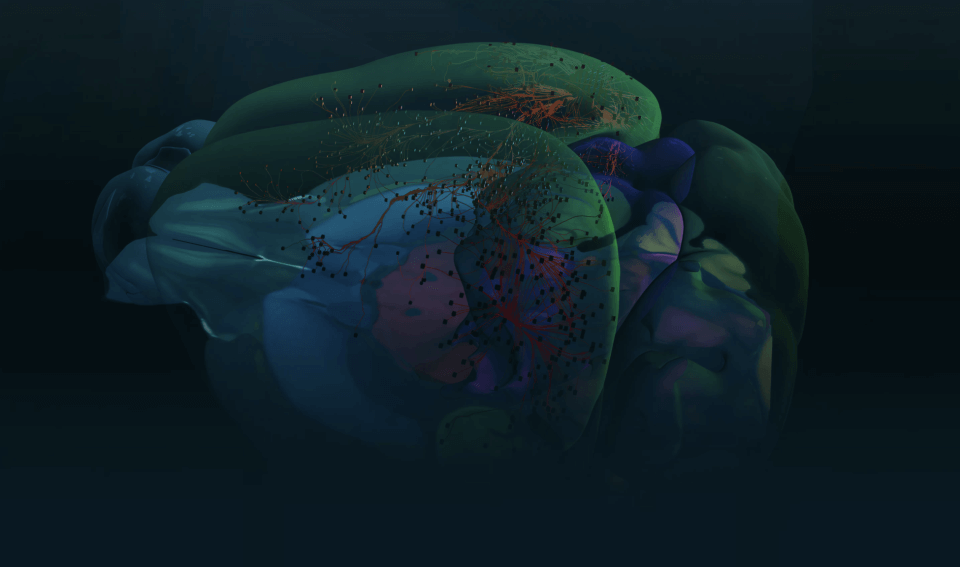
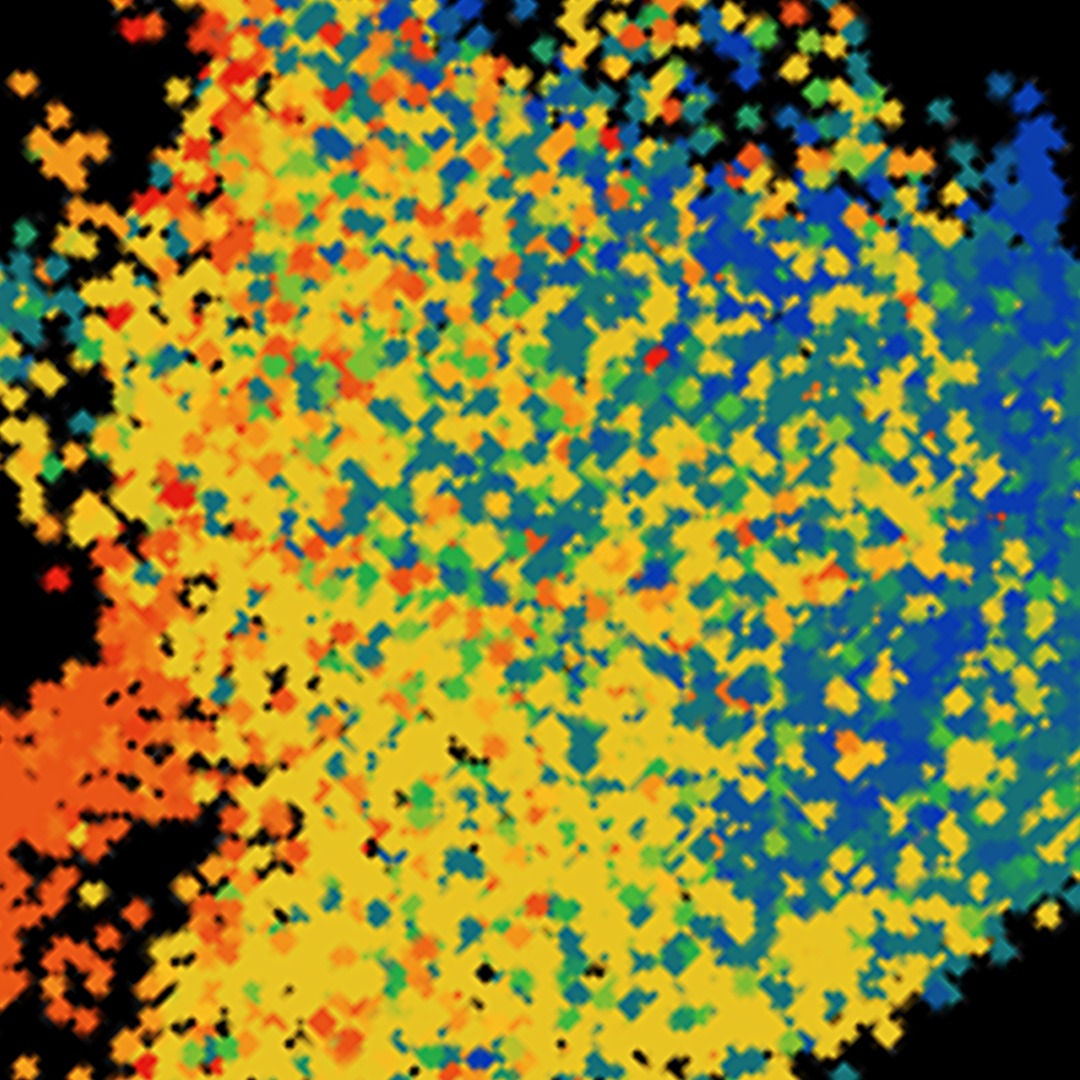
The authors also found that many of the 388 identified mouse brain cell types are arrayed in gradients across subregions within each of these two large brain structures, meaning neuron types are more similar to their nearby neighbors in the brain than they are to farther away brain cells. This likely reflects how the structures emerge during development.
The work expands on previous studies from the Allen Institute that mapped brain cell types in two regions of the neocortex, the outermost structure of the mammalian brain. Those earlier studies and the latest study bin different neurons and other brain cells into “types” based on the complete set of genes each individual cell switches on, or its transcriptome.
The Allen Institute team took advantage of recent advances in this technology, known as single-cell transcriptomics, to look at brain cell types across the entire neocortex and the hippocampal formation, a smaller brain structure nestled near the center of the brain. The resulting dataset of more than 1.3 million cells is one of the largest sets of brain cell-type data published to date. The researchers released the data for anyone in the community to use through the Allen Institute for Brain Science’s public portal.
Brain evolution
The bumpy folds that cover most of the visible surface of the human brain, the neocortex, is unique to mammals and is thought to be the seat of much of our complex cognition. In humans and other primates, this region underwent a huge expansion in recent evolution; as a result, our neocortex is much larger compared to the rest of our brain than the neocortex of a mouse.
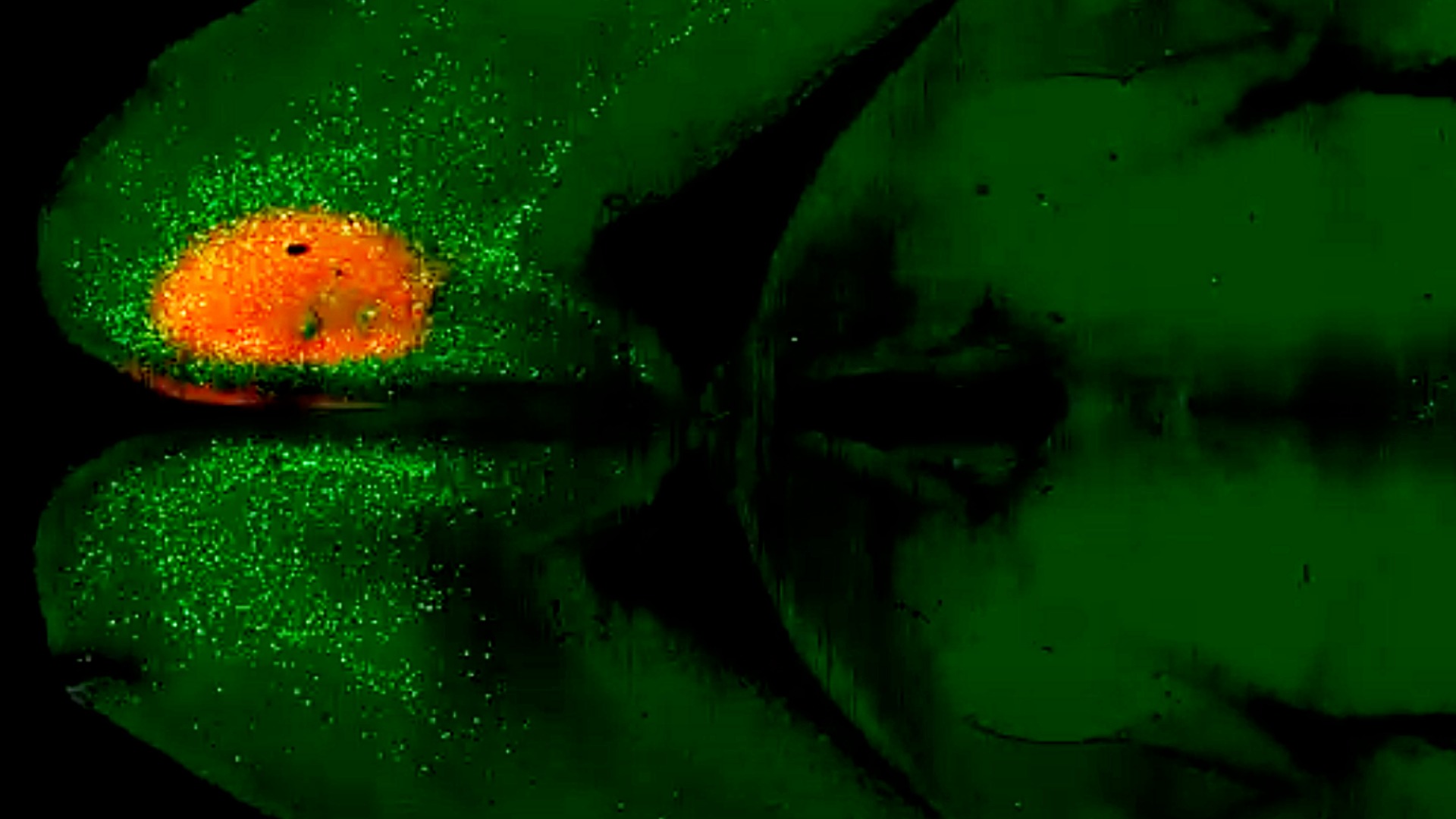
Nestled beneath the neocortex, near the center of the mammalian brain, sits the hippocampus and its neighboring regions collectively called hippocampal formation, a smaller and older brain structure that plays important roles in learning and memory, spatial awareness, and dementia. In humans, the hippocampus (a Greek word for seahorse) is hook-shaped, like the edge of your ear or a seahorse.
The neocortex is a focus of intense study in neuroscience. The many subregions within the neocortex regulate our sensory perceptions of the world around us, and they are also thought to control much of our conscious decision making and thinking. The Allen Institute researchers decided to expand their brain cell type studies to the hippocampal formation both because this structure is important in its own right, and because it’s closely related to the neocortex. The scientists hoped to learn more about each structure by comparing their similarities and differences.
“Some people believe that the mammalian hippocampal formation is more ancient and therefore simpler, while the neocortex has continued to expand during evolution,” Zeng said. “If the hippocampal formation was simpler than the neocortex, we would expect it to have a simpler set of cell types, but it turns out that wasn’t the case. It is just as complex and contains the same components as the neocortex.”
Their study found that the neocortex and hippocampal formation are more similar than the scientists had previously realized — not just in terms of their complexity of cell types, but in their general “six-layered” organization as well. The finding suggests that these two major structures in the mammalian brain have co-evolved from the ancestral reptile brain to acquire new cell types and functions.
How the brain grows
In the research team’s previous study defining mouse brain cell types using transcriptomics, which was published in 2018 and identified 133 different cell types, the scientists sampled cells from two parts of the neocortex, the regions involved in vision and movement. They found very distinct forms of excitatory neurons, the type of neurons that activate other neurons, in the two different regions, but inhibitory neurons, which switch off other neurons, seemed the same between the two regions.
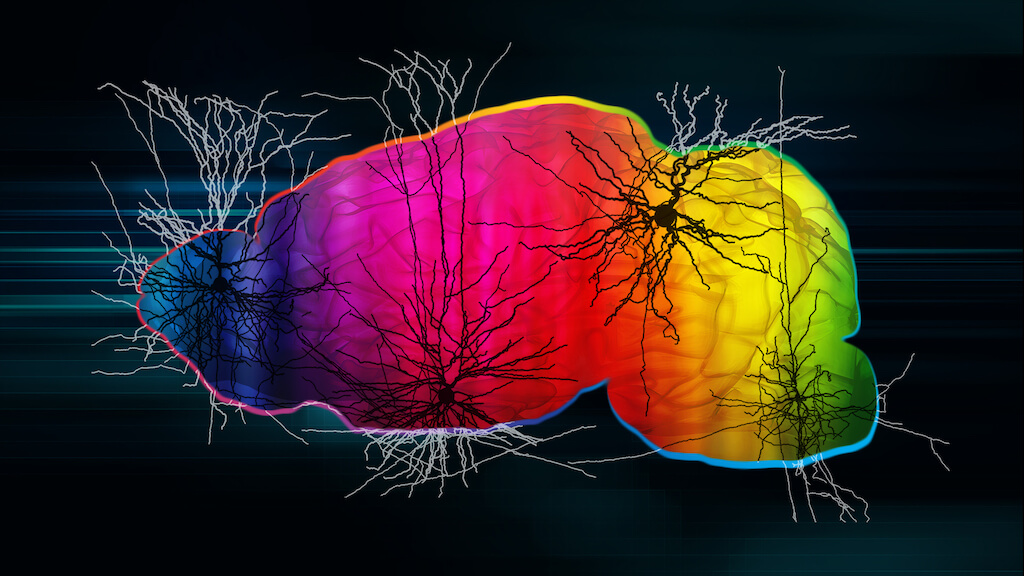
Like many things in science, as the researchers gathered more data, the picture started to look different — and more complicated. The regions sampled in the 2018 study happened to be at the opposite ends of the mouse neocortex. When the scientists looked at all the regions in between, they found many more cell types and they realized that the cell types changed gradually from one end of the neocortex to the other, from front to back, and from middle to both sides. If you think of the different types of neurons as colors, the more complete picture was like rainbows or ombre gradients that gradually shift colors in different directions. The previous study captured just the “red” and “purple” ends of that gradient, giving the impression that the brain was comprised of discrete stripes of color.

“Our previous view of distinct cell types at two ends of the spectrum was only a specific snapshot of what turned out to be a more complicated picture,” said Zizhen Yao, Ph.D., a computational biologist and Assistant Investigator at the Allen Institute for Brain Science and first author on the study. “Now I think we have a more realistic view.”
That gradient of cell types could be a result of how the brain — like any of our organs — develops. All of our many different kinds of cells come from common ancestor cells, all the way back to a single fertilized egg, so it makes sense that different cells would have attributes in common with their closest relatives, which also often happen to be their physically nearest neighbors. The gradients cell types make up in the brain match the way these structures grow from simpler sheets of cells in early development as the brain is forming. Having such a complete picture of cell types will also help to uncover what goes awry during brain development in developmental diseases and disorders.
“At the end of the day, these data really make sense. They recapitulate what we already knew and are giving us so much more new insights,” said Yao. “To me, it felt like the data were almost alive, telling their stories in silence, and we didn’t know how to listen. Now, with the advent of new technologies, we’re finally able to hear those stories.”
The research described in this article was funded by multiple grant awards from institutes under the National Institutes of Health, including award number R01EY023173 from The National Eye Institute, U01MH105982 from the National Institute of Mental Health and Eunice Kennedy Shriver National Institute of Child Health & Human Development, and U19MH114830 from the National Institute of Mental Health. The content is solely the responsibility of the authors and does not necessarily represent the official views of NIH and its subsidiary institutes.
Citations
about the allen institute
The Allen Institute is an independent, 501(c)(3) nonprofit research organization founded by philanthropist and visionary, the late Paul G. Allen. The Allen Institute is dedicated to answering some of the biggest questions in bioscience and accelerating research worldwide. The Institute is a recognized leader in large-scale research with a commitment to an open science model. For more information, visit alleninstitute.org.