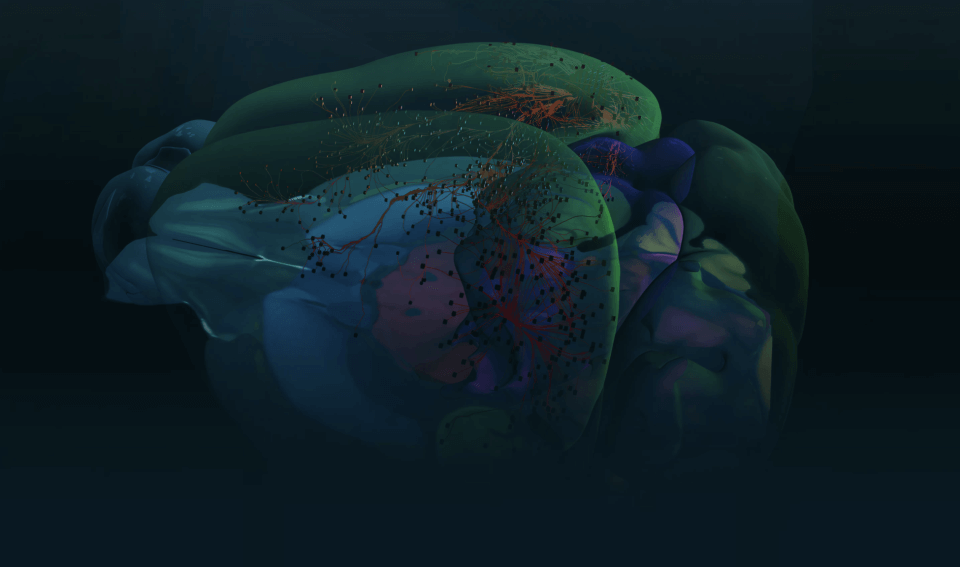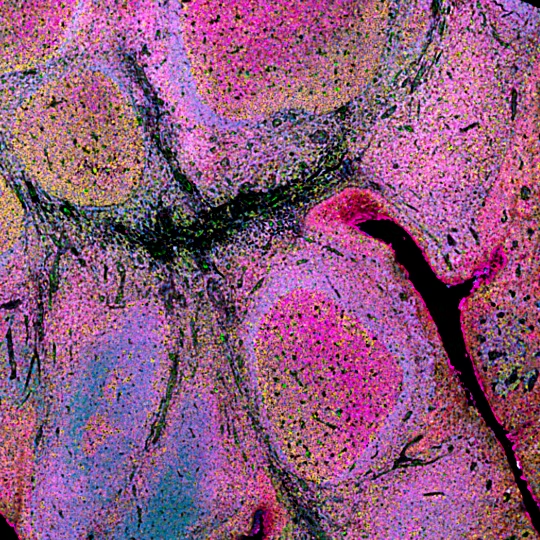

Scientists have just unveiled a massive effort to understand our own brains and those of our closest primate relatives.
In a suite of 21 papers published today in the journals Science (12), Science Advances (8), and Science Translational Medicine (1), a large consortium of researchers shares new knowledge about the cells that make up our brains and the brains of other primates. It’s a huge leap from previously published work, with studies and data that reveal new insights about our nervous systems’ cellular makeup across many regions of the brain and what is distinctive about the human brain.
The research consortium is a concerted effort to understand the human brain and its modular, functional nature. It was brought together and is funded by the National Institutes of Health’s Brain Research Through Advancing Innovative Neurotechnologies® (BRAIN) Initiative. Hundreds of scientists from around the world worked together to complete a range of studies exploring the cellular makeup of the human brain and those of other primates, and to demonstrate how a transformative new suite of scalable techniques can be used to study the detailed organization of the human brain at unprecedented resolution.
This knowledge could ultimately lead to better treatments for diseases
Understanding our brain at the cellular level is key to understanding how our brains function and who we are as a species, as well as more accurately pinpointing the cellular roots of brain diseases and disorders.
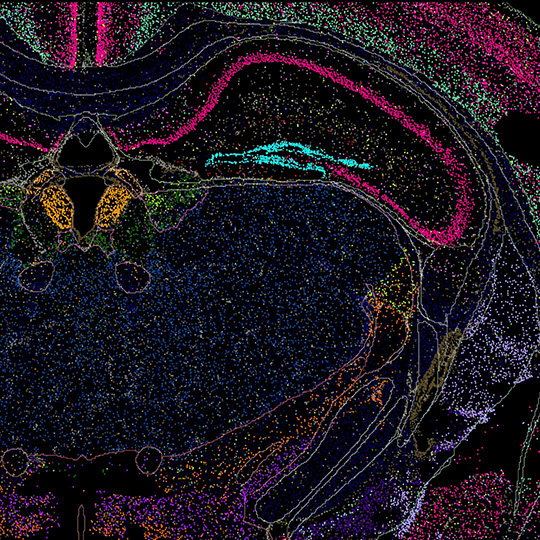
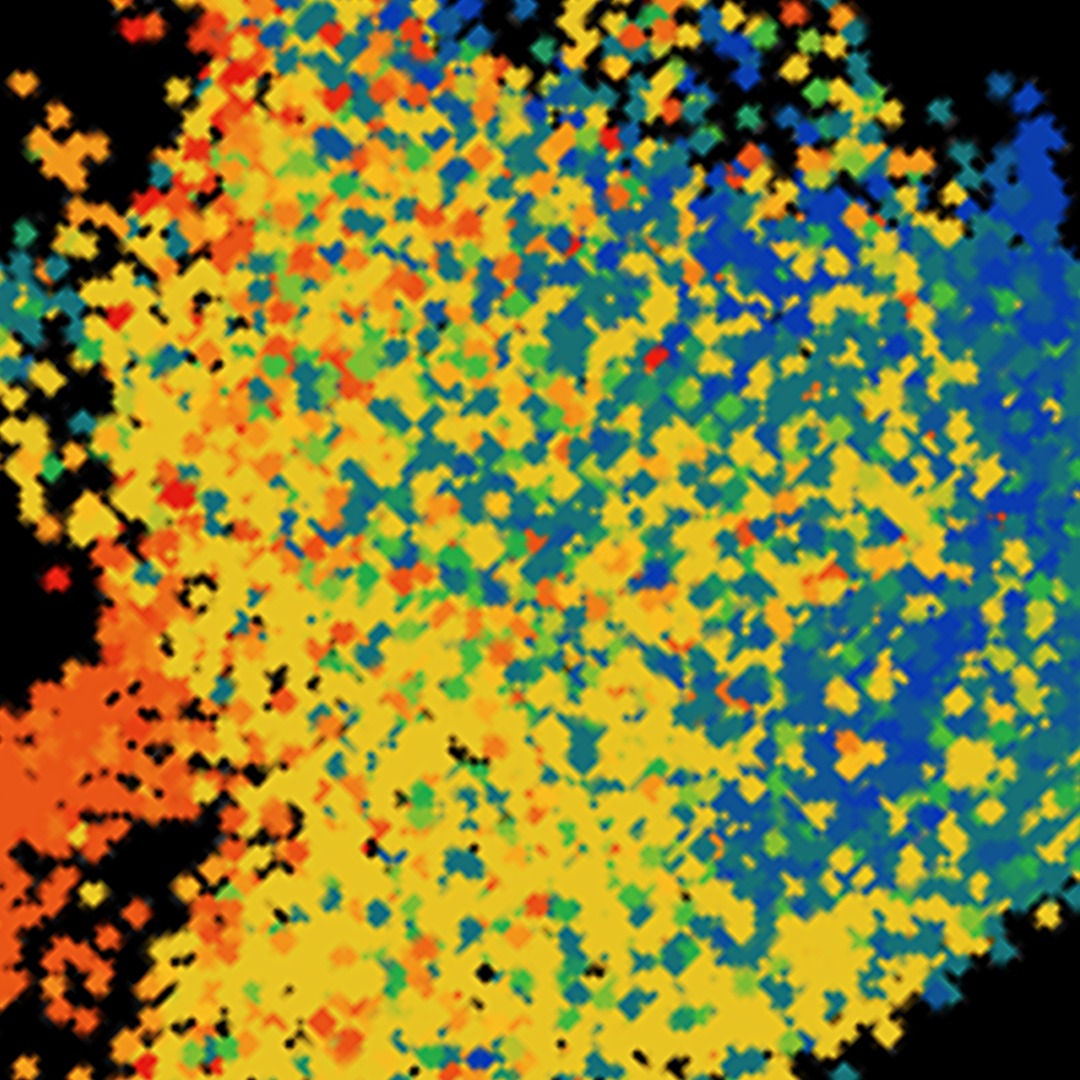
Scientists at the Allen Institute led five of these studies and made significant contributions to three others, including a study that greatly expands on existing knowledge about the number of types of cells in the adult human brain. Scientists at Karolinska Institute and the Allen Institute studied the genes switched on in individual brain cells, a technique known as single-cell transcriptomics, revealing an astonishing diversity of cell types: we have more than 3,000 different kinds of brain cells.
The present suite of studies represents a landmark achievement that continues to build an important bridge toward illuminating the complexity of the human brain at the cellular level" Dr. John Ngai, Director of the NIH BRAIN Initiative
“I view this as a pivotal moment in neuroscience, where new technologies are now allowing us to understand the very detailed cellular organization of the human brain and of other primate brains,” said Ed Lein, Ph.D., Senior Investigator at the Allen Institute, who led several of the newly published studies. “At its core, this body of work is a triumph of molecular biology: Differential gene usage can be used to define cell types, and the tools of genomics could be used to create the first drafts of high-resolution, annotated maps of the cells that make up the entire human brain.”
Tackling important neuroscience questions
The studies also tackle a range of important questions such as: How different are individual people’s brains at the cellular level? How different are our brains from those of our closest ape relatives? How many kinds of brain cells do we have? What are the properties of these cells? How do these cells emerge and mature in development?
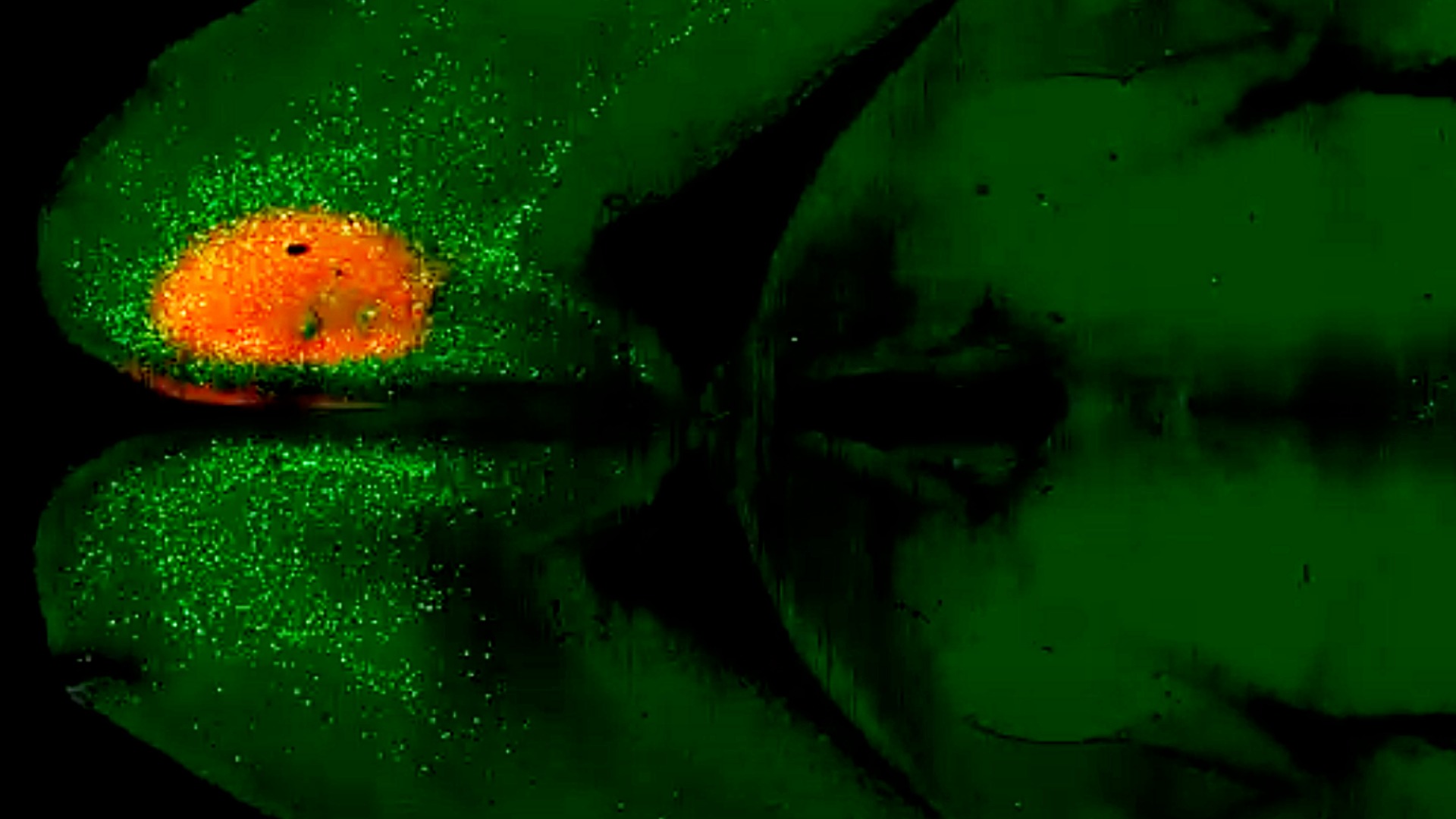
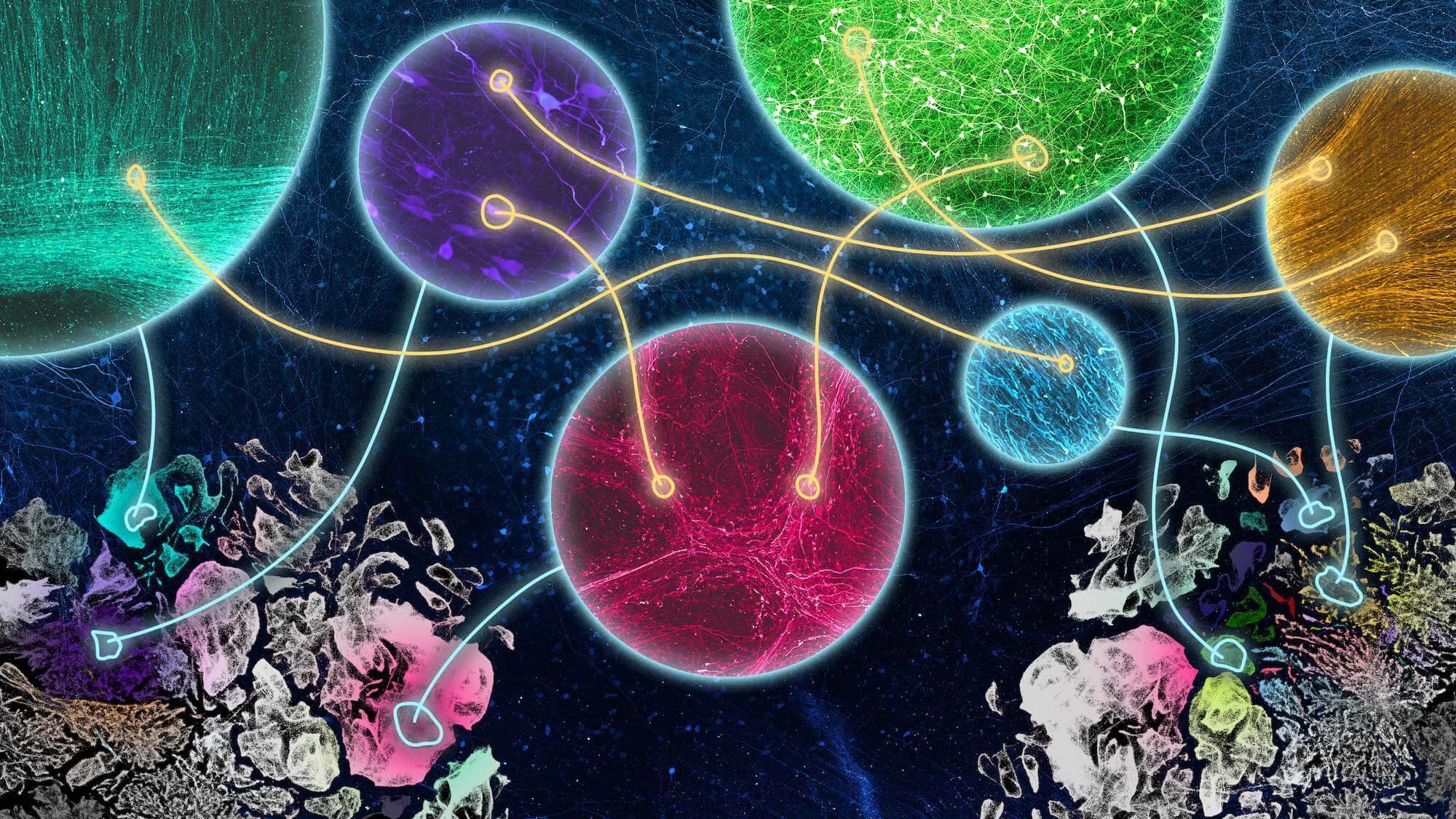
Building off previous work mapping brain cell types in high resolution in single regions of the human cortex, the outermost shell of the brain, the newly published package expands those studies to dozens up to a hundred regions across the entire brain. Where the single region studies found over 100 different brain cell types, the newly released data shows thousands of different kinds of brain cells across the entire brain. For many parts of the brain, that complexity and variety had never before been described.
These studies are part of the NIH’s BRAIN Initiative Cell Census Network, or BICCN, a five-year funding program that was launched in 2017 to create a catalog of brain cell types. This body of work demonstrated the scalability of cutting edge cellular and molecular approaches to tackle the challenges of size and complexity of the human brain, and has set the stage for the next phase of this cell census effort. This next phase, part of which is underway at the Allen Institute, will build much more comprehensive atlases of human and other primate brains through the BRAIN Initiative’s Cell Atlas Network, or BICAN.
“The present suite of studies represents a landmark achievement that continues to build an important bridge toward illuminating the complexity of the human brain at the cellular level,” said Dr. John Ngai, Director of the NIH BRAIN Initiative. “The scientific collaborations forged through BICCN, and continuing in the next phase in BICAN, are propelling the field forward at an exponential pace; the progress – and possibilities – have been simply breathtaking.”
The human studies used postmortem tissue from people who had donated their brains to science, as well as healthy living tissue donated from patients who had undergone brain surgery and donated tissue to research.
The data from the newly released studies will also feed into the Human Cell Atlas, an international effort that is building a comprehensive reference atlas of cells across all organs, tissues, and systems of the human body.
Five Allen Institute-led studies
- An exploration of the variability in brain cell types between individual people. In this study, the scientists looked at brain cells by the levels of the genes they switch on in one region of the cortex, the middle temporal gyrus, across 75 different adult donors. This was one of the first human brain studies to compare a large number of individual people using single-cell techniques. The researchers found that while we all have the same basic cellular parts list, the proportions of certain kinds of cells and the genes switched on in those cells varies substantially from person to person.
- A comparison of brain cell types between humans and our closest ape relatives, chimpanzees and gorillas. These studies reveal that we share the same basic brain cell type architecture with our close evolutionary cousins, but that there are changes in the genes used by those conserved cell types. Specifically, many genes involved in connections between neurons and the formation of circuits in the brain are different between humans and other primates. “That creates a plausible explanation for how you could increase cognitive capability through evolution, by wiring up circuits of the same kinds of cells or changing the gain in the system in slightly different ways,” Lein said.
- A deep dive comparing the cells that make up across different regions of the human cortex, which is the seat of many of our higher-order cognitive functions. That study looked at the variety of cell types in different regions of the cortex and found that our visual cortex, where we process what we see, is much more specialized and distinct than other regions, and more specialized than the mouse visual cortex. That finding likely ties into the fact that humans and other primates rely on our sense of sight more than many other mammals.
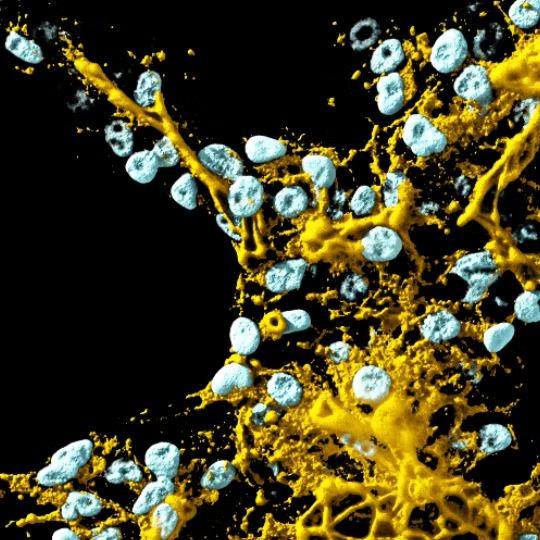
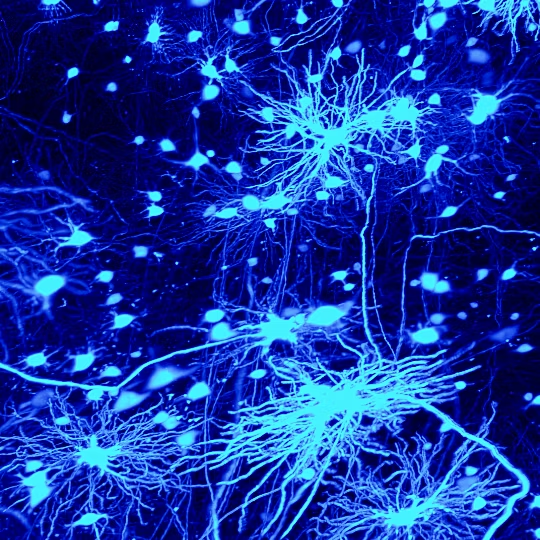
- Two studies analyze the properties of inhibitory neurons of the human neocortex by exploring their electrical properties and their complex 3D shapes in addition to the genes they switch on, an approach requiring the use of living tissues obtained from neurosurgical procedures to treat intractable epilepsy or brain tumors. These studies provide essential information about the characteristics of human neurons, including several types found in humans and some other mammals but not in mice, including the descriptively named rosehip cells and double bouquet cells.
Research reported here was supported by the National Institutes of Health Brain Research Through Advancing Innovative Neurotechnologies® (BRAIN) Initiative. The content is solely the responsibility of the authors and does not necessarily represent the official views of the National Institutes of Health.
Citations
about the allen institute
The Allen Institute is an independent, 501(c)(3) nonprofit research organization founded by philanthropist and visionary, the late Paul G. Allen. The Allen Institute is dedicated to answering some of the biggest questions in bioscience and accelerating research worldwide. The Institute is a recognized leader in large-scale research with a commitment to an open science model. For more information, visit alleninstitute.org.