in this article

The annual Society for Neuroscience meeting, commonly referred to as SfN, clocks in at just above or just under 30,000 attendees, year to year. The meeting’s thousands of talks and poster presentations run the gamut from new findings in neurodegenerative diseases to the neurons in our gut to the basic biology of the brain.
In other words, there’s something for everyone, neuroscience-wise.
To get a grasp on themes that emerged from SfN 2018, which took place in San Diego last month, we asked a few neuroscientists from the Allen Institute for their take in the weeks following the meeting. What interesting science did they see come out of the conference, and what do those trends tell us about where their fields of neuroscience are moving?
The different types of cells that make up our (and other animals’) brains
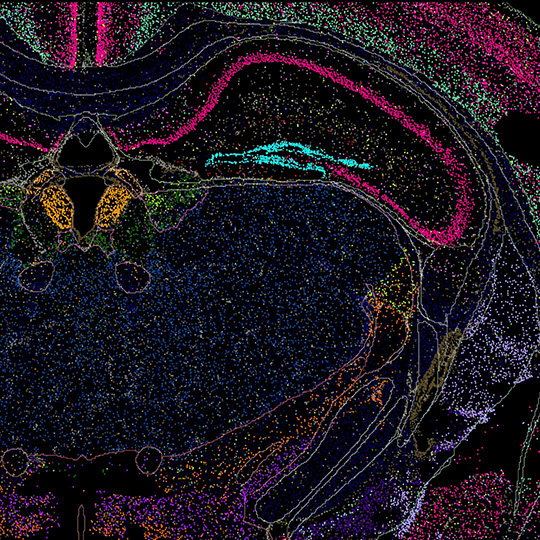
Understanding the different types of cells that make up our brains, or the brains of other animals, is one of the biggest areas of interest for Allen Institute researchers — and it’s increasingly a burgeoning enterprise across the whole field, said Ed Lein, Ph.D., a neuroscientist and Investigator at the Allen Institute for Brain Science, a division of the Allen Institute. Lein and his colleagues study cell types in human brains and are leading part of a large-scale consortium effort funded through NIH called the BRAIN Initiative Cell Census Network aimed at mapping every cell type in the human brain.
Specifically, the method Lein and many other neuroscientists use to identify brain cell types, known as single-cell transcriptomics, is “becoming much more prevalent and coming to fruition to learn some real biology,” Lein said. That method involves looking at the entire set of genes a single cell switches on or off, across thousands or tens of thousands of cells.
The brain circuits that drive behavior
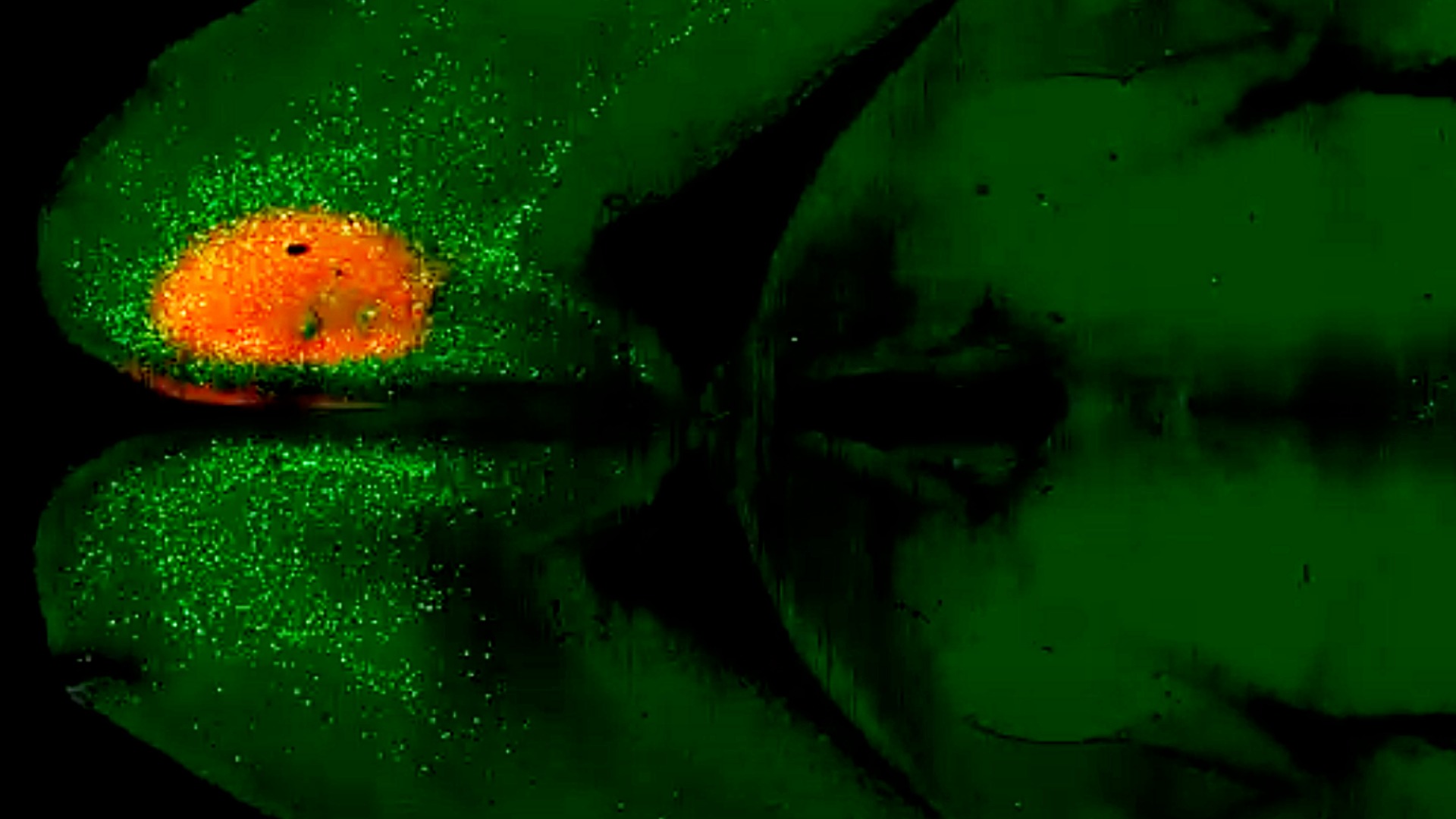
One of the most exciting applications of identifying different cell types, Lein said, is figuring out the specific brain circuits made up of those cells that drive certain behaviors. He pointed to a recent study from researchers at Harvard University, led by neuroscientist Catherine Dulac, Ph.D., and biophysicist Xiaowei Zhuang, Ph.D., and presented at the conference, which uncovered different cell types in part of the mouse hypothalamus that are connected with innate behaviors like parenting, aggression and mating.
“Figuring out the cell types in this area, that’s a very hot story,” said Hongkui Zeng, Ph.D., a neuroscientist who also studies brain cell types in mice, serves as Executive Director of Structured Science at the Allen Institute for Brain Science, and leads part of the BRAIN Initiative Cell Census Network aimed at mapping every cell type in the mouse brain.
What made that particular study “hot” was the fact that the researchers made a detailed connection between molecular cell types, as defined by their genes, the cells’ precise location in the brain, and how those cell types drive parenting, aggression and other behaviors in the animal.
“I think this is the tip of the iceberg,” Lein said, describing how the field of single-cell transcriptomics is on the verge of revealing more and more novel insights about what the individual cell types actually do. “This is a wonderful example of how strong the molecular paradigm is and a great forbearer of what we’re going to see across the whole nervous system.”
The interconnected brain
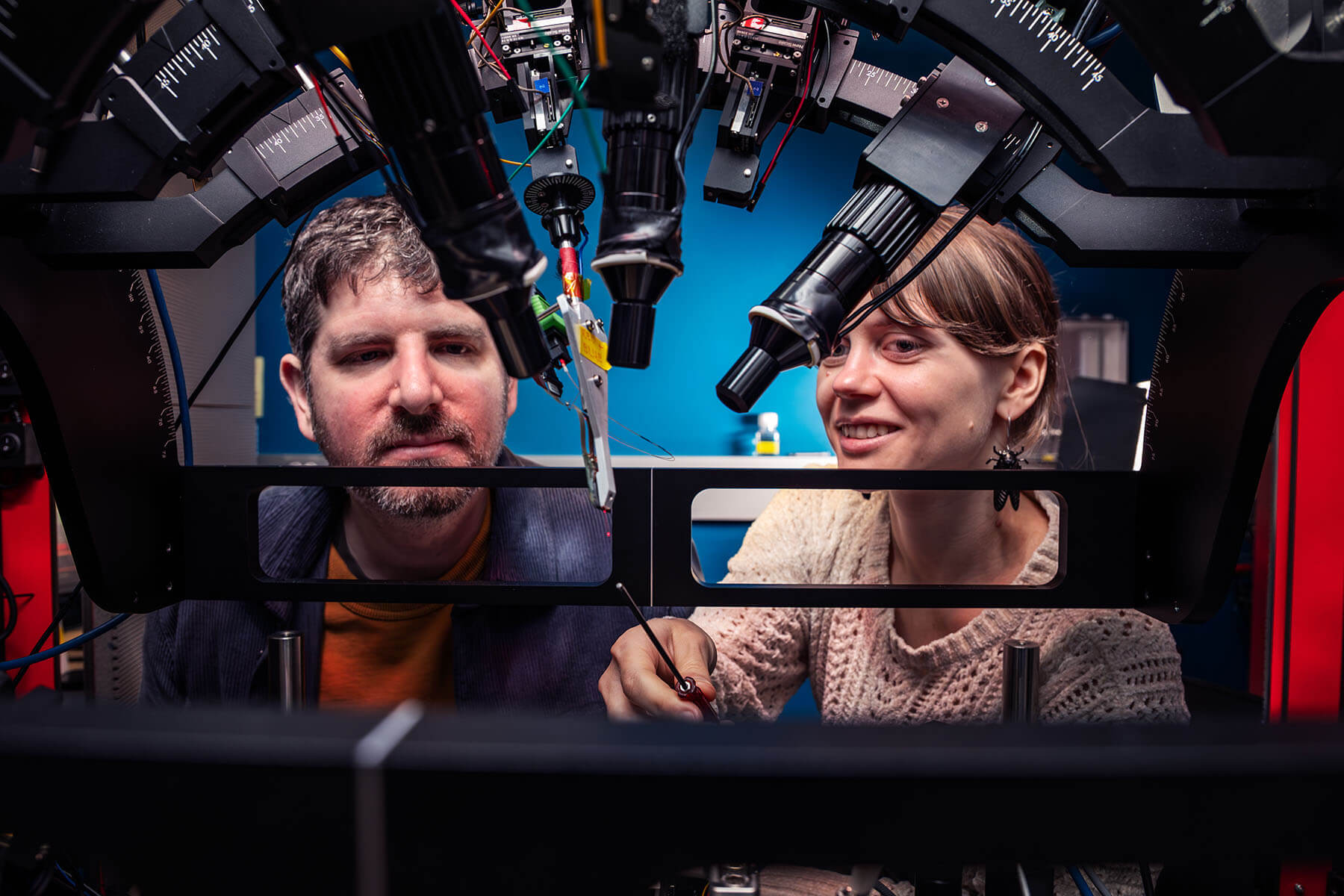
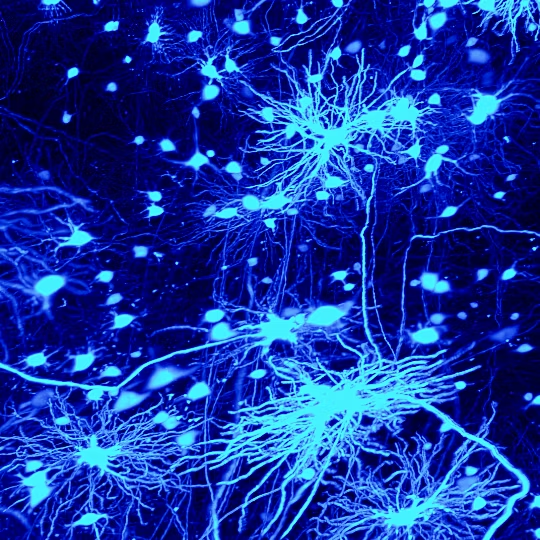
Marina Garrett, Ph.D., is a neuroscientist at the Allen Institute for Brain Science who is part of a team working to understand the visual processing part of the mouse brain by observing its neurons in action. She had an eye out for studies related to how the brain processes the animal’s environment through its senses, and particularly how an animal’s movement affects that processing. In recent years, researchers have made findings that “challenge ideas about strict feed-forward hierarchies of processing in the brain,” Garrett said, uncovering that a mouse’s movement affects how its brain responds to what it sees.
Because Garrett and her colleagues study the visual part of the brain in mice in motion and at rest, she was intrigued by results she saw presented by Simon Musall, Ph.D., who works with Anne Churchland, Ph.D., at Cold Spring Harbor Laboratory. That group found that when an animal is moving and responding to something it sees or hears, its entire cortex, the outer layer of the brain, is dominated with movement-related signals. The results suggest that the brain might use information about the body’s motion to help interpret stimuli perceived from the environments to build an internal model of the world and predict the outcome of future actions.
New tools in neuroscience: see-through brains and voltage readouts
Amy Bernard, Ph.D., Product Architect at the Allen Institute for Brain Science, had her eye out at SfN for up-and-coming tools and innovations, both those that push the boundaries of the neuroscience research field and those that companies are using for business development.
“Sometimes a technical discovery pops in a particular year and then you see that one new tool is suddenly everywhere,” Bernard said.
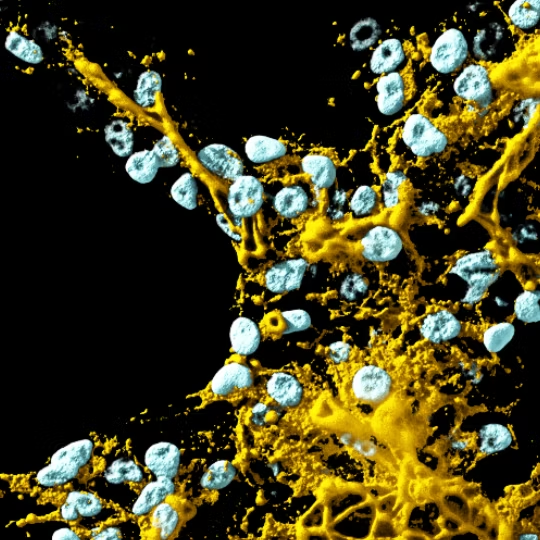
In previous years, a technology known as “brain clearing” emerged. It sounds like a meditation technique, but brain clearing is a research method to make brains easier to image under the microscope by using a special kind of polymer that makes the tissue more translucent.
“It’s providing a little more insight — so to speak — into a lot of different structural biology challenges that before this point were not tractable,” Bernard said. “Many labs have access to this technology, as it becomes more mainstream and commercialized.”
Zeng saw a lot of talk at SfN of voltage sensors, an emerging genetic tool that allows researchers to capture the real-time electrical activity of neurons under the microscope. There are other ways to do this, Zeng said, but the voltage sensors have a much faster readout than the current standard, which are known as calcium sensors.
“This is a new technology which gives you different kinds of information,” she said. “We should watch this technology and see how it matures.”
‘Vastness of information’
For Bernard, another theme from this year’s conference was just “more data and collaboration,” she said. “There’s a big push to have data be open, shareable and accessible as soon as possible. It’s neat to see that becoming de rigueur in the field.”
Sharing data soon after they’re generated is a key tenet of open science, one of the Allen Institute’s core principles and one which Bernard is happy to see catching on across neuroscience in recent years. The next step for the field? Better ways to read the meaning behind that data, she said.
“I think some of the next breakthroughs are going to be truly understanding what the vastness of this information and data can tell us about the brain,” Bernard said. “Having more data to work with is awesome, but that in and of itself isn’t going to give rise to the next big insight — the analysis is.”
Citations
about the allen institute
The Allen Institute is an independent, 501(c)(3) nonprofit research organization founded by philanthropist and visionary, the late Paul G. Allen. The Allen Institute is dedicated to answering some of the biggest questions in bioscience and accelerating research worldwide. The Institute is a recognized leader in large-scale research with a commitment to an open science model. For more information, visit alleninstitute.org.