impact
impact
open science
subheadline
careers and opportunities
subheadline
people & teams
people & teams
subheadline
allenites
subheadline
allen institute advisors
subheadline
board of directors
subheadline
shanahan foundation fellowship
subheadline
next generation leaders
subheadline
research
overview
our approach
subheadline
publications
subheadline
open science
subheadline
accelerator
brain science
subheadline
cell science
subheadline
neural dynamics
subheadline
immunology
subheadline
synthetic biology
subheadline
education
education
science education
subheadline
education resources
subheadline
field trips
subheadline
open science
subheadline
open science quest
subheadline
news
news
stories
subheadline
podcast
subheadline
sign up for our newsletter
subheadline
events
events
all events
subheadline
conferences
subheadline
event code of conduct
subheadline
events
open science quest
subheadline
summer workshop on the dynamic brain
subheadline
open science week
subheadline
brain fest
subheadline
science resources
science resources
allencell.org
subheadline
allenimmunology.org
subheadline
allenneuraldynamics.org
subheadline
brain-bican.org
subheadline
brain-map.org
subheadline
microns-explorer.org
subheadline
impact
back to menu
impact
open science
subheading
careers and opportunities
subheading
people & teams
people & teams
subheading
allen institute advisors
subheading
board of directors
subheading
shanahan foundation fellowship
subheading
next generation leaders
subheading
research
back to menu
impact
Label
subheading
Label
subheading
people & teams
education
back to menu
research
Label
subheading
Label
subheading
Heading
news
back to menu
research
Label
subheading
Label
subheading
Heading
events
back to menu
research
Label
subheading
Label
subheading
Heading
science resources
back to menu
science resources
allencell.org
subheading
allenimmunology.org
subheading
allenneuraldynamics.org
subheading
brain-bican.org
subheading
brain-map.org
subheading
microns-explorer.org
subheading
search
stories
news

No lab? No problem for this neuroscience student

How open science tools helped a personal journey into Alzheimer’s research

September 17, 2024
 min read
share/
How open science tools helped a personal journey into Alzheimer’s research
Thank you! Your submission has been received!
Oops! Something went wrong while submitting the form.

in this article

table of contents will display on published page only
set h2 to populate the table of contents here

authors

Jake Siegel

As a first-year teacher, Sarah Latchney was excited to introduce students to the complexity of the human brain through her BIOL 419: Neurobiology with Laboratory course. But when the COVID-19 pandemic arrived, the St. Mary’s College of Maryland professor faced one tiny problem:

The lab was closed.  

“All of a sudden I was stuck online and didn’t know what to do,” Latchney recalled.

Julia's experience with the Allen Institute's resources shows how valuable open science and collaborative science is.

– Sarah Latchney Assistant Professor of Neurobiology at St Mary's College of Maryland.

Fast forward a semester, and hybrid learning was the norm. To accommodate both in-person and remote students, Latchney turned to open science tools from the Allen Institute. She used these resources to teach first-year biology students concepts like mitosis and incorporated a lesson plan on neuron morphology in her intro to neuroscience course.  

“These resources can show students a lot about experimental design, about generating hypotheses, about coming up with predictions, about how to analyze data—even without ever picking up a pipette,” Latchney said.

When a student, Julia Milner, decided to study Alzheimer’s disease—a subject outside Latchney’s area of expertise—she knew where to turn.
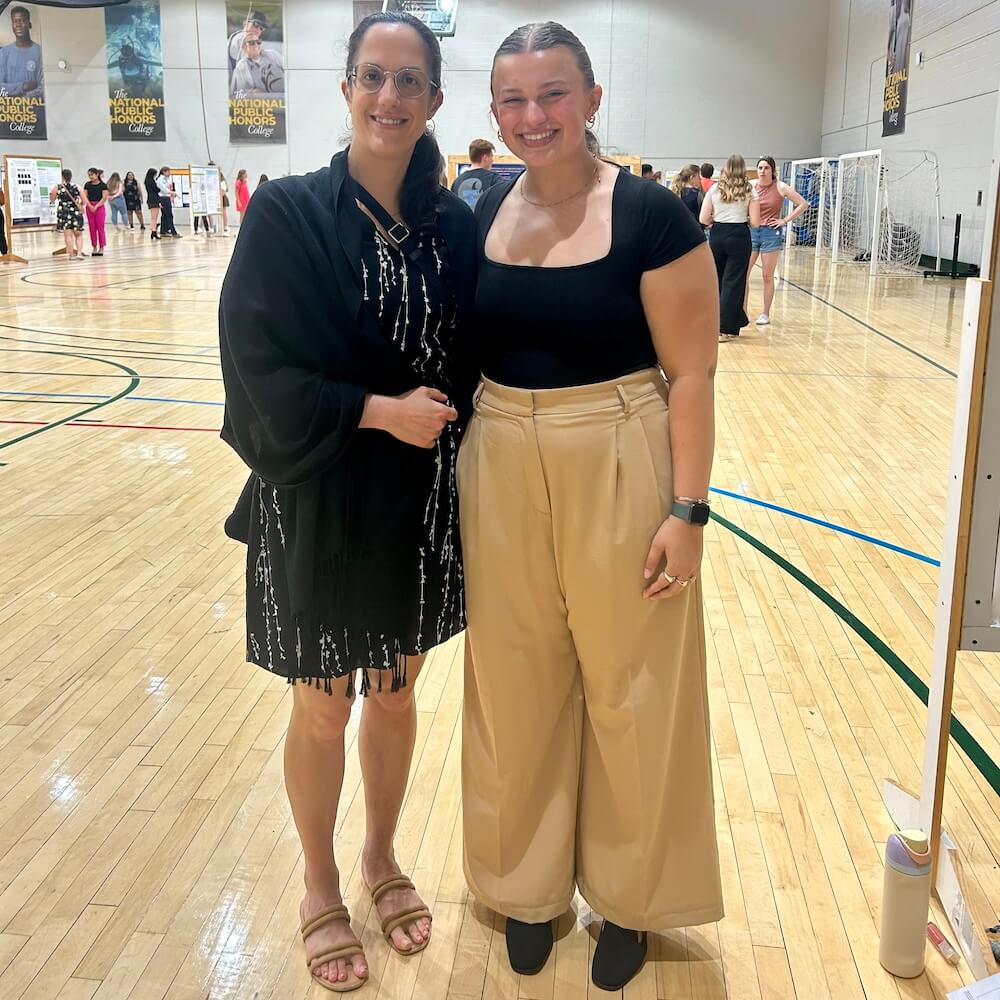
Sarah Latchney (left) and Julia Milner at St. Mary’s College after Milner presented her senior capstone project.

Milner’s interest in Alzheimer’s was personal: The year she was born, her maternal great-grandmother died of the disease. Milner’s grandmother rarely spoke about it, but her experiences caring for her mother during her long decline left a lasting impact.

“Toward the end of her life, (my grandmother) was kind of bogged down with the fact that she might have Alzheimer’s disease,” Milner said. “She tricked herself into believing that she was losing her mind, even though we knew that she was fine.”

Latchney knew she couldn’t offer a wet lab experience to Milner. But tools like the Seattle Alzheimer’s Disease Brain Cell Atlas (SEA-AD) and the Allen Brain Cell Atlas could offer a window into the disease.  

Initially interested in human neuroscience research, Milner found herself drawn to cellular and molecular studies through the Allen Institute’s databases.

“At first I was daunted, because I don’t consider myself very tech savvy,” she said. “But soon I was learning how genetic research is done within the wet lab, and how it’s able to be reproduced within these databases.”

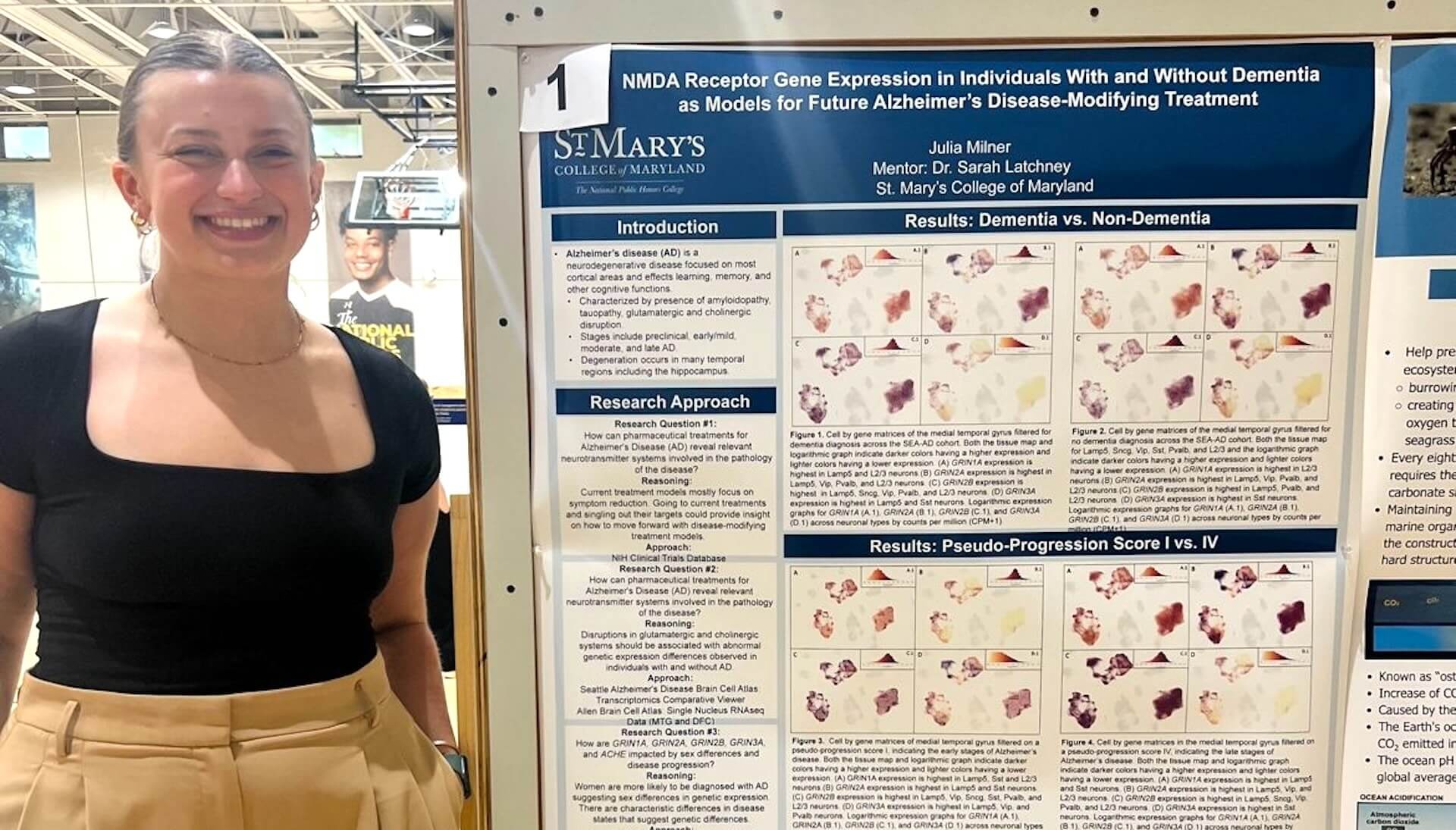
For her capstone project, Milner explored the complex world of gene expression in Alzheimer’s disease. Using the Allen Institute tools and the NIH Clinical Trials database, she focused on two genes associated with the NMDA receptor, a protein in the brain crucial for learning and memory. She was surprised to discover significant differences in how these genes were expressed in early versus late stages of the disease—a finding that hints at more targeted therapies, she said.  

“Diving deeper into how genes could be used for Alzheimer’s treatment could provide better avenues for individuals with the disease,” she said.    

Today, Milner is working as a laboratory technician at Virginia Tech, studying the cellular mechanisms that link Parkinson’s disease and traumatic brain injury. Her journey to the wet lab began with open science resources, demonstrating the transformative potential of these tools in research and education.  

“I think what I took away from using the (Institute’s) databases is that learning looks completely different for different people,” she says. “You’re able to explore and broaden your perspective of what research could be by using these sorts of databases.”

Her former professor echoed the sentiment.  

“Julia’s experience with the Allen Institute’s resources shows how valuable open science and collaborative science is,” Latchney said. “When you bring together different types of scientists, you get different perspectives that can lead to new ideas. Think how far we could get into discovering new disease-modifying treatments if we would share our data more, and be more open and collaborative.”

Citations
No items found.

about the allen institute

The Allen Institute is an independent, 501(c)(3) nonprofit research organization founded by philanthropist and visionary, the late Paul G. Allen. The Allen Institute is dedicated to answering some of the biggest questions in bioscience and accelerating research worldwide. The Institute is a recognized leader in large-scale research with a commitment to an open science model. For more information, visit alleninstitute.org.
explore related stories

explore more stories
news 
Designing better weapons to fight prostate cancer
New study unlocks key insights that could help develop next-generation immunotherapies
news 
“Computational crystal ball” helps predict cell behavior
New technology could lead to better treatments for cancer by allowing scientists to perform virtual experiments
news 
How age affects vaccine responses and how to make them better
Age-related shifts in T cells weaken vaccine response in older adults, but new findings pave the way for next generation of vaccines.
video 
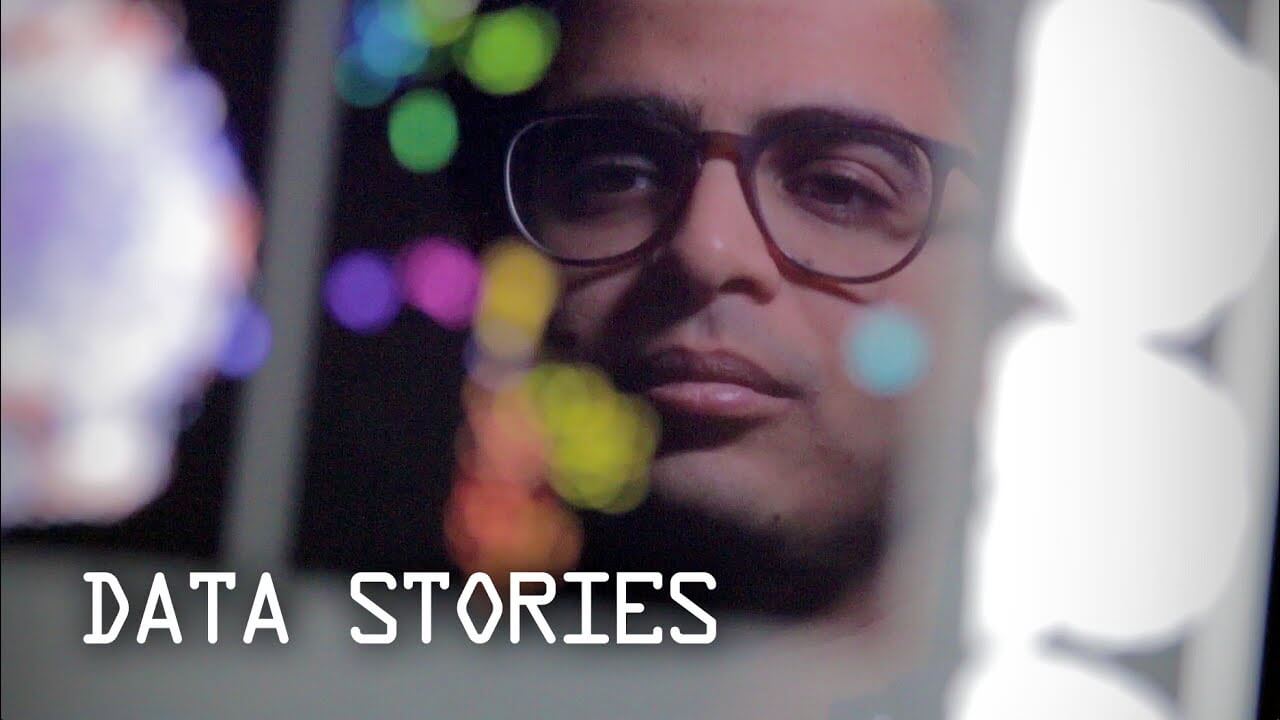
Data Stories | Visualizing the human brain
Computational biologist Ahmed Mahfouz, Ph.D., used data exclusively from the Allen Brain Atlas for his dissertation, and to explore a signature of...
video 
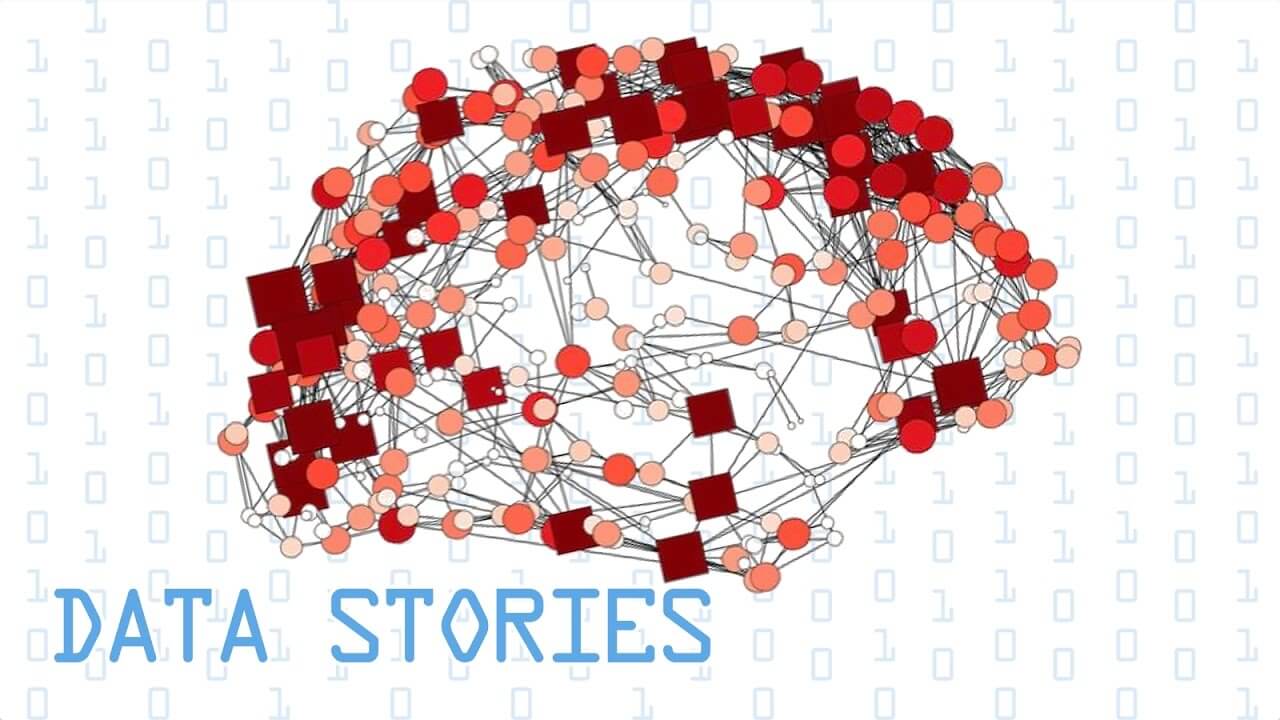
Data Stories | Exploring the teenage brain
Researchers at the University of Cambridge merged data from the Allen Human Brain Atlas with MRI brain scans and made an important discovery about the...
we acceleratedevelopcatalyzeimpact

science done differently. shared with the world.

explore our accelerators

brain science

Mapping every cell, connection, and circuit in the brain—openly shared with the world.

cell science

Decoding how cells become tissues, then programming that knowledge into powerful new research tools.

neural dynamics

Revealing the brain's hidden algorithms that transform neural activity into real-world behavior.

immunology

Creating the deepest open reference for the healthy human immune system ever built.

synthetic biology

Engineering cells to record their own histories, transforming how we understand disease over time.

research

Big questions, open answers, and science built to be shared.

education

Inspiring the next generation of scientists through open science resources.

impact

Our science is empowering researchers and advancing health worldwide.
advancing science through open, collaborative research
Get the allen institute newsletter
Stay informed on the latest breakthroughs in neuroscience, bioscience, and AI-driven research.
allen institute
impactpeople & teamscareers & opportunitiesalumnihistory & founder
science resources
allencell.orgallenimmunology.orgallenneuraldynamics.orgbrain-bican.orgbrain-map.orgmicrons-explorer.org
research
brain sciencecell scienceneural dynamicsimmunologysynthetic biologypublications
education
science educationfield tripsprofessional developmenteducation resources
quick links
newseventsopen sciencepodcastscience resourceshuman brain donationvisit uscontact
follow us/

allen institute, 615 Westlake Ave North, Seattle, WA 98109 +12065487055

© 0000 allen institute. all rights reserved.
privacy policyterms of usecitation policyemployee portalpolicy & compliance