in this article
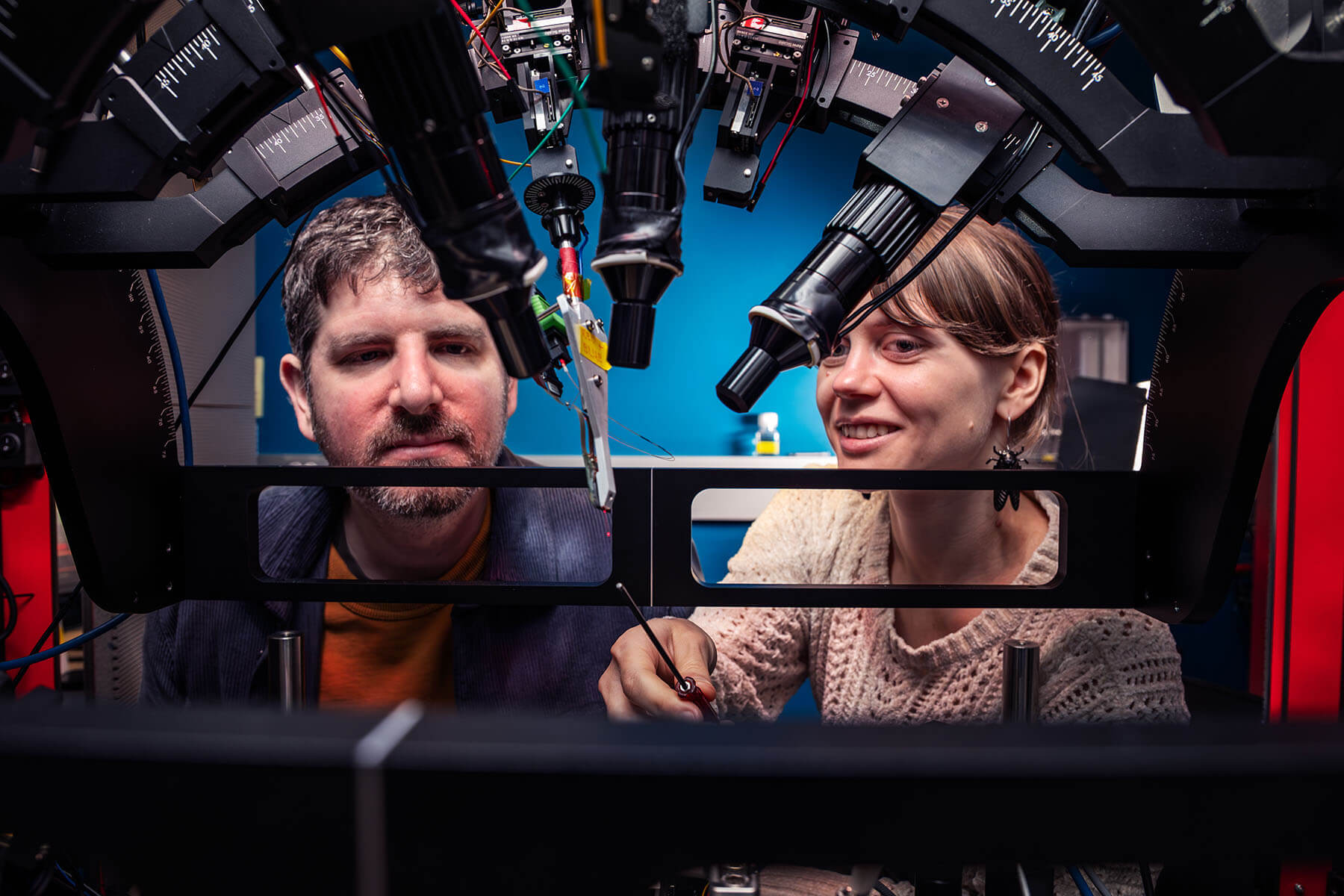
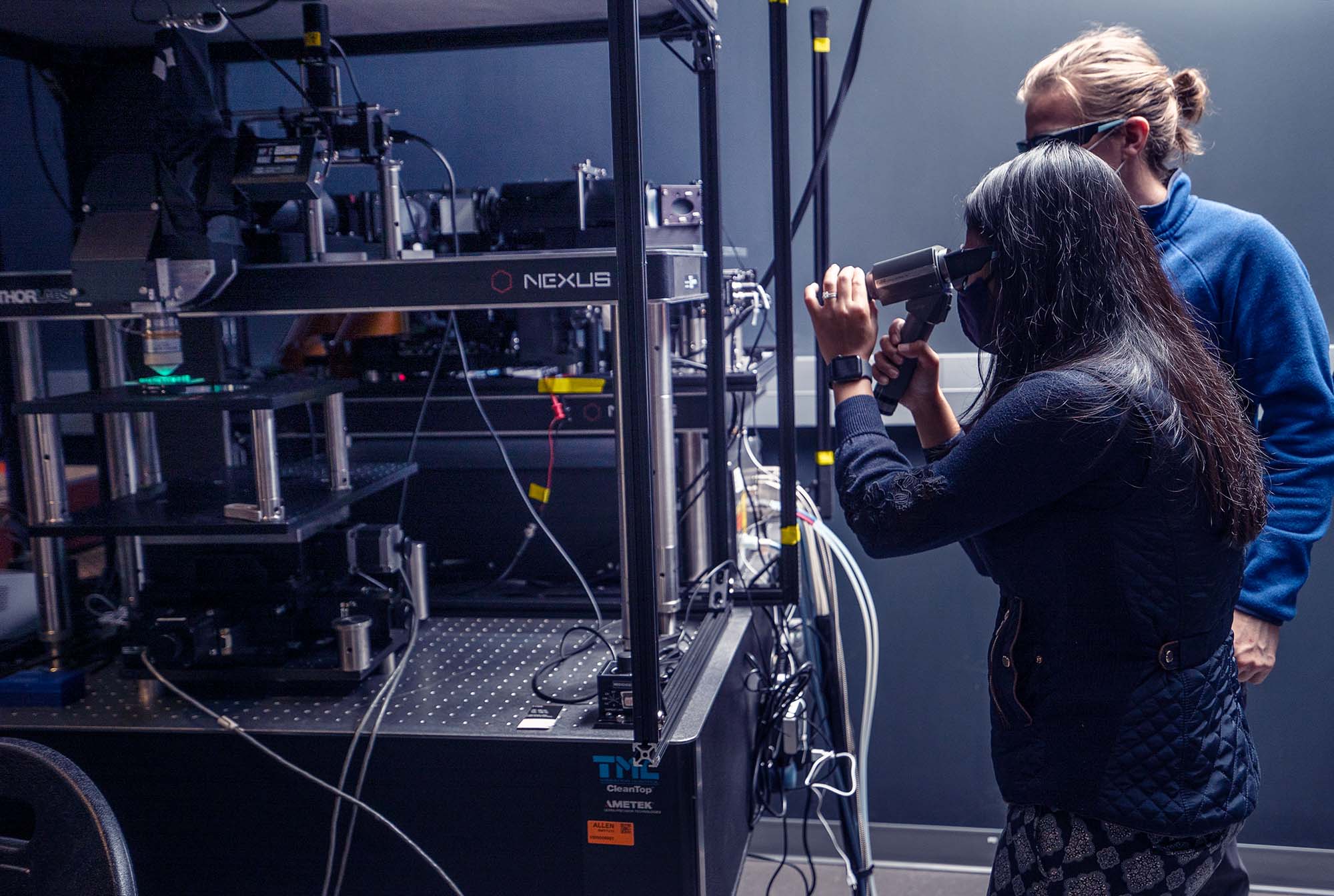
Scientists on theNeural Dynamics team at Allen Institute are building a 3D model of the brain by assembling 2D images produced via light-sheet microscopy. Light-sheet microscopy is a high-speed imaging technique that uses a thin “sheet” of light to capture high-resolution 2D images of a fluorescently stained specimen. Unlike traditional microscopes that scan a sample pixel by pixel to form a 2D image over time, light-sheet methods capture millions of pixels all at once to rapidly form 2D images. When these 2D sections are stitched together, they produce a comprehensive 3D model that allows scientists to examine biological structures in greater detail. A vast map of neural connections within a mouse brain is spotlighted above in a microscopy image captured at the University of Washington by Adam Glaser, Ph.D., now a Senior Scientist at the Allen Institute. Understanding this network is key to learning how the brain drives behavior and decision-making. Glaser and his colleagues are working on the development of tools for large-scale imaging projects. They are currently building three customized light-sheet microscopes and plan to use them to identify and describe different neuronal cell types and their connections.
Citations
about the allen institute
The Allen Institute is an independent, 501(c)(3) nonprofit research organization founded by philanthropist and visionary, the late Paul G. Allen. The Allen Institute is dedicated to answering some of the biggest questions in bioscience and accelerating research worldwide. The Institute is a recognized leader in large-scale research with a commitment to an open science model. For more information, visit alleninstitute.org.